News

Featured Products

Controlled singeing removes surface fuzz before downstream wet processing.
A singeing machine removes loose, projecting fibers from the surface of yarn or fabric. It exposes the surface to a carefully controlled heat source for a very short time, burning the fuzz while preserving the main fabric. The result is a cleaner, smoother surface that can improve luster and help later dyeing, printing, coating, and finishing look more even.
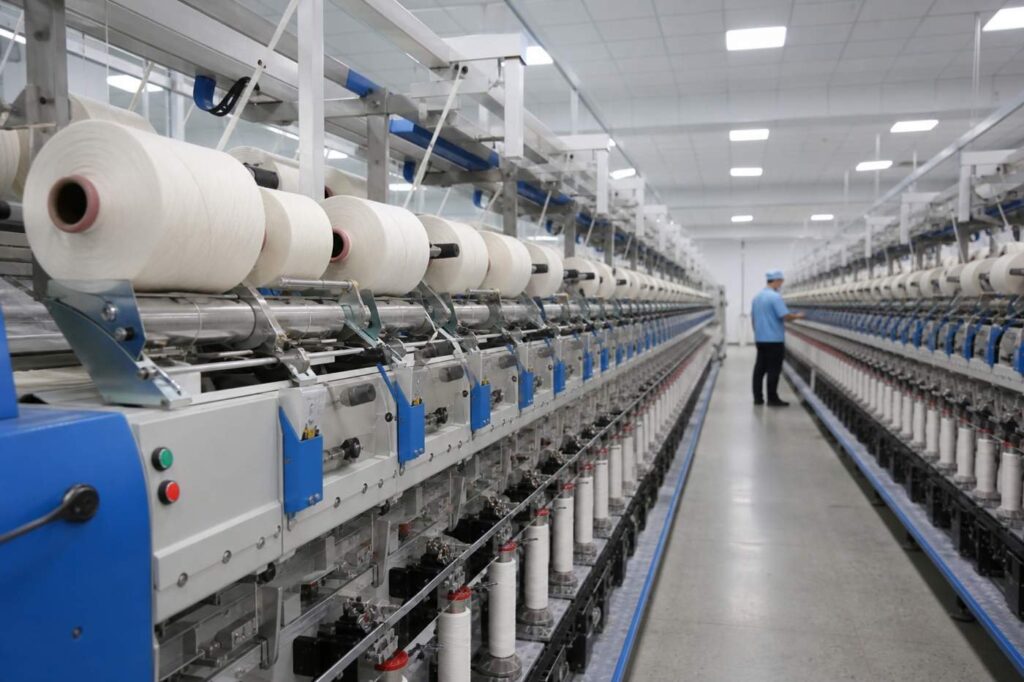
A TFO line combines controlled feed, twisting, and take-up into a compact yarn-processing operation.
A two for one twister is a yarn twisting machine that inserts two turns of twist into the delivered yarn for each revolution of its spindle. Yarn from a stationary feed package passes through a hollow rotating spindle, forms a controlled balloon, then winds onto a take-up package. This clever yarn twist principle gives TFO equipment its name and makes it a widely used route for ply twisting spun yarns and twisting many filament yarns.
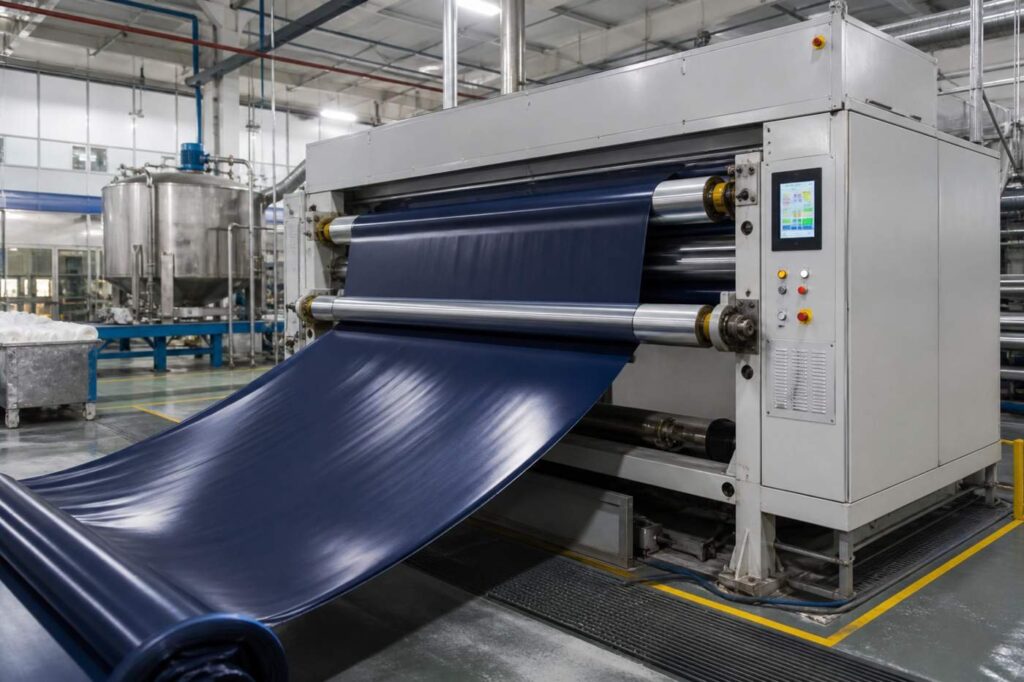
Roller pressure, heat, and fabric path create the final calendered surface.
A calendering machine changes fabric surface and handle by passing fabric through one or more pressure nips. Heat, pressure, roll material, moisture, and relative roll speed determine whether the result is smoother, flatter, glossier, denser, softer, or patterned. A 2-roller calender is a direct choice for simple smoothing or luster. A 3-roller calender gives more process flexibility and can support friction or multi-nip effects. An embossing machine is chosen when a visible surface pattern is the goal.
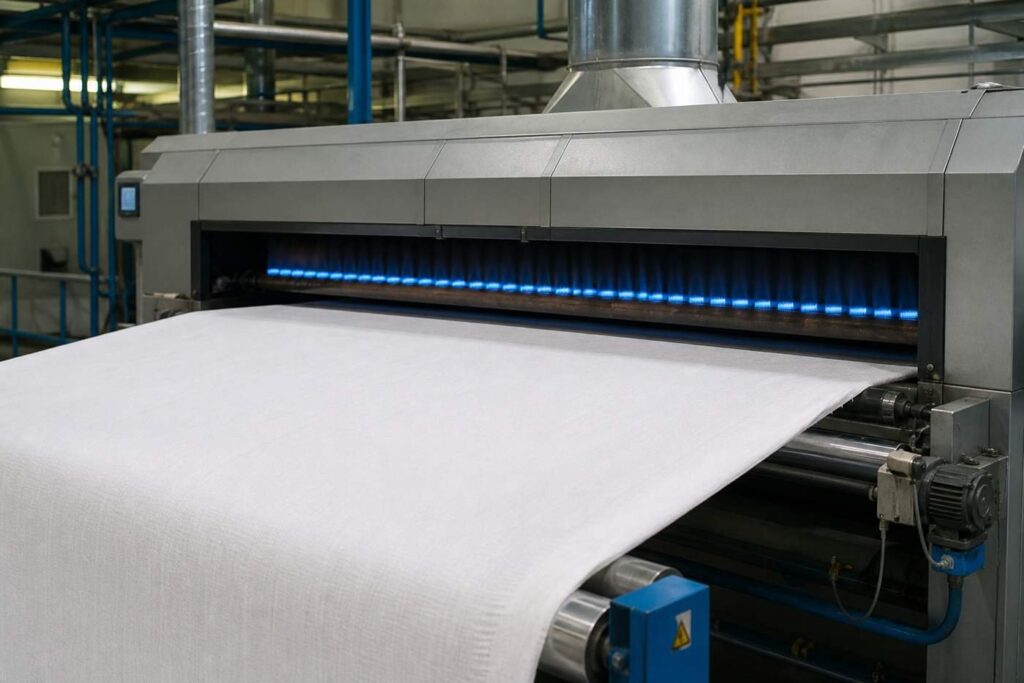
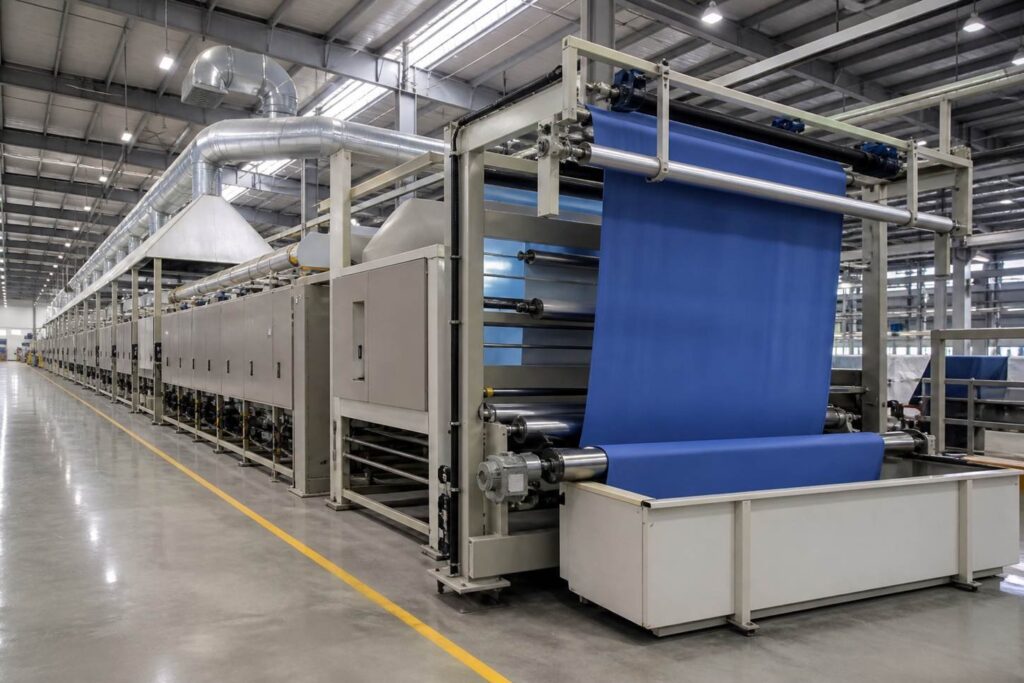
A stenter line controls fabric width and thermal exposure as the fabric moves continuously through heated chambers.
A stenter machine carries fabric in open width through controlled heating while its edges are held on two moving chains. It can dry fabric, set a target width, correct bow and skew, apply finishing chemicals, and stabilize selected synthetic or blended fabrics through fabric heat setting. The machine does not improve every property by itself. It creates a controlled zone where width, tension, airflow, moisture, temperature, and dwell time can be managed together.
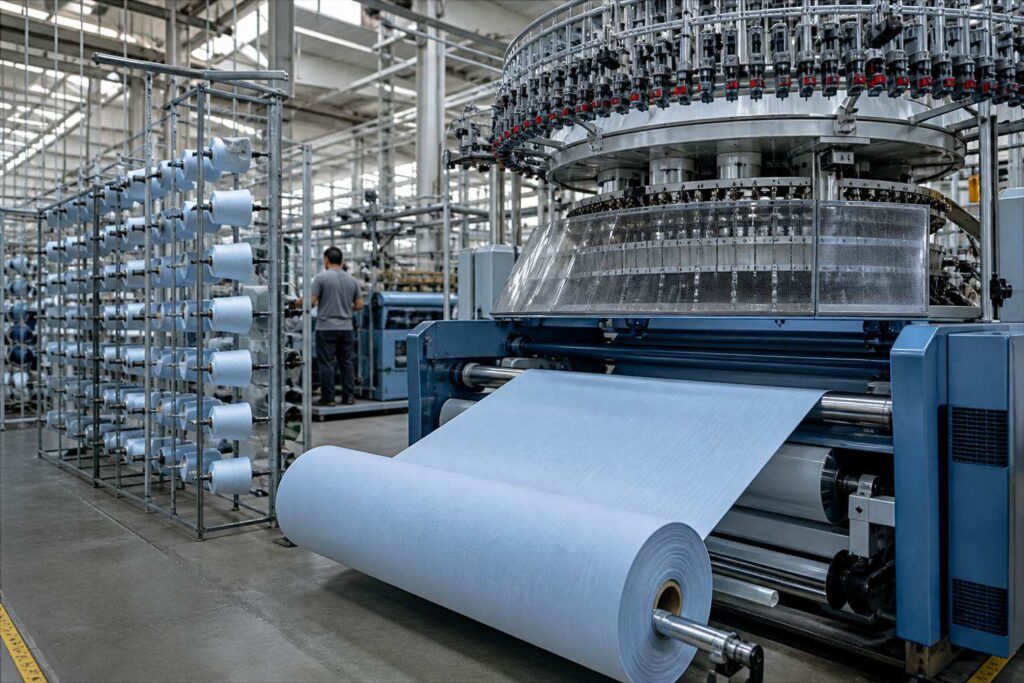
A tricot-oriented production line is designed around consistent yarn feeding, loop formation, and fabric take-down.
Choose the machine from the fabric you need to make, not from the machine name alone. A tricot knitting machine is usually the best route for smooth, stable, lightweight fabrics. A raschel machine is better when open structures, texture, heavier constructions, or many pattern options matter. Double needle bar warp knitting is the specialist choice for spacer fabrics and other structures that need two connected fabric faces.
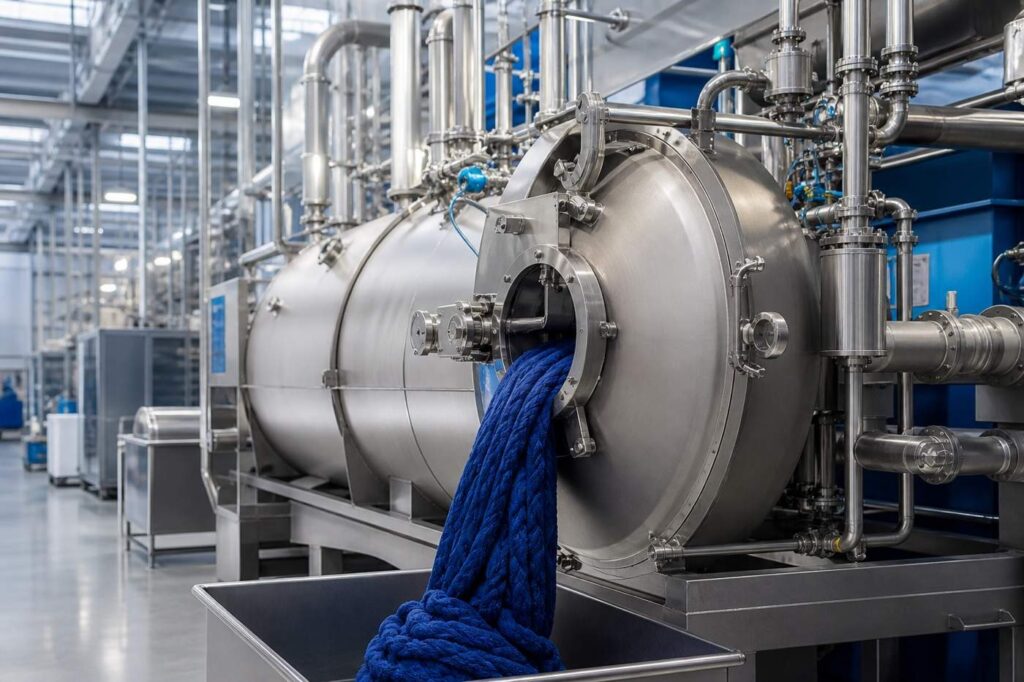
Jet dyeing machines circulate both fabric and liquor in a closed rope-dyeing system.
A textile dyeing machine is not chosen only by capacity. The textile form, fiber chemistry, fabric construction, desired shade, batch size, water use, and handling sensitivity all shape the correct decision. A machine that produces level polyester knit may be the wrong choice for a delicate voile, a yarn package, or a garment wash effect.

Singeing Machine in Textile: Purpose, Types, and Working Process

Two For One Twister: Working Principle, Benefits, and Applications

Calendering Machine Types: 3-Roller vs 2-Roller vs Embossing Comparison

Stenter Machine Working Principle: How Fabric Heat Setting Works

Warp Knitting Machine Types: Tricot, Raschel, and Double Needle Bar Explained

Types of Dyeing Machines in Textile: A Complete Selection Guide