

 English
  Hungarian
  Indonesian
  Bulgarian
  Turkish
  Polish
  Russian
  Spanish
  Portuguese
  Korean
  French
 SutexMach
textile Machine Video
SutexMach
One-Stop Solution Provider Of Intelligent Textile Machinery
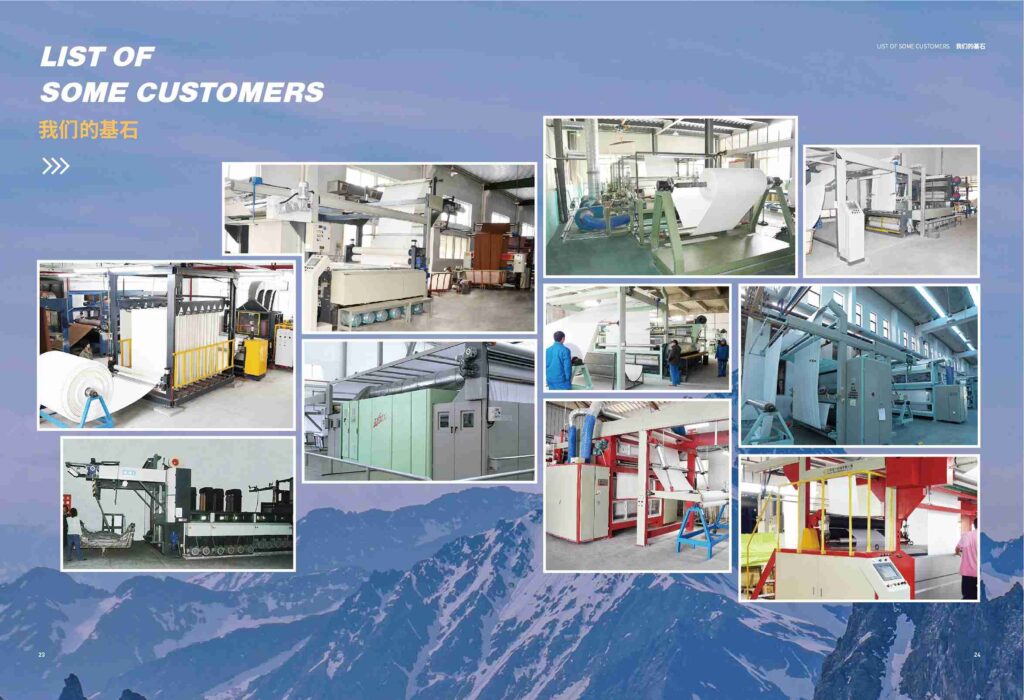
Intelligent Textile Machinery Video Gallery
Check out our textile machinery video collection to see smart, efficient equipment at work. Watch production demos and technical spotlights to learn how our one-stop solutions boost textile manufacturing with innovation, reliability and advanced technology.
Warp Knitting Machine
- Tricot Warp Knitting Machine
- Raschel Warp Knitting Machine
- Weft Insertion Warp Knitting Machine
Two for One Twisting Machine
- Dual-twist Two For One Machine
- Durable Two For One Machine
- Customizable Two For One Machine
Double Winder Machine
- Double winder for spinning & weaving
- Professional Double winder
- Double winder for high-load yarn processing
Air Softening Machine
- Air softening machine for fabrics
- Air blast softening machine for pile fabrics
- Fabric air‑flow softening equipment
Stenter Machine
- High Capacity Fabric Stenter Machine
- Automatic Sizing & Drying Stenter Machine
- Textile Stenter Machine for Woven Fabric
Sizing Machine
- Cylinder drying sizing machine
- High-speed sizing machine
- Sizing machine for textile weaving
Sueding Machine
- Single‑cylinder Sueding Machine
- Multi‑cylinder Sueding Machine
- Horizontal / Vertical Sueding Machine
Singeing Machine
- Rotary‑Cylinder Singeing Machine
- Singeing Machine for Woven Fabric
- Roller Singeing Machine
Warping Machine
- Sectional Warping Machine
- Direct Warping Machine
- Ball Warping Machine
Get More Consultation
After-sales FAQ and Equipment Maintenance Guide
It is recommended to perform a comprehensive maintenance every 6 months, and the specific cycle is adjusted according to the frequency of use and environment. Please contact technical support for a personalized solution.
The goal is to provide fast and efficient after-sales service, respond within 30 minutes, and arrange on-site or remote support within 24 hours. The response time may vary depending on the region and the urgency of the fault.
Calibrate according to the operating manual, perform the no-load trial operation and load test, monitor vibration, temperature, pressure, and other indicators, record data, and compare with standards. If necessary, ask engineers to provide on-site or remote guidance.
Comply with safety operating procedures, wear protective equipment, and ensure that electrical and mechanical connections meet standards. It is recommended that professional technicians install and conduct preliminary inspections to prevent safety hazards.
After debugging, a comprehensive functional verification is carried out, including the whole machine operation test and key parameter review. The technical team will provide on-site training for operators, explain operation, maintenance, and troubleshooting, and provide operation manuals and video tutorials.
Shutdown:
1. Turn off the machine to discharge impurities in the air pipe, check the air leakage of pneumatic components, and turn off the air source.
2. Clean the electric control box, power box, and moving parts, and check the looseness of the line (under power-off state).
3. Refer to the maintenance manual for maintenance when the maintenance period expires.
4. Loosen the tangential belt and record the position to extend the service life.
5. Keep the power on to prevent the electric control components from being damaged by moisture.
Startup:
1. Check each component and check the air leakage of the pneumatic components after ventilation.
2. Restore the tangential belt position, run the empty car from low speed to high speed, and check whether the machine operation and spindle speed are normal.
Shutdown:
1. Keep the power on to prevent the electronic control components from getting wet and keep the workshop dry.
2. Clean the inside of the front electrical box and the body electrical box, and use an air gun to clean the hairiness (avoid pointing the high-pressure air gun at the circuit board).
3. Remove yarn entanglement, hairiness, and foreign matter from all parts of the equipment, especially transmission parts, synchronous belts, bearings, etc.
4. Check for air leakage in pneumatic components and turn off the air source.
5. Check whether the circuit board, connectors, and wire ends are loose to avoid damage to the components after powering on.
6. Perform maintenance, check the bearing jamming, synchronous belt wear and cracking, etc., and replace damaged parts in time.
Startup:
1. Before starting the machine, carefully check all components, especially the transmission components for foreign matter.