

 English
  Hungarian
  Indonesian
  Bulgarian
  Turkish
  Polish
  Russian
  Spanish
  Portuguese
  Korean
  French


During a specific period, a textile enterprise in Ho Chi Minh City, Vietnam decided to dismantle imported sueding machines that had been in use for two years and replace them with customized equipment from SutexMach China. This equipment renewal decision has drawn industry attention to Sutex’s competitive advantages: in a market long dominated by imported textile machinery, what exactly enabled Sutex to gain recognition from cooperative enterprises?
Client Background
As a leading textile manufacturer in Vietnam’s textile industry, the cooperative enterprise’s imported sueding machines were once the focus of industry attention—each piece of fabric processing equipment was of high value and capable of handling complex fabric processing techniques.
Client Needs
The enterprise faced multiple challenges in actual production: the corduroy fabric required high sueding precision, the equipment needed frequent shutdowns to calibrate humidity sensors in Vietnam’s humid environment; equipment failures had led to a certain percentage of delivery delays with insufficiently timely responses from overseas engineers; and incompatibility with recycled cotton raw materials widely used in Vietnam resulted in a fabric defect rate higher than the industry average. The enterprise clearly put forward four core needs: first, product quality improvement to reduce fabric defect rate to industry-leading levels; second, equipment performance stability to reduce shutdown calibration frequency in humid environments; third, energy efficiency optimization to lower energy consumption per unit of production capacity; and fourth, space utilization to achieve higher production capacity configuration within limited factory space.
Sutex Solution
The customer originally planned to visit China but, considering the long distance from Southeast Asia to China, switched to cooperation through the customer fabric sample delivery cooperation mode. After receiving the samples, our team conducted processing tests using Sutex textile machinery, then sent the processed samples and test reports back to the customer, forming an efficient remote cooperation model.
SMA382C Series Sueding Machine Specifications
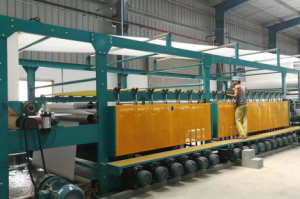
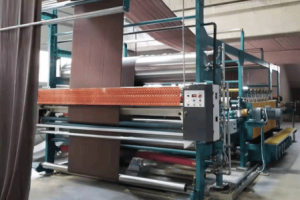
At the core of the solution is the SMA382C Series Sueding Machine, a flagship product in Sutex’s sueding machine product line. Key features of this model include horizontal design for optimized operator access, automatic cleaning system for reduced maintenance downtime, intelligent tension control for consistent fabric processing, and frequency conversion drive for precise speed regulation.
| Roller width | 2000-3600mm |
| Type | horizontal, with 18 rollers(optional) |
| Mechanical speed | 5-80m/min. |
| Drive type | AC variable frequency |
| Compressed air | 0.3-0.6Mpa |
| Installed power | 220kW(not including fans) |
After Sale Service and Support
Adopting modular space optimization layout design effectively reduced the original equipment footprint, with double-layer cable trays and integrated control systems enabling multiple machines to share one central dust removal system. Meanwhile, three regional service centers covering Vietnam, Indonesia, and Bangladesh were established, achieving a high proportion of localized parts warehousing to ensure rapid delivery of critical spare parts to the site.
Energy-Saving Technology and R&D
Multiple energy-saving technologies were integrated: variable frequency speed control motors (showing significant energy-saving effects compared to traditional equipment), waste heat recovery systems effectively reducing energy consumption in the drying process, and intelligent sleep mode greatly lowering standby power consumption. An industrial Internet of Things platform was also deployed to achieve remote diagnosis of multiple machines in Southeast Asia with high accuracy in predictive maintenance. When equipment at the cooperative factory malfunctions, regional engineers can quickly receive maintenance solutions.
Implementation Results
SutexMach efficiently completed equipment delivery, installation, and commissioning, meeting the production schedule requirements for autumn European and American orders. Within a specific period, the last Sutex sueding machine was commissioned and produced qualified fabrics, and the person in charge of the cooperative enterprise awarded the “Partner” honorary title to the Sutex team. The implementation achieved significant results: in terms of product quality, the fabric defect rate was greatly reduced; production efficiency was improved, with increased sueding processing volume per unit time; energy consumption decreased significantly; and overall operating costs were effectively reduced.
Client Feedback
The production director of the cooperative enterprise stated: “The overall efficiency of Sutex equipment has met the expected production indicators, with the fabric defect rate significantly reduced to an advanced industry level, and all key performance parameters meeting the contractually agreed standards.”
The enterprise’s person in charge commented: “Choosing Sutex was one of our important decisions. They provided reliable quality equipment along with applicable production concepts and thoughtful after-sales service. Sutex has become our important partner.” For more details on company background or to contact Sutex, please visit the official website.
Conclusion
This cooperation holds strategic significance for both parties: for the cooperative enterprise, the equipment upgrade achieved dual improvements in product quality and production efficiency, consolidating its leading position in the Vietnamese textile market; for Sutex, it successfully validated the feasibility of the “technical customization + localized service” industrial solution in the Southeast Asian market, accumulating valuable experience for subsequent expansion into Indonesia, Thailand and other markets. This case also provides new insights for textile equipment upgrading in Southeast Asia—while ensuring technological advancement, full consideration must be given to local climate characteristics, raw material properties, and service response speed, promoting the industry’s transformation from “equipment import” to “technical cooperation.”