


 English
  Hungarian
  Indonesian
  Bulgarian
  Turkish
  Polish
  Russian
  Spanish
  Portuguese
  Korean
  French


Today, warp knitting is one of the most significant components of the fabric manufacturing industry. As global brands have sought to produce faster, more stable fabrics and have increased the customization of materials, the warps have emerged as a popular solution to problems in apparel, home textiles, automotive textiles, medical fabrics, industrial reinforcements, and technical applications.
This article discusses the functioning of warp knitting machines, what they’re used for, why manufacturers choose them, and how they compare to other forms of knitting.
What Is a Warp Knitting Machine?
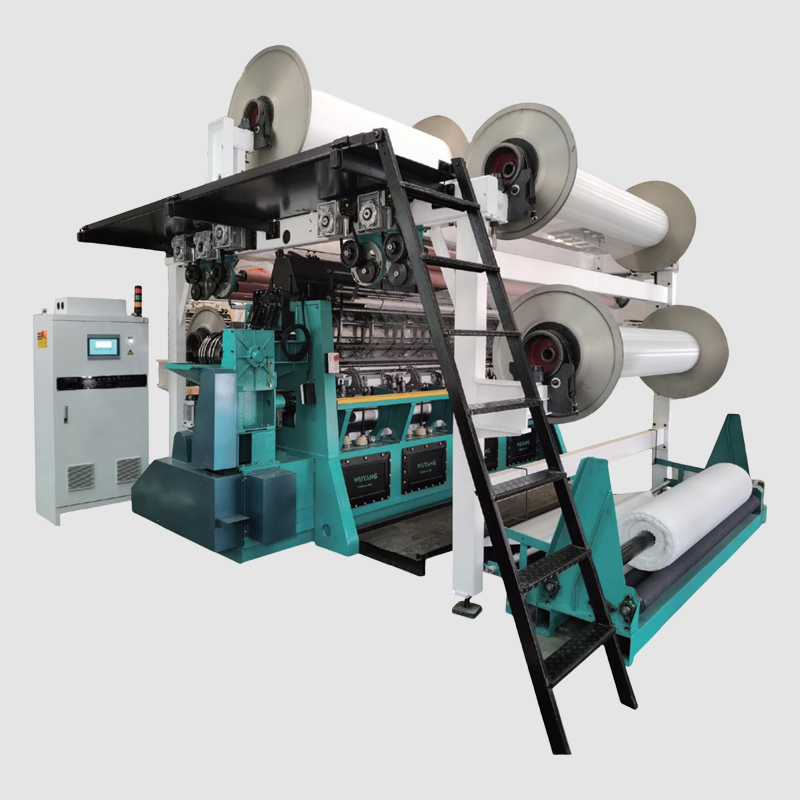
A warp knitting machine is a specialized machine that creates fabric by interlacing loops formed from yarns that are running in a single direction (the warp direction). Warp knitting is different from weft knitting; the latter involves a single yarn that travels in a horizontal direction, while the former involves multiple yarns that are fed from different points on the fabric or material’s surface.
Main Attributes
Each loop is composed of its own bale, which provides a superior fabric consistency.
Fabrics are fabricated at high speed, typically exceeding 1,500-3,000 RPM based on the model.
Machines employ guide rails to regulate the movement of yarn and produce different structures (e.g., tricots, raschels, mesh, spacer fabric).
The Significance of the Current Marketplace
Warp knitting machines facilitate the creation of high-performance textiles that are resistant to distortion, have a stable dimension, are lightweight, and can be customized. As functional textiles take hold in industries, the practice of warp knitting is still popular.
How Does a Warp Knitting Machine Work?
Understanding the process helps explain why manufacturers are increasingly reliant on warps.
- The Basics of the Working Principle
Warp Beams or Yarn Packets nourish Yarns.
Hundreds or thousands of strands of yarn are collected in succession.
Guide Bars Help Yarns Move in a Direct Line
Each guide bar has a flap that swings and a heel that shogs, which creates circles around the needles in a pattern of knitting.
Loops for Needles
Many modern machines utilize latch-style needles, but tricot machines may utilize bearded spring needles as well.
Sinkers Preserve the fabric
Sinkers have the ability to form loops and take down fabric.
The fabric is pulled down and rewound.
- Machines Types
Tricot Warp Knitting Machines
Utilized in lingerie, sportswear, automobile interior design, and microfibers.
Raschel’s Warp Knitting Machines
Utilized in laces, nets, mesh, and technical textiles.
Two-needle-bar ( Spacer ) Machines
Creating 3D printed fabrics for shoes, mattresses, and sports equipment.
Each machine type supports different patterns of fabric, which causes the process of weaving to be one of the most popular textile technologies.

What Is the Use of a Warp Knitting Machine? (Core Section)
The primary applications of warp knitting machines are categorized into several large industrial classes. This section combines the content of rankings with additional technical analysis that is expansive in scope.
Fashion and Apparel Textiles
Warp fabric is most preferred for apparel today because of its four benefits:
Stability in terms of dimensions
Warmth of the hand
Breathability and moisture management
The ability to snag
High stretchiness (perfect for use with spandex)
Common uses
Sportswear and activewear
Yoga, cycling, and apparel for compression
Swimwear (chlorine-resistant fabric that is warp-knitted)
Lingerie and other apparel that is intimate.
Lightweight fabric lining
Warp knitting machines facilitate precise control over the density, elasticity, and mechanical properties of apparel, which is essential for high-end brands.
Home Furnishings
Warp stitching is frequently employed for:
Mattress fabric
Cushions
Cushion components
Sheer the curtain
Soft and plush materials
Mosquito curbs
These products take advantage of the ability of warp knitting to produce large fabric areas with exceptional uniformity.
Automotive and Transportation fabrics
This is one of the most rapidly expanding fields of warp-crop machines.
Key applications
Seat cover fabric
Headliners
3D fabric spacer for seat air ventilation.
Liners of the trunk
Extra layers of support
Automotive fabric requirements include high resistance to wear, scratches, and heat, all of which can be achieved by constructing with warp.
Industrial and Technical Clothes
Warp knitting machines are commonly utilized in technical fabrics because of their structural stability.
Useful applications include:
Geotextiles
Replacement materials
Filtration materials
Overlapping films
Textiles that are protective ( resistant to cuts, flame-retardant)
Stretchy tapes and belts
Technical fibers that are used for warps have a heavyweight, composite nature and special functions like the addition of aramid, glass fiber, carbon fiber, or UHMWPE.
Medical and Healthcare tecidos
Warp-knitted fabric is of great importance to:
Stretchable bandages
Compression therapy supplies
Cartilage for the treatment of hernias.
chirurgical fabric
Orthopedic 3D materials for spacers
The advantages of controlled elasticity and low distortion make it ideal for medical-quality performance.
Footwear and Sports Items
With the increasing popularity of 3D footwear, the need for warp knitting has become apparent:
Upper clothing
Spacer’s cushioning materials
refuerzo mesh
Breathable linings
Brands utilize fabric that is warp-knit to achieve lightweight, ventilated, and long-lasting designs.
Advantages of Using a Warp Knitting Machine
Why do manufacturers favor the use of warp over other fabric production methods?
High Productivity
High-speed knitting machines have a wide range of applications and provide a superior amount of throughput.
Spatial Stability
Warp-knit fabric doesn’t easily ladder or diminish its size; this makes it ideal for long-term applications that require durability.
Fantastic control over the fabric
Guide bars facilitate the precise mechanical properties of structured, designed fabrics.
Many different types of materials can be combined
Works with polyester, nylon, cotton blends, two-component fibers, spandex, technical fibers, and more.
Adept for Technical Use
Spacer fabric, net structures, and textile reinforcements are unable to be produced with other fabricating technologies.
Warp Knitting Machine Highlights
- High Productivity
Capable of producing large quantities of fabric with a quick machine speed.
- Exactly crafted
guarantees exceptional concentricity, uniform loop formation, and consistent fabric composition.
- Varietal fabric options
Can create a variety of fabrics: mesh, lace, sportswear, functional textiles, and technical fabrics.
- Constant and Sustainable Performance
Robust design that dissipates little to no energy over time, with long-lasting performance.
- Complete automation
Features automated feed of yarn, pattern recognition, and error detection, which diminishes the need for labor and human intervention.
- Energy Efficiency
Energy-efficient motors and drives reduce the consumption of energy while still providing a high degree of performance.
- Adjustable patterns and fabrics
Capable of multi-faceted configurations, intricate patterns, and different combinations of yarns, it offers flexibility in design.
- Combination with New Production Methodologies
compatible with CNC and computer-operated systems, this enables the production of fully automated fabric warps.
Warp Knitting vs. Weft Knitting: What’s the Difference?
| Feature | Warp Knitting | Weft Knitting |
| Yarn Direction | Parallel (warp) | Horizontal (weft) |
| Production Speed | Very high | Moderate |
| Fabric Stability | Excellent | Lower |
| Stretch Behavior | Balanced stability | Higher stretch |
| Typical Products | Technical textiles, sportswear, automotive | Sweaters, T-shirts |
Warp knitting is the preferred option when stability, uniformity, and production efficiency are required.
Warp Knitting Machine vs. Warping Machine — Comparison Table
| Item | Warp Knitting Machine | Warping Machine |
| Function | Uses warp yarns to form loops and directly produces fabric | Arranges loose yarns and winds them onto a beam, preparing warp yarn for weaving/knitting |
| Process Stage | Fabric manufacturing (weaving/knitting stage) | Pre-weaving preparation stage |
| Output | Warp-knitted fabrics (mesh fabric, lace, functional textiles, etc.) | Warped beams (warp yarn arranged in order) |
| Key Components | Needle bed, guide bar, loop forming system, take-up system | Creel, tension control, yarn guiding system, warping beam |
| Does it make fabric? | ✔ Yes, it directly produces fabric | ✘ No, it only prepares yarn |
| Main Users | Fabric producers, knitting factories | The warping/preparation department of textile mills |
| Input Material | Warped yarn beams | Yarn packages on cones |
| Output Destination | Finished or semi-finished fabrics | Warp knitting machines, weaving machines, and other textile equipment |
Warp Knitting Machine Technology Trends in 2025
Modern improvements include:
High-speed electronic guidance system (EGS)
Online patterning systems
Energy-saving, motion-saving servos driven by electricity
Tension control with AI
Multiple-bar lace and mesh creation
Proficient use of advanced composite and industrial-grade fibers
These enhancements allow manufacturers to enter new markets that are characterized by smart textiles, biomedical textiles, and lightweight structural reinforcements.
Common Questions About Warp Knitting Machines
Q1: Is it expensive to have a warped fabric?
The initial cost is greater than the basic cost of weft knitting, but the long-term gain and efficiency of the process justify the expense.
Q2: Can the practice of warping knitting become the default method of weaving?
In some instances, this material is already utilized in sportswear, automotive fabric, and net structures.
Q3: What kinds of yarns have the greatest success?
Polyester and nylon are the most common polymers, but modern machines are capable of supporting spandex, polypropylene, cotton blends, jacquard effects, and technical fibers.
Conclusion
A loom that warps fabric is a crucial component of modern fabric manufacturing. Their capacity to produce at a high rate, have structural stability, have a variety of industrial applications, and are compatible with technical fibers makes them important for the future as well. From apparel and household lined to automotive, industrial, and medical applications, the practice of warp knitting has continued to increase its importance in the global textile industry.
If your company needs to produce high-quality, consistent, engineered fabric, the technology of warp knitting is still one of the most effective and versatile solutions available.