


 English
  Hungarian
  Indonesian
  Bulgarian
  Turkish
  Polish
  Russian
  Spanish
  Portuguese
  Korean
  French


Understanding the Role of the 3-roller Calender Machine in Modern Production
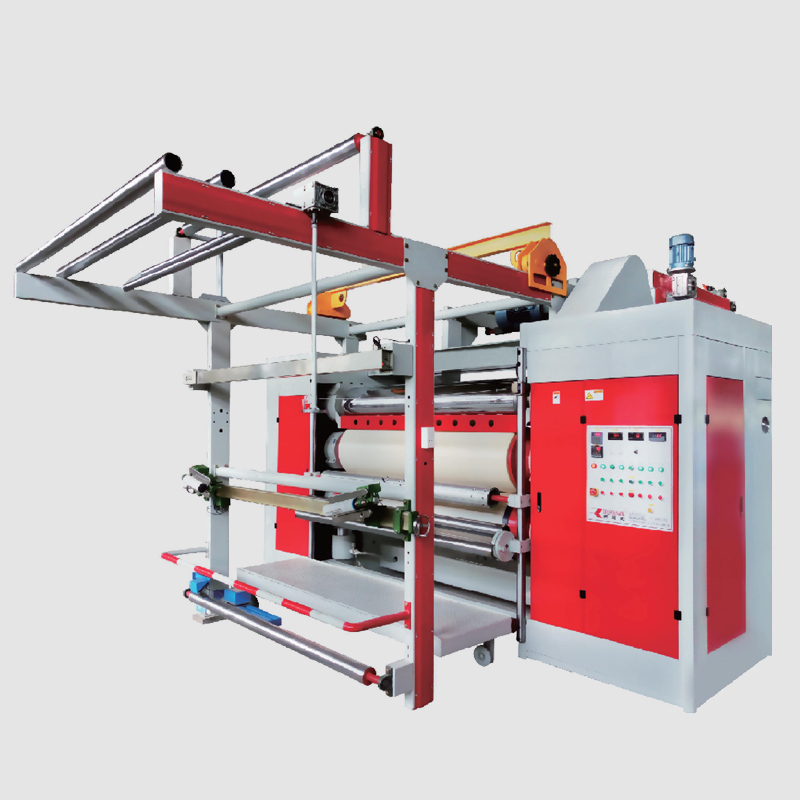
The 3-roller calendar machine is a key piece of equipment in manufacturing processes where thickness control, surface finishing, and densification are to be achieved under highly stable conditions. Controlled pressure and heat application through three precisely engineered rollers make this machine suitable for a wide range of sheet and web materials such as textiles, rubber sheets, plastic films, nonwovens, synthetic leather, specialty paper, or engineered industrial fabrics. High production, yet more stable, uniform high-quality requirements drive the demand for such machinery with large as well as special type producers’ establishments. Mechanical stability, accompanied by an attractive appearance, is imparted to goods processed on it, besides helping optimize processing workflow efficiencies across different industrial environments.
Evolution of Calendering Technology
Calendering machines have come a long way from purely mechanical to force distribution-assisted forms. Earlier models relied mainly on manual adjustments with little capability for precise control of the forces acting through the nip. Modern three roller calenders are equipped either with servo or hydraulic systems applying pressure, automatic adjustment of roll gaps, intelligent temperature controllers, and advanced digital interfaces providing real-time monitoring and feedback. This enables better smoothness, uniformity across different categories of materials, together with a tight tolerance achievable by manufacturers today.
Why the Three-roller Structure Matters
The three-roll system provides better force distribution than a two-roller system. This multi-stage pressure application allows the materials to develop gradually increasing density within them, without causing any surface damage or distortion, such as wrinkling or thickness variation across the sheet. The rollers can be independently heated and adjusted for specific finishing effects, making three roller calendar machines an industrial process versatile option.
How a 3-roller Calender Machine Operates
The operation of a 3-roller calender machine relies on the coordinated interaction of roller spacing, heated zones, pressure systems, and synchronized rotation. This combination ensures stable processing and consistent output quality across different material types.
Key Mechanical Functions
The machine has three rollers, which may be set up as an I-type, L-type, or Z-type configuration according to production needs. They operate in unison through state-of-the-art bearing systems and a precision-engineered frame designed for low vibration. Independent temperature control on each roller gives parallel heat transfer across all rollers, essential to attain perfect surface finishing.
Material Processing Workflow
Material is fed to the calender through a feeding assembly and passes the first nip between the top and middle rolls, where it undergoes an initial compression to create basic alignment and density. It then passes a second nip between the middle and bottom rolls, where enhanced pressure continues the process of calendering until smooth, uniformly thick sheets are formed before being carried out for cooling, winding, cutting, or laminating as may be required in production.
Notable Features of the 3-roller Calender Machine
A 3-roller calender machine includes various features that enhance precision and boost production efficiency. These features enable manufacturers to meet rigorous specifications for surface finish and material thickness.
Advanced Temperature and Pressure Control
There are multi-zone rollers on modern machines for an accurate profile of temperature settings across the width. Hydraulic or servo systems apply forces to ensure even compression along the roller width, thereby minimizing defects such as edge thinning or density inconsistency and reducing such problems in a final product. The system is digitized with human-machine interfaces where parameters can be set and monitored.
Structural Design and Roller Craftsmanship
The rollers are constructed from premium alloy steel or chilled cast iron with accurately engineered surface finishes ranging from mirror polish to matte texture, including embossed patterns. Hard and precision surface conditions make them last long as well as keep performing uniformly in highly demanding production environments.
Key Benefits of Using a 3-roller Calender Machine
The 3-roller calender machine offers numerous industrial advantages, making it a preferred choice for a variety of material-processing applications.
Excellent Surface Finishing and Thickness Control
Precise pressure and temperature coordination produce highly uniform sheet materials. The machine helps eliminate surface irregularities and delivers consistent gloss, smoothness, or textured effects depending on roller design.
Improved Output Efficiency and Material Stability
High-speed output with maintained quality is possible because this machine can run continuously. Automated adjustments reduce a lot of downtime, and the heavy-duty frame keeps it stable under high-load operations. It becomes an economical investment for manufacturers who wish to unify their machinery since it accommodates various material types.
Industrial Applications of the 3-roller Calender Machine
The 3-roller calender machine is used in a wide range of industries requiring precise material finishing and sheet-forming capabilities.
Textile and Nonwoven Applications
Surface smoothness, thickness stability, and gloss are improved by the calender machine in the textile sector. It is important to finish synthetic fabrics, industrial textiles, and nonwoven rolls. Controlled thermal bonding assists manufacturers in developing structural strength and durability of the material that can be used for construction purposes.
Rubber, Plastic, and Sheet Manufacturing
Calendering is responsible for the thickness uniformity and mechanical stability of rubber sheets, thermoplastic films, PVC floor coverings, conveyor belts, as well as automotive interior materials. A 3-roller calender machine helps in meeting strict performance requirements pertaining to elasticity, strength smoothness, etc., of these materials.
Variations in 3-roller Calender Machine Configurations
Manufacturers can select from multiple machine configurations based on processing needs and material properties.
Structural Layout: Vertical, Horizontal, or Inclined
Vertical structures offer excellent space efficiency, while horizontal models accommodate wider material formats. Inclined designs support gravity-assisted feeding for improved material tension control during processing.
Surface Finishing Options: Mirror-polished, Matte, or Embossed
Mirror rollers create glossy and smooth surfaces, matte rollers are suitable for functional textures, and embossed rollers can add aesthetic or functional patterns. These options allow manufacturers to customize the final product according to customer and market demands.
Important Factors to Consider When Choosing a 3-roller Calender Machine
Making a suitable choice requires evaluating material characteristics, production volume, and expected long-term operating conditions.
Material Requirements and Thermal Sensitivity
Rubber, PVC, PP, PU, paper, and technical textiles each have unique temperature and pressure requirements. Ensuring the chosen machine supports appropriate heating capacity and precision helps avoid deformation, discoloration, or mechanical weakness.
Production Scale and Automation Needs
Heavy-duty frame, automated roller gap system, high-power drive assemblies-these should be the priorities of large manufacturers. A small plant would prefer a flexible compact model with manual or semi-automatic adjustment, but strong structural stability and precise calibration between rollers.
Common Challenges and How the 3-roller Design Solves Them
Production lines often face issues related to material tension, heat distribution, or pressure imbalance. The 3-roller design helps mitigate many of these challenges.
Preventing Wrinkling and Thickness Deviation
The multi-stage pressure application reduces surface distortion and helps maintain material straightness. Balanced roller speeds and optimized temperature gradients minimize the risk of thickness variations, ensuring consistent product quality.
Managing Heat Sensitivity and Avoiding Material Damage
With independent temperature control for each roller, heat-sensitive materials can be processed safely without burning, deformation, or unwanted texture changes. Operators can fine-tune settings to match material characteristics precisely.
Maintenance Techniques for Long-term Performance
A 3-roller calender machine can operate for many years when paired with diligent maintenance. Proper care prevents unnecessary repairs and ensures consistent production output.
Daily and Scheduled Maintenance Tasks
Operators should inspect roller surfaces, bearings, electrical panels, and pressure systems regularly. Lubricating moving parts reduces friction and prolongs component life. Monitoring for unusual sounds or vibrations helps detect early signs of mechanical issues.
Operator Training and Preventive Measures
Proper training ensures operators understand setup procedures, emergency responses, and safety guidelines. Preventive maintenance schedules, calibration checks, and software updates ensure long-term machine accuracy and safety.
Global Market Trends Driving the Demand for 3-roller Calender Machines
As manufacturing industries expand, the need for high-quality sheet materials continues to grow. This trend contributes to increasing demand for reliable and efficient calendar machines.
Growth of High-performance Material Sectors
Advanced polymers, specialty composites, and engineered textiles require precision-calendered surfaces and consistent material thickness. The 3-roller calender machine supports these industries by offering controlled processing conditions and customizable finishing effects.
Industrial Automation and Smart Production Lines
More factories are implementing automated systems that reduce labor requirements and improve quality consistency. Modern 3-roller calender machines integrate smart sensors, digital monitoring, and data-driven optimization features that align with future industrial automation trends.
Future Outlook for 3-roller Calender Machine Technology
New technological advancements are shaping the future of calendering machines, making them more efficient, intelligent, and environmentally friendly.
Intelligent Control Systems and Predictive Monitoring
Future designs will incorporate AI-driven roller adjustment, predictive maintenance, and real-time quality monitoring. These intelligent features help reduce downtime, improve processing accuracy, and streamline manufacturing operations.
Energy-efficient Engineering and Sustainable Design
Energy conservation and environmentally friendly output will count more and more. Better insulation, higher heating efficiency, and green lubricants will be among the next features to enter the machines as standard components in future models. This helps the manufacturer conserve energy to achieve sustainability targets while keeping operational costs low.
Conclusion: The Continued Importance of the 3-roller Calender Machine
The 3-roller calender machine is a basic tool of industrial production worldwide. Precision, surface finish, or material properties that can be obtained better by any other means remain achievable through it[132]. Its flexibility may be applied to textiles or rubber and plastics, and films, and engineered fabrics to consistently repeat high-quality results. With automation, roller engineering energy efficiency develops with greater aspects in future manufacturing environments. This three roller calendar will have an even more significant role to assume; however, for an industry that seeks reliable performance-controlled finishing effects accompanied by high productivity, there exists no alternative investment than this machine.