


 English
  Hungarian
  Indonesian
  Bulgarian
  Turkish
  Polish
  Russian
  Spanish
  Portuguese
  Korean
  French


As manufacturing processes develop in the direction of more precision, accuracy, and repeatability-consistency, winding can be noticed as having quietly undergone its own revolution. In many industries, it is no longer simply considered an end operation but a critical process step with direct influence on product quality, downstream efficiency, and material performance. It is within such a context that the automatic low speed winder has evolved into a distinctly different solution from traditional systems.
These differences can be understood by manufacturers, engineers, and decision-makers who are evaluating winding solutions for sensitive materials, precision components, or quality-driven production environments. The meaningful comparison,n apart from the mechanical specification,s should include control logic and process stability in adaptability, hence automation of modern winding operations.
The Changing Role of Winding in Modern Manufacturing
From Auxiliary Process to Quality-Critical Operation
Historically, winding has been viewed as a secondary or auxiliary process. Traditional systems installed for the process were primarily designed and set up to deliver throughput speed and output volume, with very little emphasis on fine control. In most cases, until variations in tension, alignment, or layer formation did not result in losses significant enough compared to overall production targets achieved, the same were accepted by default.
Today’s manufacturing defines greater emphasis on consistency and repeatability. Small deviations of whatever is being wound – yarns, films, wires, tapes, or flexible substrates- can influence downstream processes or final product performance. This has made winding a quality-critical operation instead of just another simple finishing step.
Why Speed Is No Longer the Only Metric
Traditional winding systems are designed to operate efficiently at higher speeds. The system functions well when strong materials run on applications with low sensitivity, but becomes cumbersome if the material is weak, elastic, or sensitive and of high value.
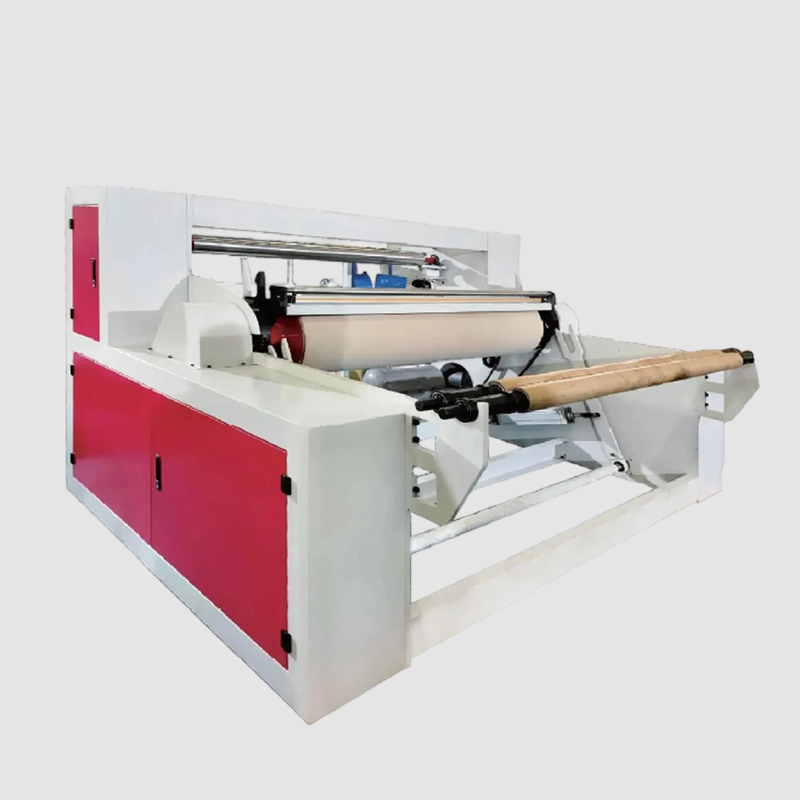
The automatic low speed winder is based on a totally different philosophy. Instead of trying to break speed records, it focuses on controlled movement, stable tension, and good laying. This is also in line with the general trend of the industry to optimize processes rather than simply increase output by running machines faster.
Core Differences in Control Philosophy
Manual and Semi-Automatic Control in Traditional Systems
Traditional winding systems are mainly dependent on manual adjustment or, at best, semi-automatic controls. The operator has to visually monitor tension, alignment, and quality of winding, making corrections based more on experience than on any actual real-time data.
A skilled operator may attain acceptable results, but this introduces elements of variability. Differences in skill levels between operators, fatigue setting in an operator, or even differences in interpretation can result in inconsistencies over long production runs.
Automated Precision Control in Low Speed Winders
An automatic low speed winder is defined by a precise program of controls. Tension is automatically controlled, speeds are synchronized, and lay-on patterns remain within perfectly controlled parameters throughout the complete cycle.
At low speeds, however, the system becomes more responsive to control and stable under regulation. Smooth, gradual changes can be effected without creating sudden shock peaks in tension or disarranging completely aligned settings, as usually happens at high speeds.
Tension Stability as a Key Differentiator
Limitations of Traditional Tension Control
Conventional winding systems rely heavily on a reactive approach toward tension control. Either mechanical brakes or some simple feedback system suddenly responds to changes in roll diameter or properties of the material being processed, with quite limited response times.
Small variations become amplified as the speed of winding increases and result in non-uniform layers, deformation either within the material itself or building up internal stresses that might not be visible immediately but show up as performance problems further down the production chain.
How Low Speed Automation Enhances Stability
Manual and automatic low speed winders operate within a much narrower and more controlled speed range, thereby allowing the tension control systems to function optimally. Quick response sensors and algorithms in the control system quickly detect any change in the behavior of the material being wound so as to keep constant tension through the winding cycle.
This stability is highly appreciated when dealing with materials sensitive to stretch, compression, or even surface damage. It results in a more uniform wound structure having lower internal stress.
Winding Accuracy and Layer Formation
Traditional Layering Challenges
At high speeds, in particular, traditional winding systems struggle with keeping the layers precisely placed. The machine starts building up slightly off alignment control on one side and manifests as telescoping or edge wandering and uneven build-up.
Most of these problems are detected through inspection after the fact or addressed by rework, increasing costs and reducing overall efficiency.
Precision Layer Control in Automatic Low Speed Winders
Another defining difference of an automatic low speed winder is its ability to maintain accurate layer formation. At lower operating speeds, the synchronization between material feed, winding motion, and traverse mechanism can be precisely controlled.
This precision results in clean edges with consistent winding density and predictable roll geometry. Where downstream processing depends on uniform rolls, this difference becomes critical.
Adaptability to Sensitive and Advanced Materials
Material Diversity in Modern Production
Today, manufacturers deal with a wider array of materials than at any time in the past. Advanced polymers, composite fibers, coated films, and functional textiles each place specific demands on winding systems.
The traditional winders designed more for generic materials may not be so flexible as to accommodate such a wide variation effectively. Adjustments can prove to be time-consuming or are limited within certain scopes.
Low Speed Winders as Material-Adaptive Systems
Automatic low speed winders are inherently more adaptable. Their controls can be set to respond to different material behaviors, thicknesses, and surface characteristics at low speeds without imposing high mechanical stresses, which would make it difficult or impossible for sensitive or high-value materials to be processed without loss of quality. This type of environment is found in modern manufacturing environments that promote innovation through experimentation with new materials.
Operational Consistency and Repeatability
Variability in Traditional Winding Operations
Traditional winding systems deliver results that vary even when the system is well-maintained. A change occurs in a batch of materials supplied, environmental conditions, or handling by an operator creates slight inconsistencies.
In high-precision manufacturing, this level of variability destroys all efforts at quality assurance through any form of process validation.
Standardization Through Automation
An auto low speed winder facilitates parameter-based operations instead of depending on any operator’s skill. Once parameters are set, the same conditions can be maintained for several production runs. Such repeatability is very useful to manufacturers who supply regulated industries or customers with strict quality requirements because it helps in consistent results, which ease documentation, auditing, and quality control procedures.
Efficiency Reconsidered: Quality Versus Speed
Rethinking Productivity Metrics
At first glance, low speed operation may appear less efficient than high speed winding. However, productivity should be evaluated in terms of usable output rather than raw throughput.
Traditional systems may produce higher volumes quickly, but quality issues, rework, or scrap can offset these gains.
Net Efficiency Benefits of Low Speed Winding
Net efficiency is delivered by waste reduction, reduced downtime, and improved first pass yield. A stable process also delivers a process with minimum continuous interventions.
When quality consistency is considered as a part of total productivity, automatic low speed winders can have huge practical benefits.
Integration into Modern Production Lines
Compatibility Challenges with Legacy Systems
Legacy winders are not digitally integrated into the modern production environment. There is an information gap because data is not reported or collected manually within the workflow of production processes.
Therefore, any holistic optimization approach towards improving and controlling processes based on facts becomes difficult to achieve.
Digital Readiness of Automatic Low Speed Winders
Automatic low speed winders have been developed with integrated systems. The controls of the automatic low speed winders can be interfaced with a general production management system for monitoring, data collection, and optimization of processes, hence digital-ready to support continuous improvement strategies in the manufacturing operations industry 4.0.
Maintenance and Long-Term Reliability
Wear and Stress in High Speed Systems
High speed operation places greater mechanical stress on components, increasing wear and maintenance requirements. Over time, this can lead to higher downtime and reduced system reliability.
High speeds also mean more frequent servicing if acceptable levels of performance are to be maintained.
Longevity Through Controlled Operation
By operating at lower speeds, automatic low speed winders experience reduced mechanical strain. Components are subjected to smoother motion profiles and lower peak loads, contributing to longer service life.
This reliability supports stable production planning and reduces unexpected interruptions.
Strategic Implications for Equipment Selection
Aligning Equipment Choice with Production Goals
The choice in investment between classic winders and automatic low speed winders is not a purely technical one. It relates to aspects of quality, flexibility, and long-term competitiveness.
Manufacturers who are oriented toward precision, advanced materials, or premium products increasingly opt for controlled winding solutions instead of a maximum speed solution.
Supporting Scalable and Future-Oriented Manufacturing
Winding systems must adapt to resultant automatic low speed winders that offer a base of scalable future manufacturing capable and tolerant of various materials and tighter tolerances, including digital integration.
It makes the manufacturer more flexible toward the changing market requirements.
The Broader Industry Shift Toward Precision Automation
Why Low Speed Does Not Mean Low Technology
The term “low speed” is, in fact, a misnomer. In the context of modern winding systems, it reflects an aspect of their intended design rather than any limitation.
Automatic low speed winders incorporate advanced sensors, control algorithms, and automation technologies at levels that may in fact exceed those found within more traditional high speed systems.
A Reflection of Manufacturing Maturity
Increasing use of auto slow speed winders reflects a mature thinking toward manufacturing. Instead of running at high speeds, low speed automatic machines help in controlling the process and maintain quality that automatically results in sustainable efficiency.
This is exactly the trend seen across other precision manufacturing sectors.
Conclusion: Understanding the Real Difference
The difference between an automatic low speed winder and a conventional or traditional system is not merely in the aspect of operating speed. It contains within its depth control philosophy and process stability, flexibility, and responsiveness towards new-age manufacturing agendas.
Automatic low speed winders redefine traditional concepts of precision, consistency, and repeatability through emphasized automation to meet the new parameters of a quality-driven production environment. The difference between automatic low speed winders and semi or manual types must be clearly understood by manufacturers who are on a sensitive material application, wherein advanced features are sought in winding machines, so that an appropriate decision can be made regarding equipment selection.