


 English
  Hungarian
  Indonesian
  Bulgarian
  Turkish
  Polish
  Russian
  Spanish
  Portuguese
  Korean
  French


In the discipline of civil engineering, road construction, landfill operations, and foundation development require a machine for soil stabilization and long-lasting structural integrity. This is known as a compacting machine. It reduces by force the volume of earth, asphalt, gravel, or waste material being deposited. The greater the density attained through compaction, the more resistant the material becomes to settlement and infiltration of water as well as deformation under load.
It discusses the process of compaction machines, their working principles, types, applications, and growing global market demand. It also describes step-by-step how the compaction process takes place.

What is a Compacting Machine?
A compacting machine is defined as any construction or industrial equipment that uses pressure, vibration, or static weight to decrease the air voids in soil, aggregate, or asphalt layers. It results in a denser surface and more stable support for heavy loads.
Compacting machines find great application in:
- Road Construction (Asphalt Paving, Base Layers)
- Building Foundations (Stabilizing Soil Before Pouring Concrete)
- Landfills Waste Volume Reduction(Space Utilization Improvement)
- City upkeep tasks (like fixing sidewalks, digging trenches, and making repairs)
What is the Process of a Compacting Machine?
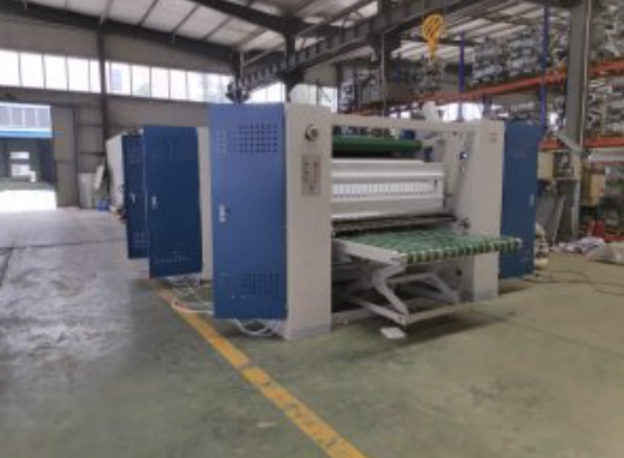
Constant tension fabrics feed—overfeeding and expanding—steaming and moistening—preshrinking—cooling –precise folding

The Role of Compacting Machines
The main purposes of compaction are:
- Improving Soil Bearing Capacity – Prevents structural settlement under load.
- Enhancing Durability – Reduces water infiltration and increases lifespan of roads and foundations.
- Volume Reduction – Especially important in landfills, where compactors extend site capacity.
- Uniform Surface Preparation – Ensures smooth and stable layers for further construction.
Main Types of Compacting Machines
There are several categories of compactors, each designed for specific materials and site conditions:
- Vibratory Rollers- fitted using huge metallic drums that can vibrate to compact either soil or asphalt.
Mostly found on highways, airports, and big initiatives.
- Plate Compactors-flat heavy plates vibrate to granular soils and asphalt patches.
Sidewalks, parking lots, and trenches are the best areas for their application.
- Walk-behind Compactors- small machines that can easily be used in confined spaces.
Most of the time they are utilized in municipal repairs or landscaping.
- Static Compactors-these depend only on the weight of the machine and do not involve any vibration.
Used on sensitive sites where it may cause damage to nearby structures if vibration is applied.
Comparison Table: Types of Compacting Machines
| Type | Suitable Materials | Typical Applications | Advantages | Limitations |
| Vibratory Roller | Asphalt, gravel, mixed soil | Highways, airports, large roads | Deep compaction, high productivity | Heavy, not for tight areas |
| Plate Compactor | Granular soil, asphalt patches | Sidewalks, parking lots, trenches | Lightweight, easy to operate | Shallow compaction depth |
| Walk-Behind Compactor | Soil, small asphalt patches | Municipal repairs, landscaping | Portable, ideal for small areas | Limited coverage area |
| Static Compactor | Clay, cohesive soil | Foundations, sensitive areas | No vibration impact on structures | Lower efficiency |
Suitable Construction Scenarios
Compacting machines find application in a range of construction environments, such as;
- Road Construction – Base course and asphalt compaction.
- Foundation engineering – Stabilizing soil for building structures.
- Earthworks and embankments – Dams, levees, and airport runways.
- Landfills – Compressing waste to extend the fill’s capacity.
- Municipal projects – Sidewalk and trench compaction in the city.
Compaction Depth and Intensity
- Large Vibratory Rollers: Can achieve depths of 30–60 cm in granular soils.
- Plate Compactors: Typically compact up to 15–30 cm.
- Static Rollers: Best for clay-rich soils with depths around 20–40 cm.
The compaction intensity depends on machine weight, vibration frequency, soil type, and layer thickness.
Are Small Compactors Suitable for Tight Spaces?
Yes. Small walk-behind compactors and plate compactors are specifically designed for narrow urban spaces, trenches, and small-scale repair works. They are lightweight, portable, and easier to maneuver compared to large vibratory rollers.
Power Sources of Compacting Machines
Compactors are powered by different energy sources:
- Diesel Engines – Most common for heavy-duty rollers.
- Gasoline Engines – Found in small plate and walk-behind compactors.
- Electric Motors – Eco-friendly option for indoor or low-emission zones.
- Hydraulic Systems – Provide stable power transmission and control.
Efficiency: How Much Area Can Be Compacted Per Hour?
- Vibratory Rollers: 3,000–5,000 m² per hour
- Walk-Behind Compactors: 500–1,500 m² per hour
- Plate Compactors: 200–500 m² per hour
Efficiency depends on soil type, operator skill, and compaction passes required.
Impact on Nearby Structures and Noise Concerns
- Vibration Risks – Vibratory rollers may affect underground utilities or nearby buildings.
- Low-Noise Options – Electric and static compactors reduce vibration and noise.
- Urban Construction – Noise-reduced and emission-free models are increasingly demanded.
Transport and Storage Convenience
Large Rollers require trailers for transport.
Small Walk-Behind Units are portable and sometimes feature foldable handles for easy storage.
Compact models are suitable for contractors working on scattered urban projects.
Maintenance and Common Wear Parts
Maintenance is relatively straightforward. Regular checks include:
- Lubrication of bearings and joints
- Engine oil and filters replacement
- Inspection of vibration mechanisms
- Cleaning the roller drum or plate
Common wear parts: vibration exciter, belts, bearings, shock absorbers, and hydraulic seals.
How to Choose the Right Compactor?
- Size of Work – Big roads want vibratory rollers; small fixes like plate-plate-plate-plate compactors.
- Type of Soil – Stick soils need static rollers; loose soils want the beat type.
- Money Plan – Small compactors are cheaper for town or small worker use.
- Place Needs – Electric ones are best for quiet or smoke-free areas.
Global Market Demand
- High-Demand Regions: Asia-Pacific (China, India), North America, Europe.
- Growing Sectors: Infrastructure development, urbanization, landfill management.
- Emerging Trend: Adoption of smart monitoring systems, low-emission engines, and hybrid compactors.
Market Capacity and Growth Trends
The global compactor market is expected to see steady growth driven by:
- Expanding road and highway networks
- Increased landfill management needs
- Demand for urban infrastructure upgrades
- Rising adoption of compact, versatile machines for city projects
Popular Models in the Market
Large Vibratory Rollers remain the top choice for infrastructure mega projects.
Small Walk-Behind Compactors are highly popular among contractors handling urban road maintenance and municipal repairs.
Conclusion
The compacting machine process happens by the application of force using static weight, vibration, or impact so that density and stability can be gained in soil, asphalt, or waste material. These machines have many types ranging from large vibratory rollers down to portable plate compactors that serve different applications in road construction as well as foundations and landfills.
Great growth potential is seen in the developing regions where infrastructure and construction activities are on the rise. A contractor will choose a machine depending upon the size of his project, type of soil, efficiency required, and budget. From great highways to minor municipal repair works, compaction is an essential tool that offers strength together with safety and efficiency in modern construction.