


 English
  Hungarian
  Indonesian
  Bulgarian
  Turkish
  Polish
  Russian
  Spanish
  Portuguese
  Korean
  French


Dryer machines and stenter machines are both commonly used mechanical equipment in the textile industry. The main function of the dryer is to remove moisture from the fabric and improve drying efficiency, while the main function of the stenter machine is to stabilize the fabric fiber structure. The two are both related and different. This article will analyze the dryer and stenter machine in detail from the aspects of process, performance, application, etc. to help everyone fully understand the difference between the two so as to make a reasonable choice!
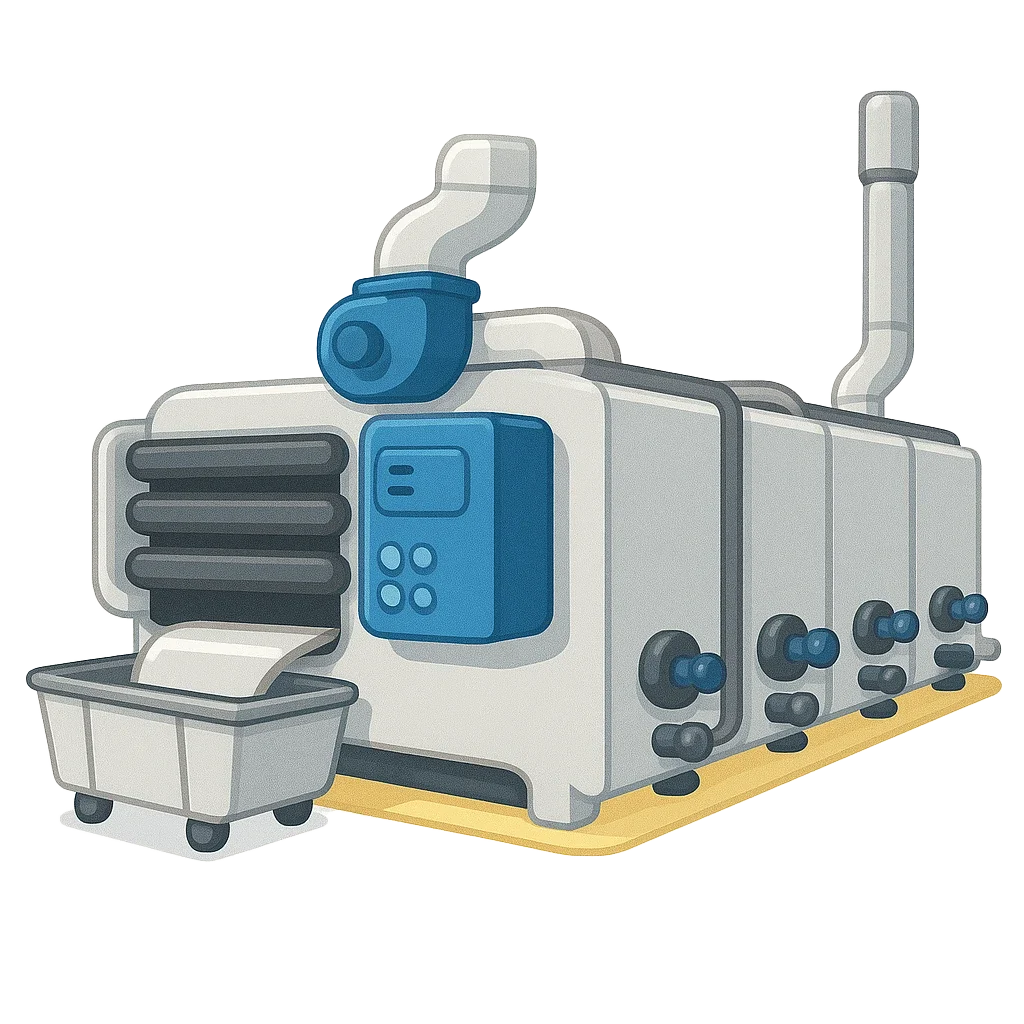
What is a dryer machine?
- Definition and Function
Dryer machines are essential mechanical equipment in textile finishing. Their core function is to remove moisture from fabrics, maintain a stable fiber structure, and improve production efficiency. Different types of dryers can handle fabrics of varying moisture levels, thicknesses, and materials, providing a stable foundation for processes such as printing, dyeing, coating, and embossing.
Key functions include:
- Rapid Dehumidification: Wet fabrics can quickly reach their ideal moisture content, typically within 5%, after passing through a dryer.
- Enhanced Fiber Stability: Effectively prevents shrinkage, warping, and distortion that can occur during the natural drying process of wet fabrics.
- Improved Efficiency of Subsequent Processes: Dried fabrics are easier to print, dye, shape, and emboss, improving production consistency and quality.
- Extended Product Life: The drying process prevents mildew and microbial growth, extending the shelf life of textiles.
2. Dryer Types and Features
- Hot Air Circulation Dryer
Advantages: Uniform drying, wide applicability
Disadvantages: High energy consumption, requires optimized air duct design
- Steam Heated Dryer
Advantages: Rapid moisture removal in a high-temperature, high-humidity environment, suitable for heavy fabrics
Disadvantages: Complex steam supply system, high initial investment
- Electrically Heated Dryer
Advantages: Precise temperature control, fast startup
Disadvantages: High operating costs, suitable for small and medium-volume enterprises
- Tunnel Dryer
Advantages: Continuous production, significantly improved efficiency
Features: Fabric is transported through a tunnel, and hot air is evenly distributed
What is a stenter machine?
- Definition and Function
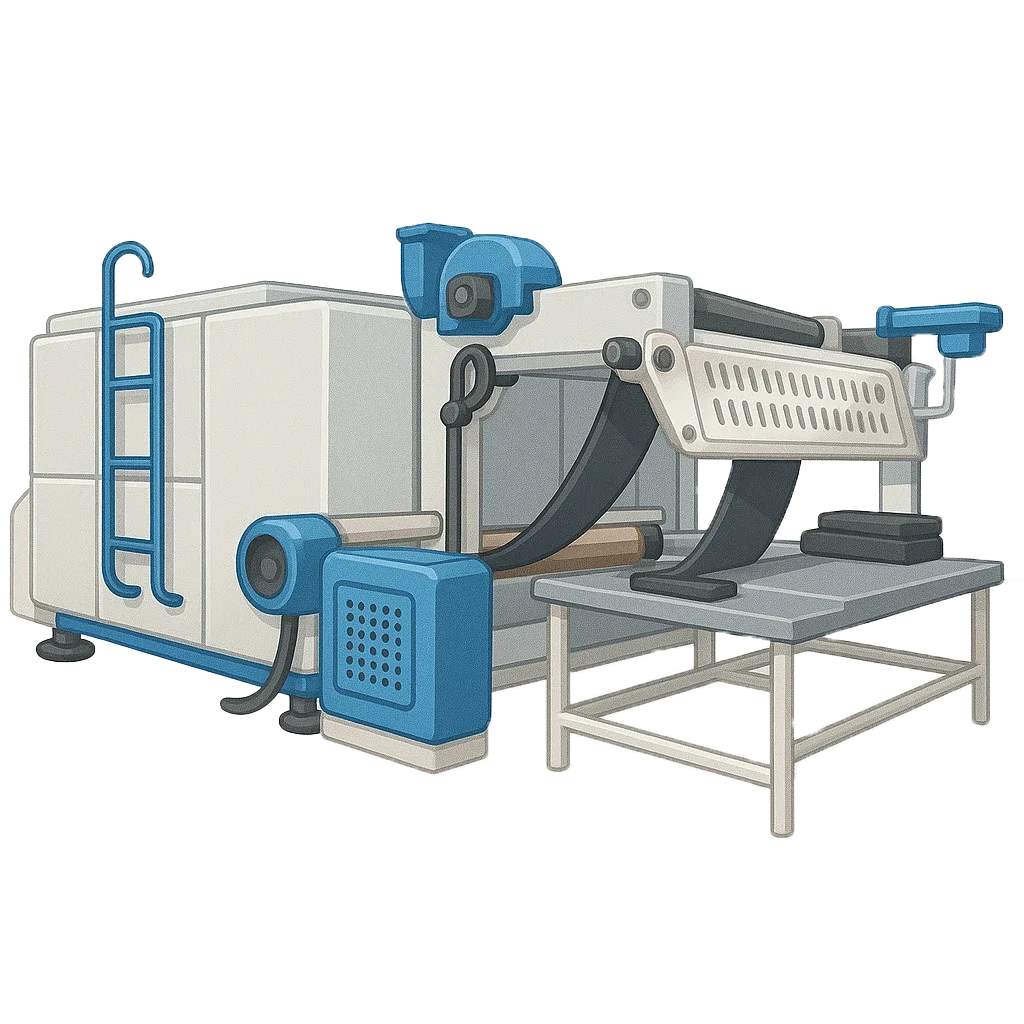
A stenter machine is a textile finishing machine whose core function is to fix the fabric width and achieve fiber definition through tension control, heating, and cooling. It is particularly suitable for chemical fibers, blended fabrics, and high-end fabrics, ensuring fabric width, flatness, and dimensional stability. Main functions include:
Width Fixation: Prevents fabric shrinkage and edge distortion; Fiber Setting: High temperature or steam treatment stabilizes the fiber structure; Handle Improvement: Heat setting and tension stretching improve fabric softness and drape; Appearance Enhancement: Improves smoothness and enhances dyeing and printing results.
- Typical Types:
- Drum Stenter: Suitable for wide-width synthetic fabrics, offering uniform temperature and adjustable tension;
- Flat-Plate Stenter: Suitable for thin, delicate fabrics, ensuring smoothness;
- Combined Stenter: Integrates drying, setting, and finishing, saving steps.
Dryer and Stenter Machine Production Process
Dryer machine Production Process
- Wet Fabric Pretreatment: After washing or dyeing, the fabric must be evenly unrolled or wound to ensure uniform drying.
- Heating Drying: Moisture is evaporated using hot air, steam, or electric heating.
- Temperature and Humidity Control: PID control or an automatic feedback system is used to adjust temperature, air speed, and humidity.
- Collection or Discharge: The dried fabric is transported to the next process via a winding system.
Typical Parameters:
| Parameter | Scope |
| Temperature | 50~180℃ |
| Wind speed | 0.5~3 m/s |
| Drying time | 2~20 minutes (depending on the thickness of the fabric) |
| Width | 0.5~3m |
Stenter Machine Production Process
- Fabric Tension Control: A traction device ensures uniform fabric stretch and a stable width.
- Heating and Setting: Steam or hot air is applied to the fabric to heat-set the fibers.
- Cooling and Setting: Chilled rollers or air cooling ensure the fiber shape is fixed.
- Width Detection and Adjustment: Ensures the fabric meets standard width and flatness.
Key Parameters:
| Parameter | Scope |
| Width accuracy | ±2mm |
| Setting temperature | 120~220℃ |
| Tension control | 0~100N |
| Processing speed | 3~15 m/min |
Applicable Fabric Types
Dryer Machine Applicable Fabrics:
- Cotton, linen, silk, wool, and blended fabrics;
- Knitted, woven, and non-woven fabrics.
- Drying temperature and air speed can be adjusted according to fabric thickness, moisture content, and fiber type.
Stenter Machine Applicable Fabrics:
- Chemical Fibers: Polyester, nylon, acrylic;
- Blended Fabrics: Polyester-cotton, polyester-linen;
- High-end Fabrics: Chiffon, satin, and silk;
- Specialty Fabrics: Embossed, coated, and stretch fabrics.
Performance
Dryer Machine Performance
- Drying Temperature: 50-180°C
- Drying Speed: 1-15 m/min
- Moisture Control Accuracy: ±2%
- Width Adjustment: 0.5-3 meters
- Energy Consumption: Hot air circulation saves approximately 15-20% energy; steam heating is highly efficient.
Stenter Machine Performance
- Width Accuracy: ±2 mm
- Stenting Temperature: 120-220°C
- Tension Adjustment Range: 0-100 N
- Processing Speed: 3-15 m/min
- Energy Consumption: Steam or hot air driven, optionally equipped with a waste heat recovery system
Energy Consumption and Efficiency
Dryer Machine
- Hot air circulation: Moderate energy consumption, but duct optimization can save 15-20%
- Steam heating: Suitable for heavy fabrics, highly efficient under high moisture loads
- Electric heating: Precise temperature control, but high power consumption
Stenter Machine
- Steam setting: Main energy source is steam, energy consumption is related to fabric thickness and temperature
- Hot air setting: Highly efficient for light and thin fabrics
- Energy-saving measures: Waste heat recovery, automatic temperature control, variable frequency drive
Automation Level
Dryer Machine Automation
- Automatic temperature and humidity control
- Speed and roll tension control
- Remote monitoring supported for some equipment
Stenter Machine Automation
- Automatic width adjustment system
- Automatic tension feedback control
- Automated temperature and speed matching for intelligent production
Main Application Industries
- Textile printing and dyeing plants: Drying and setting various fabrics
- Knitting and weaving plants: Improving fabric smoothness
- High-end fabric manufacturers: Chiffon, satin, and functional fabrics
- Nonwoven and industrial fabrics: Even drying and neat setting
- Apparel manufacturers: Pre-production treatment and full-length fabric setting
Main Functions
Dryer Machine Functions:
- Uniform moisture removal
- Preventing fabric shrinkage and deformation
- Improving production efficiency
Stenter Machine Functions:
- Fixing fabric width and fiber structure
- Improving fabric smoothness
- Improving Improved feel and appearance
- Provides a stable substrate for subsequent processes such as printing, dyeing, and coating.
Maintenance Methods
Dryer Machine Maintenance
- Regularly clean the hot air ducts and filters
- Inspect the heating elements and temperature control system
- Lubricate the transmission components
- Regularly calibrate the humidity and temperature control instruments
Stenter Machine Maintenance
- Inspect the tension sensor and drive mechanism
- Clean the heating and cooling rollers
- Lubricate the mechanical transmission components
- Regularly check the width control accuracy and temperature uniformity
Service Life
- Dryer: 15-20 years with normal maintenance
- Stenter: 15-25 years with normal maintenance
- Lifespan is closely related to equipment quality, usage intensity, and maintenance frequency.
Difference and contrast
| Characteristic | Dryer Machine | Stenter machine |
| Core Features | Remove moisture | Fixed width and shaped fibers |
| Heat source type | Hot air, steam, electric heating | Steam, hot air, heated rollers |
| degree of automation | Medium to high, remote monitoring possible | High, automatic width tension control |
| Applicable fabrics | Various wet cloths | Chemical fiber and blended high-end fabrics |
| Impact on fabric shape | No change in width | Control width and improve flatness |
| Energy consumption | Hot air or steam | Mainly steam or hot air |
Selection Recommendations
- Based on Fabric Type: Natural fibers should choose a dryer, while chemical fibers or high-end fabrics should prefer a stenter setter.
- Production Scale: Large-capacity enterprises prioritize automated equipment.
- Energy Considerations: Focus on energy-saving design and waste heat recovery.
- Maintenance: Ease of maintenance and operation, extending equipment life.
- Investment Cost-to-Return Ratio: A comprehensive evaluation based on production volume and fabric characteristics.
Conclusion
Dryer Machines and Stenter Machines play different but complementary roles in the textile industry. Dryers primarily remove moisture from fabrics, improving production efficiency; stenter setters ensure the flatness and dimensional stability of high-end fabrics by shaping the fabric width and setting the fibers. Choosing and combining dryers and stenter setters based on your company’s fabric type, production volume, and process requirements can not only improve production efficiency, but also ensure stable product quality and be energy-efficient and environmentally friendly.