


 English
  Hungarian
  Indonesian
  Bulgarian
  Turkish
  Polish
  Russian
  Spanish
  Portuguese
  Korean
  French


A rubber roller is a rolling component with a rubber outer covering and a metal or composite inner shaft. It is widely used in industries such as printing, papermaking, textiles, packaging, steel, plastics processing, and the food and pharmaceutical industries. Its primary functions include transmission, pressing, guiding, coating, and supporting equipment during operation.
What are rubber rollers?
A rubber roller is a rolling component made by attaching a rubber layer (natural or synthetic) to a metal or composite core through coating, vulcanization, or bonding. Its core function is to convey materials, apply pressure, control speed, or perform surface treatments, leveraging the elastic and frictional properties of the rubber material.
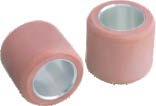
A rubber roller typically consists of the following components:
Core: Typically made of steel, aluminum, stainless steel, or a high-strength alloy, it ensures structural strength and precision.
Bonding layer: Located between the core and the rubber layer, it enhances adhesion.
Rubber covering: Directly contacts the material and determines the roller’s wear resistance, temperature resistance, and chemical resistance.
End caps/bearings: Serves to connect equipment, transmit power, and ensure rolling stability.
Compared to metal rollers, rubber rollers offer improved shock absorption, a higher coefficient of friction, and enhanced surface protection, making them superior in applications requiring anti-slip, cushioning, or precision surface treatment.
How to Clean Rubber Rollers?
During long-term operation, rubber rollers are exposed to contaminants such as ink, glue, dust, chemical solvents, and fiber debris. If not cleaned promptly, surface aging, hardening, cracking, or the accumulation of adhesives can affect production precision and product quality.
- General Cleaning Methods
Warm water wiping: Suitable for rollers used in the food and pharmaceutical industries. Avoid using toxic solvents.
Neutral detergent: Effectively removes ink and glue stains from rollers used in printing and textile applications.
Specialized rubber cleaner: Dissolves oil stains and slows rubber aging.
- Precautions
Avoid using strong acids, strong bases, or aromatic solvents (such as benzene and toluene) to prevent rubber swelling or hardening.
After cleaning, wipe dry with a dry cloth to prevent residual moisture from rusting metal parts.
In high-temperature environments, wait until the roller has cooled before cleaning to avoid surface damage caused by thermal expansion and contraction.
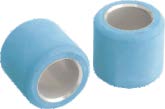
Rubber Roller Material Introduction
The performance of a rubber roller depends largely on the material of the rubber layer. Common rubber types include:
| Rubber Material | Main Features | Common Applications |
| Natural Rubber (NR) | High elasticity, good abrasion resistance, low temperature flexibility | Printing, textile, paper industry |
| Nitrile Rubber (NBR) | Oil resistance, good wear resistance | Printing ink rollers, coating rollers |
| EPDM | Excellent weather and ozone resistance | Outdoor machinery, chemical industry |
| Silicone Rubber (VMQ) | High temperature resistance, good release properties | Food processing, medical equipment |
| Polyurethane (PU) | High hardness, superior wear resistance | High-speed machinery, steel industry |
Different materials vary significantly in hardness, wear resistance, chemical resistance, and temperature range, so material selection should be considered comprehensively based on process requirements.
Overview of Rubber Roller Technical Parameters
| Parameter | Typical Range | Description |
| Hardness (Shore A) | 20 – 100 | Determines elasticity and pressure capability |
| Diameter | 10 mm – 1200 mm | Affects contact area and torque |
| Length | 50 mm – 6000 mm | Depends on machine size and application |
| Temperature Resistance | -40°C to +250°C | Varies with rubber type |
| Surface Roughness (Ra) | 0.2 – 6.3 μm | Impacts material grip and finish quality |
| Load Capacity | Up to 5000 kg | Based on core material and structure |
Rubber Roller Applications and Common Fields
Rubber rollers are used in a wide range of industries, from high-speed printing presses to precision medical equipment:
Printing and Packaging Industry
Used for paper conveying, coating, inking, laminating, and other processes.
Papermaking and Fiber Processing
Pulp press rolls, drying rolls, and guide rolls.
Metal and Plastic Processing
Calendaring, laminating, cooling, and stretching.
Food and Pharmaceutical Industry
Sanitary conveyor rollers and anti-stick coating rollers.
Woodworking and Glass Industry
Conveying and anti-scratch treatment.
Rubber Roller Usage and Maintenance Guide
Proper installation: Maintain roller bearing concentricity to avoid eccentric wear.
Regularly check hardness: Rubber may harden or soften with long-term use.
Avoid overloading: Prevent roller core bending or rubber peeling.
Regularly refurbish the rubber lagging: Extend service life and reduce replacement costs.
Rubber Roller FAQs
1.How do I select the material for my process?
Select the appropriate rubber material based on media type, temperature, speed, pressure, and chemical corrosion.
2.How hard is the rubber?
Shore A of 30-50 is suitable for buffered conveying, 60-80 for high-speed printing, and 90 and above for metal processing.
My line speed is very high.
3.How can I avoid chattering and skipping?
Select rollers with high dynamic balancing accuracy and maintain surface uniformity.
4.If the roller surface is worn or contaminated, is it necessary to replace it?
Not necessarily. Re-coating or refurbishing can extend its life.
5.Can it be used in food and pharmaceutical applications?
Yes, but it must be made of FDA or EU food-grade certified materials.
6.What rollers should I choose for laminating/calendering?
Polyurethane or high-hardness NBR is recommended for better pressure and wear resistance.
Conclusion
Rubber rollers are essential components in industrial production. Their performance directly affects product quality, production efficiency, and equipment stability. With the increasing demand for high-end manufacturing and the trend towards green and sustainable development, rubber rollers will continue to be optimized in terms of high precision, long life, and environmentally friendly materials. When selecting a model, enterprises should comprehensively consider process requirements, cost control and maintenance convenience to achieve a win-win situation in equipment performance and economic benefits.