


 English
  Hungarian
  Indonesian
  Bulgarian
  Turkish
  Polish
  Russian
  Spanish
  Portuguese
  Korean
  French


Textile production does not just stop at the stage of weaving or knitting yarns into high-quality fabric; there are further steps to take. One of the most necessary steps in terms of enhancing fabrics is singeing, and this process is established by a singeing machine. Usually neglected by onlookers, singeing machines are very instrumental in providing fine, clean, and shiny fabrics for garment construction as well as upholstery and industrial applications.
A singeing machine is a textile fabric finishing apparatus. It works by burning off the sticking fibers and fuzz from the surfaces of either woven or knitted fabrics. These free fibers can create an uneven surface, pilling, poor dyeing, or printing results. By removing them, singeing ensures a smooth, cleaner, more refined fabric.
Singeing is usually one of the earliest steps in the finishing line after fabric is made and before processes like desizing, scouring, bleaching, or dyeing.
Why Is Singeing Needed?
The requirement for singeing arises from several quality objectives:
- Better fabric smoothness: Eliminating surface hairiness makes the fabric feel smoother to touch.
- Better dyeing and printing: Hairy fibers hinder dye penetration or pigment adhesion. Singeing ensures uniformity.
- Pilling resistance: The fibers that are left loose have greater pilling potential in wear and washing. Singeing reduces pilling by quite an amount.
- Brighter look: Singed fabrics appear much brighter and more elegant.
- Better finish: Subsequent operations, such as calendaring or mercerizing, work better on singed fabric.
In brief, singeing is a pretreatment process through which fabric aesthetics, performance, and process efficiency are amplified.

How Does a Singeing Machine Work?
Essentially, singeing means passing fabric over a flame or hot plate for just a little while, in order to burn off the loose fibers without harming the body of the cloth. Singeing machines can have flame burners, hot plates, or heated rollers—they vary.
Parts of a Singeing Machine:
- Feeding and guiding unit: Makes sure that the fabric is being fed in steadily and with tension.
- Burner or heating unit: Flame burners or heated cylinders used for singeing.
- Cooling zone: Cools the fabric immediately after singeing.
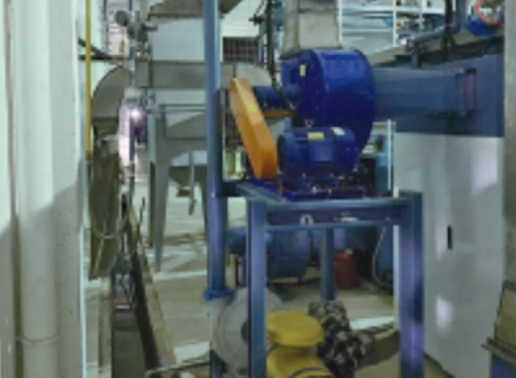
- Exhaust system: Removes smoke, burned particles, and fumes.
- Control system: Allows precise speed as well as flame intensity and temperature control.
- Take-up unit: Rolls or folds the processed fabric so that it can be further finished.
The fabric moves at a controlled speed and distance over or near the flame. As the fibers burn, waste is exhausted away. Quick cooling ensures there is no thermal damage.
Types of Singeing Machines
Singeing machines vary in heat source and fabric type:
1. Gas Flame Singeing Machine
- The most commonly used type for woven cotton and cotton blend fabrics.
- Uses open gas flames applied to both sides or one side of the fabric.
- Has exact flame control, many burners, and fast handling.
2. Plate Singeing Machine
- Uses hot copper or cast iron plates.
- Fabric slides over these hot surfaces to singe.
- Used in older mills or for special fabric types.
- Not as flexible as flame-based machines.
3. Cylinder Singeing Machine
- Uses hot rotating cylinders that just touch the fabric surface.
- Normal for lightweight and delicate fabrics.
- More even singeing at a slower pace than gas flame machines.
4. Infrared (IR) Singeing Machine
- Infrared radiation is used for burning fibers.
- Suitable for synthetic and heat-sensitive fabrics.
- Clean, contactless operation, and energy-efficient.
5. Laser Singeing Machine (New Tech)
- Precision lasers are used to remove fuzz.
- Selective programmable singeing is available.
- High capital cost, but getting more attention in technical textiles.
Applicable Fabrics
Singing is not for everyone. It finds application mostly in:
- Cotton and cotton blends: T-shirts, bedsheets, denim, shirting.
- Polyester, nylon (special singeing).
- Wool fabrics (rarely, due to the risk of damage).
- Blended yarns and fabrics (depending on the fiber composition).
Very textured and heavy fabrics may not be suitable for singeing because of the risk of scorching; delicate fabrics like silk are not suitable because of the risk of even burn.
Process Parameters That Affect Singeing Quality
The quality of singeing is dependent upon multiple parameters:
- Flame height and intensity should be maintained at a level that matches the type of fabric used to ensure correct singeing.
- Fabric tension needs to be controlled because if it is left loose, the fabric will flap and can get burned.
- The distance from the burner should be such that scorching does not take place, though a close distance gives a stronger effect.
- Moisture content — slightly moist fabrics can resist excessive burning.
Singeing machines are fully automatic with control systems, having optical sensors to adjust all parameters according to real-time feedback.
Advantages of Singeing Machines
The singeing operation adds so much value to textile processing:
1. Improved Quality of Fabric
- A smooth, clean surface
- Better texture and feel
- Less hairiness means higher-grade output
2. Enhanced Dyeing and Printing
- Uniform color penetration
- Reduced dye blotches or streaks
- Crisper print outlines
3. Reduced Pilling and Shedding
- Extends garment life
- Better customer satisfaction
- Fewer complaints about fuzz or pills
4. Increased Efficiency of Further Processing
- Mercerizing, coating, calendaring, or laminating work better on singed fabric
5. Cleaner Production
- With exhaust and filtration systems, modern singeing machines contribute to environment-friendly finishing.
Challenges and Environmental Considerations
- Fabric damage: Over-singeing may result in scorching or weakening the fabric.
- High energy consumption: Particularly in gas-flame setups.
- Air pollution: The fibers from burning release smoke and particles.
- Inapplicability for every fabric: Especially open or textured weaves.
New Technologies for Singeing Machines
Modern innovations are helping singing to be safer, smarter, and more sustainable:
1. PLC & HMI Controlled Systems
- Accurate digital control of flame, speed, and other settings.
- Improves consistency and reduces human error.
2. Energy-Efficient Burners
- Low-NOx burners.
- Infrared and laser options reduce gas consumption.
3. Waste Management
- Integrated fume extraction and fiber collection systems.
4. AI-based Optimization
- Newer machines adjust settings automatically using fabric input data and AI algorithms.
5. Compact and Modular Designs
- Smaller space requirements and easy integration with production lines.

Market Insights
With worldwide textile production growing and buyers demanding finer cloth, the need for singeing machines is increasing, especially in:
- Asia-Pacific (China, India, Bangladesh, Vietnam)
- Europe (Turkey, Italy)
- South America (Brazil, Colombia)
Technical textiles like medical cloths, performance garments, and automotive interiors also drive demand.
Leading Manufacturers:
- Brückner Textile Technologies
- Xetma Vollenweider
- Santex Rimar Group
- Jiangsu Yingyang Nonwoven Machinery
Environmental Responsibility
Singeing machines contribute to environmental concerns through:
- Emission of fumes
- Fiber waste
- High energy use
Eco-conscious designs now include:
- Enclosed burner systems
- Fume scrubbers or filters
- Heat recovery units
These improvements align with standards like OEKO-TEX® and ZDHC (Zero Discharge of Hazardous Chemicals).
A singeing machine may look simple, but its role is basic in the textile value chain. It assures the fabric’s appearance, performance, and life by exactly taking off surface fuzz and sticking out fibers.
Singeing machines will further develop as global needs for quality, sustainable textiles grow. Incorporating automation, energy-efficient digital controls, today’s singeing machine is much more than just a tool — it’s a strategic asset for any textile manufacturer aiming for excellence in finish and function.
For any textile mill that wants to achieve consistent quality and customer satisfaction, putting money in a high-performance singeing machine is more than just a finishing step — it is a competitive advantage. If you have any needs for a sngeing machine, please contact us!