


 English
  Hungarian
  Indonesian
  Bulgarian
  Turkish
  Polish
  Russian
  Spanish
  Portuguese
  Korean
  French


Warp knitting machine is a kind of knitting equipment widely used in the fields of industry and clothing. It is a knitting equipment that uses multiple parallel yarns for warp knitting. It is efficient and durable, has a long service life, and helps many companies improve the production efficiency of knitted clothing. It is a very worthwhile investment.
What is a warp knitting machine?
A warp knitting machine is an industrial equipment that weaves with warp yarn as the main line direction, and is an important branch of knitting machinery. It uses a row of needles to weave the warp yarn in a loop at the same time to form a mesh, dot or flower structure fabric. Compared with weft knitting machines, warp knitting machines have faster weaving speeds and higher dimensional stability of finished products, making them suitable for large-scale continuous production.
Types of warp knitting machines
Warp knitting machines can be mainly divided into the following categories according to their structure, function and purpose:
High speed intelligent plush fabric raschel machine
Model: GE385, this machine is specially developed for producing apparel fabric, plush toy, home textile and upholstery fabric, etc.
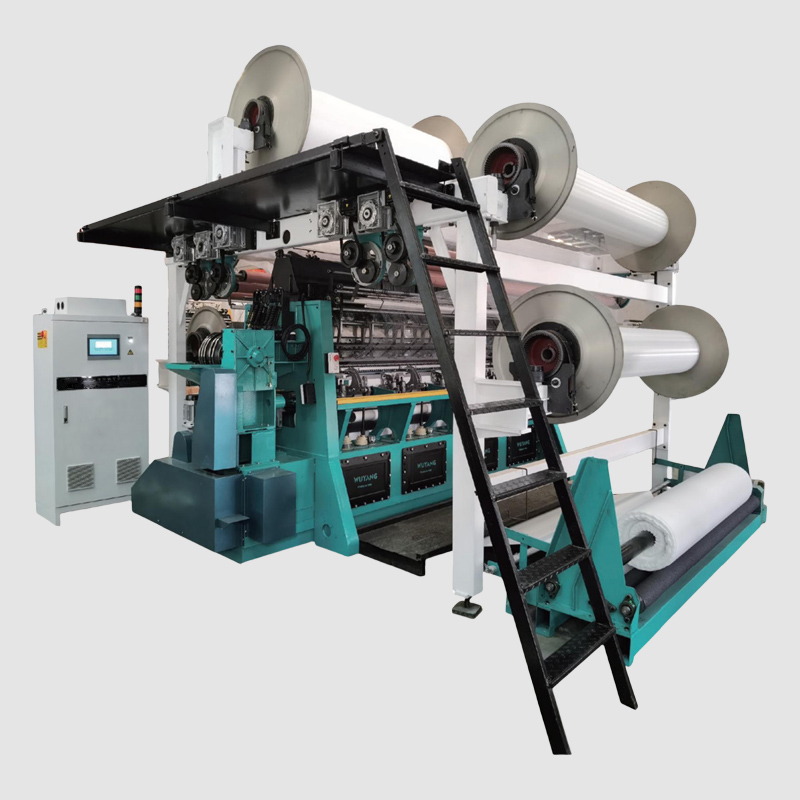
Full-width weft insertion warp knitting machine
Model: GE2269, The fabrics produced are mainly interlinings, light box fabrics, geotextile, glass fiber and other engineering fabrics, mainly used in.

High speed net Warp Knitting machine
Model:GE2393, this machine is used for knitting shade net, knotless fishing net, chemical fiber net fabric, safety net, sports net, anti-collision.

High speed double needle bar warp knitting machine
Model: GE2285, this machine is specially developed for producing backing layer fabric, short pile plush fabric and spacer fabric.

Numerical controlled tricot high speed machine
Model: GE2268,Tricot warp knitting machine is a high-speed textile machinery commonly used to weave relatively simple warp knitted fabrics.
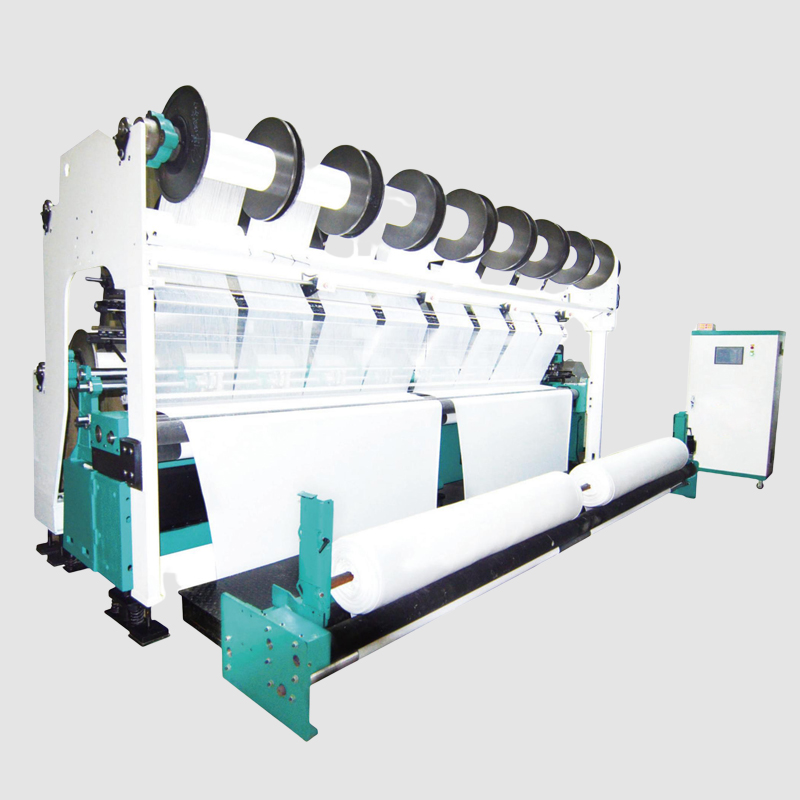
The role of warp knitting machines
The core role of warp knitting machines is to form structurally stable fabrics along the set path of yarns. They are often used for:
Mass weaving of textile raw materials
Replacing traditional woven fabrics to improve fabric elasticity and breathability
Weaving special fabrics such as mesh structures, lace patterns, and three-dimensional fabrics
Providing structural support for composite materials or functional materials
Functions of warp knitting machines
Modern warp knitting machines have the following functional modules:
Warp feeding system: Automatically controls yarn tension and supply
Knitting system: Adjustable needle type and needle length to determine fabric density
Transverse movement system: Controls the transverse movement of the yarn guide needle to achieve a variety of patterns
Electronic control system: Supports patterns Programming, fault diagnosis, etc.
Weft insertion system (optional): used for weft insertion weaving function
Automatic tension and shutdown protection system: to ensure stable operation
Application areas of warp knitting machines
Warp knitting machines are widely used in many industries:
Clothing fabrics: mesh fabrics, swimsuit fabrics, sportswear stretch fabrics
Home textile fabrics: curtain fabrics, mosquito net fabrics, sofa fabrics, lace
Industrial fabrics: sunshade fabrics, tent fabrics, filter fabrics, fireproof fabrics
Automotive interior materials: seats, ceilings, sound insulation layers
Medical fabrics: bandages, medical nets, elastic bandaging fabrics
Shoe materials/bag fabrics: sandwich mesh fabrics, jacquard fabrics, upper fabrics
What products are suitable for warp knitting machines?
Warp knitting machines are suitable for the following categories of products:
Mesh fabrics: hexagonal mesh, diamond mesh, ultra-thin mesh
Stretch fabrics: swimwear fabrics, sportswear fabrics
Lace fabrics: wedding dresses, underwear fabrics
Industrial fabrics: sunshade nets, insect-proof nets, fireproof fabrics
Automotive fabrics: ceiling fabrics, seat breathable layers
Medical fabrics: elastic bandage fabrics, breathable adhesive tape base fabrics
What is the typical capacity of a warp knitting machine?
The capacity of a warp knitting machine depends on the following factors:
Operating speed: 300 – 1,200 RPM (revolutions per minute)
Fabric width: 66″–180″ (inches) or customized
Daily fabric output (single machine): 300 – 2,000 meters/day
Monthly output (3 shifts): up to 50,000 meters or more (depending on the type of fabric)
Is a warp knitting machine difficult to operate?
For skilled operators, warp knitting machines are not complicated. Most modern warp knitting machines are equipped with electronic pattern control and automatic warp feeding system, which reduces the operating threshold.
Training cycle: It takes about 3-7 days for novices to master basic operations
Common training content:
Equipment startup and shutdown process
Yarn replacement and threading method
Pattern pattern setting
Simple fault diagnosis and maintenance
Is the warp knitting machine suitable for small and medium-sized factories?
Yes! Especially:
Small and medium-sized underwear, mesh or functional fabric factories
OEM/ODM customized factories
Traditional fabric factories that want to transform automation and increase product added value
It is recommended to choose domestic equipment with simple structure, convenient maintenance and easy-to-buy accessories as a starting point, such as Shengtai, Jingwei, Changxing and other brands.
Comparative analysis of warp knitting machines and weft knitting machines
| Compare Projects | Warp knitting machine | Weft knitting machine |
| Weaving direction | Warp direction | Weft direction |
| Finished product stability | Dimensionally stable and resistant to deformation | Easy to deform, need post-processing |
| speed | Faster and suitable for mass production | Relatively slow |
| Fabric properties | Net-like, fine structure | Soft and elastic |
| Structural complexity | Complex structure and difficult maintenance | Relatively simple structure |
| Scope of application | Industrial/functional textiles are widely used | More like daily clothing fabric |
How to maintain a warp knitting machine?
- Clean the machine regularly every day
It is recommended to remove flying flowers and oil stains before leaving get off work every day to keep the machine clean.
- Lubricate and maintain the machine regularly
Regularly oil the bearings and needle beds to prevent rust.
- Periodic tension inspection
Regularly check the tension wheel and clamp of the warp feeding system to ensure their normal operation.
- Maintain the electronic control system
Regularly check the control box circuit, remove static dust, and ensure safe maintenance.
- Check/replace vulnerable items
Replace steel needles, yarn guide needles and flower discs in time to avoid other faults.
- Avoid moisture and rust from affecting use
Keep the machine room dry, avoid long-term shutdown and unsealed to avoid losses.
Guide to the use of warp knitting machines
The following is the basic process of using a warp knitting machine:
- Prepare the required yarn first
First, you need to select the appropriate yarn and warp it;
- Secondly, thread the yarn
According to the yarn count, guide the yarn to the comb and yarn guide needle.
- Set pattern parameters reasonably
Input or adjust pattern program according to pattern parameters.
- Regularly adjust tension
Adjust warp tension and traction tension as needed.
- Start the machine
Observe whether the machine runs smoothly and prepare to start the machine;
- Monitor the use process
Pay attention to yarn breakage, knotting, skipped stitches, etc. during the process to avoid affecting production;
- Perform winding processing in time
Wrap and store according to fabric length;
- Shutdown record
It is recommended to record production and clean the equipment every day.
Conclusion
Warp knitting machines are an indispensable and important equipment in the modern knitting industry, with significant advantages such as high production capacity, stable fabrics, and wide application. Whether it is mesh, lace or functional fabrics, its high efficiency and automation characteristics bring significant production benefits to medium and large factories. To choose a suitable warp knitting machine, a comprehensive evaluation should be made based on its own product type, production requirements, budget and technical personnel.