


 English
  Hungarian
  Indonesian
  Bulgarian
  Turkish
  Polish
  Russian
  Spanish
  Portuguese
  Korean
  French


In today’s competitive textile manufacturing landscape, the choice of knitting machine has a significant impact on product quality, production speed, and cost efficiency. Among the machine categories, the warp knitting machine occupies a special position. Unlike weft knitting machines, warp knitting machines feed yarns parallel to the fabric selvedge and form loops in a highly efficient, high-speed manner.
For textile mills, OEMs, and equipment purchasers, knowing how many types of warp knitting machines exist—and which type suits a specific fabric application—is critical to making informed buying decisions. In this guide, we will explore the classifications, technical differences, advantages, and selection considerations for warp knitting machines in 2025.
What Is a Warp Knitting Machine?
A warp knitting machine is a specialized textile machine in which the yarns are laid in the warp (i.e., length/parallel to the fabric) direction, rather than the weft (cross-wise) direction.
Each needle is typically fed by its own yarn, and the loops are formed simultaneously across the width. This allows continuous high-speed production and improved dimensional stability compared to weft knitting.
The main components include warp beams, guide bars, needle beds, sinkers, take-down systems, and control interfaces. Industrially, warp knitting machines produce a wide range of fabrics—from lingerie tricot, lace, mesh, spacer fabrics, to technical textiles and industrial reinforcement fabrics.
Major Classification Criteria:
Warp knitting machines can be differentiated according to several criteria:
The direction of fabric draw-out and fabric construction (e.g., Tricot vs Raschel).
The needle bed structure (single-bed vs double-bed or multi-bed machines).
The type of needles used (crochet needle, tongue needle, compound needle).
The number of guide bars and the complexity of fabric structure (simple plain fabrics vs jacquard warps).
Application domain (garments vs technical textiles vs reinforcement fabrics).
Understanding these classification axes enables buyers to match machine types to specific production needs.
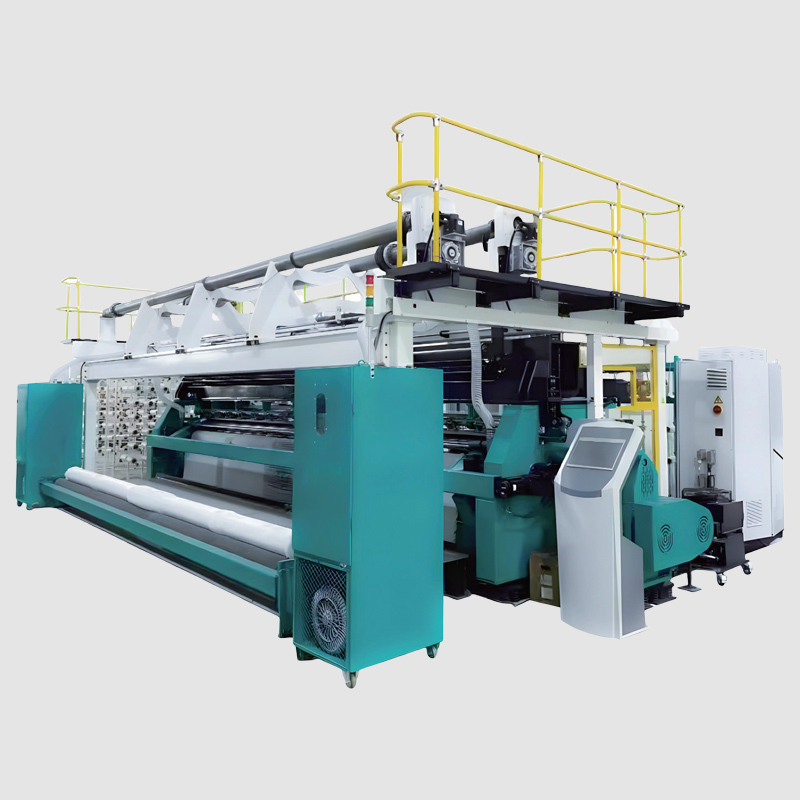
Main Types of Warp Knitting Machines
Below are the commonly used types, each with features, applications, and pros & cons:
Tricot Warp Knitting Machine
The Tricot machine is characterized by simpler construction, fewer guide bars (typically 2–4), and the fabric is drawn nearly perpendicular to the needle bed (~110° draw-out), thus subjecting higher needle bending moment.
It is well-suited for lightweight, soft fabrics often used in underwear, lingerie, sportswear, and base layers.
Features:
- High speed production (up to 3,000–3,500 courses per minute)
- Finer yarns (filament yarns) and smoother surfaces
- Lower fabric take-down tension
- Fabric width can be large
Applications:
Swimwear, intimate apparel, performance base layers, lightweight outerwear.
Raschel Warp Knitting Machine
The Raschel machine is more versatile, able to handle heavy yarns, coarse gauges, and numerous guide bars (often up to 16 or more). The fabric draw-out angle is much flatter (~160°), reducing needle bending stress.
It suits fabrics requiring texture, lace, net structures, spacer fabrics, and technical textiles.
Features:
- Handles open mesh, lace, textured fabrics
- Wide gauge range (coarse to medium)
- Suitable for synthetic fibers, blends, and technical yarns
- Lower speed compared to Tricot but greater fabric variety
Applications:
Lace fabrics, mesh for backpacks, automotive grids, geotextiles, spacer fabrics.
Double-Needle Bar / Multibar Warp Knitting Machine
As textile demands increase for 3D spacer fabrics, heavier technical textiles, and composite reinforcements, machines with two or more needle bars (double, triple, or multibar) are increasingly used.
These machines enable complex structures such as spacer fabrics (two layers separated by vertical yarns), plush and terry fabrics, and engineered technical knits.
Features:
- Multi-layer fabric capability
- Complex structure knitting in one pass
- Suitable for technical textiles, automotive textiles, and composite backing
- Higher investment cost and increased mechanical complexity
Applications:
Mattress spacer fabric, automotive seat textiles, filtration media, composite reinforcement fabrics.
Simplex / Single-Needle Bed Machines
Single-needle bed machines are simpler, used for lighter fabrics and basic warp knits. These machines may be suitable for production lines focusing on rib structures, plain warp knits, or cost-effective garment fabrics.
Features:
- Lower-cost machine setup
- Suitable for basic fabric types
- Less flexibility for complex structures
Applications:
Basic apparel fabrics, rib knits, and lightweight warp fabrics.
Lace / Jacquard Warp Knitting Machine
Lace or jacquard warp knitting machines integrate patterning systems that allow intricate designs and textures. These may be based on Raschel technology with a jacquard apparatus controlling each guide bar, enabling pattern changes for fashion, lingerie, and decorative fabrics.
Features:
- High variability in fabric design
- Slower speeds due to pattern complexity
- Requires skilled setup and programming
Applications:
Bridal wear, decorative fabrics, premium fashion, and lace trims.
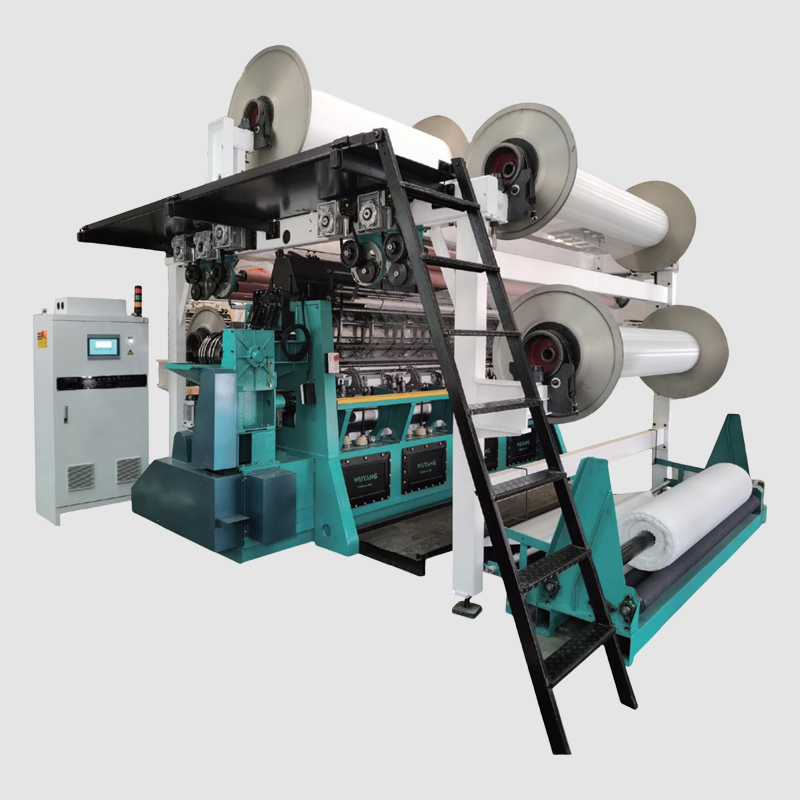
Comparison Table: Warp Knitting Machine Types
| Machine Type | Needle Bed Structure | Guide Bars | Fabric Type Example | Typical Use Case |
| Tricot | Single or multiple | 2–4 | Smooth, lightweight warp knit | Sportswear, lingerie |
| Raschel | Single or multiple | 6–16 | Lace, textured fabrics, mesh | Mesh bags, technical textiles |
| Double-Needle Bar/Multibar | Two or more beds | Multiple | Spacer fabrics, 3D knits | Automotive, mattress, composite fabrics |
| Single-Needle Bed | Single | 2–4 | Basic warp knit fabrics | Basic apparel warp knits |
| Lace/Jacquard | Single/multi | Many | Intricate designs, decorative fabrics | Fashion, high-end lace |
Technical and Operational Considerations
When selecting a warp knitting machine, buyers should focus on:
Gauge and width: The number of needles per inch and fabric width capacity.
Guide bar count: More guide bars allow complex structures and multiple yarn inserts.
Needle type: Bearded needles, latch needles, and compound needles each have different capabilities.
Fabric take-down mechanism and tension control: Essential for consistent fabric quality and minimizing defects.
Machine speed and productivity: Tricot machines may produce higher speeds, but Raschel machines allow for more complex structures.
Yarn compatibility: Warp knitting machines must handle filament and spun yarns, high tenacity fibers, blended yarns, and functional yarns.
Automation and control systems: Modern machines include electronic patterning, monitoring, fault detection, and reduced downtime.
Maintenance and spare parts: Machines with more complexity require a robust maintenance regime and higher operator skill.
Application Fields of Different Types of Warp Knitting Machines
The warp knitting machine family includes several subtypes—Tricot, Raschel, Double-Needle Bar, Simplex, and Jacquard lace machines—each developed for distinct fabric structures and end-use applications. Choosing the right type depends on yarn type, fabric density, elasticity, dimensional stability, and product category. Below is a comprehensive overview of their major application fields across apparel, industrial, and technical sectors.
Tricot Warp Knitting Machine Applications
Tricot warp knitting machines are known for their high-speed production and fine, smooth fabrics. They are mainly used in the apparel and home textile industries.
Main Applications:
- Sportswear & Activewear: The smooth, stretchable tricot fabric is ideal for sports jerseys, leggings, and swimwear.
- Lingerie & Underwear: Lightweight tricot knits are breathable, soft, and durable.
- Home Textiles: Used in bed linens, pillow covers, and decorative fabrics.
- Automotive Interiors: Tricot fabric is used as a lining material in car roofs and seat backings.
- Medical Textiles: Breathable, washable fabrics for bandages and support textiles.
Raschel Warp Knitting Machine Applications
The Raschel warp knitting machine is versatile and strong, handling coarser yarns and producing open-structured or patterned fabrics.
Main Applications:
- Lace & Mesh Fabrics: Widely used for curtains, decorative lace, and outerwear.
- Net Fabrics: Sports nets, mosquito nets, packaging nets, and agricultural shading nets.
- Technical Textiles: Filtration fabrics, reinforcement meshes, industrial liners.
- Home Furnishings: Drapery fabrics, bedspreads, upholstery covers.
- Footwear & Bags: Durable mesh used in sneakers, travel bags, and backpacks.
Double-Needle Bar / Multibar Warp Knitting Machine Applications
This type is designed for 3D and multi-layered fabrics, combining strength and comfort, suitable for advanced industrial applications.
Main Applications:
- Spacer Fabrics: 3D structures for mattresses, cushions, and seat covers.
- Automotive Textiles: Seat supports, dashboards, and noise-absorption layers.
- Medical Products: Breathable cushion materials for prosthetics and orthopedic use.
- Protective Textiles: Bulletproof fabric bases, vibration-damping layers.
- Composite Reinforcements: Used in aerospace, wind energy, and construction composites.
Simplex / Single-Needle Bed Warp Knitting Machine Applications
Simplex warp knitting machines produce basic and cost-effective warp knits suitable for mass production.
Main Applications:
- Basic Apparel: T-shirts, linings, and simple outerwear fabrics.
- Elastic Bands: Used in waistbands and cuffs.
- Interlinings: Reinforcement layers in fashion and industrial garments.
- Flags & Banners: Smooth, warp-stable fabrics ideal for digital printing.
Jacquard / Lace Warp Knitting Machine Applications
Jacquard warp knitting machines can create highly decorative fabrics with intricate designs and color patterns.
Main Applications:
- Fashion & Luxury Wear: Lace fabrics for bridal gowns, dresses, and accessories.
- Home Decoration: Curtains, tablecloths, upholstery with ornamental patterns.
- Crafts & Accessories: Embroidered lace trims and ribbons.
- Sportswear Design: Mesh with complex patterns and branding designs.
Advantages of Warp Knitting Machines Over Weft Knitting
Higher production speed: All yarns are fed simultaneously, enabling rapid fabric formation.
Greater dimensional stability: Loop structure and warp-oriented yarns provide better shape retention.
Wider fabric width: Some warp machines can knit very wide widths, useful for technical textiles.
Structural versatility: The ability to produce 3D fabrics, spacer fabrics, mesh, lace, and technical textiles extends the application range.
Material efficiency: Less waste in warp knitting compared to panel-cut processes or heavy weft knits.
Practical B2B Selection Guide
For textile machinery buyers, a structured approach helps:
- Define fabric end-use – apparel vs technical textile.
- Identify machine type required – refer to classification above.
- Estimate production capacity – width, yarn type, speed.
- Assess budget vs ROI – higher bar machines cost more but enable advanced fabrics.
- Evaluate supplier capability – machine brand, service, parts availability.
- Check support for automation – patterning systems, Industry 4.0 readiness.
- Consider future flexibility – ability to reconfigure for new fabrics or yarns.
Maintenance & Operator Considerations
Regular lubrication and monitoring of guide bars, needles, and sinkers.
Precise setting of take-down tension and fabric draw-out angle.
Scheduled machine calibration and operator training.
Spare parts inventory, especially for high-use components like needles and guide bars.
Data logging and preventive maintenance systems for minimal downtime.
Conclusion
Warp knitting machines come in a wide variety of types, have extensive applications, and require stringent technical expertise. Before purchasing a warp knitting machine, it’s essential to understand the types, functions, applications, and advantages of existing machines. This will help you choose the most suitable one for your needs.
In the future, with the continuous growth of market demand for textiles, sustainable fabrics, and automation, the demand for warp knitting machines will also continue to increase. Therefore, choosing the right machine is particularly important.