


 English
  Hungarian
  Indonesian
  Bulgarian
  Turkish
  Polish
  Russian
  Spanish
  Portuguese
  Korean
  French


Singeing machine is a kind of mechanical equipment widely used in the textile field. It removes floating hair and pilling on the surface of fabrics and yarns through burning or high-temperature treatment to improve the overall smoothness and appearance texture of the fabric. It has powerful functions and many uses.
What is a singeing machine?
A singeing machine is a crucial piece of equipment in modern textile pre-treatment. Its primary function is to use high temperatures to burn away loose fibers and stray hairs on the fabric surface, thereby improving the fabric’s gloss and smoothness and enhancing the results of printing, dyeing, and finishing processes.
Singeing machines are now widely used to treat a variety of fabrics and have become an indispensable component of modern textile production lines.
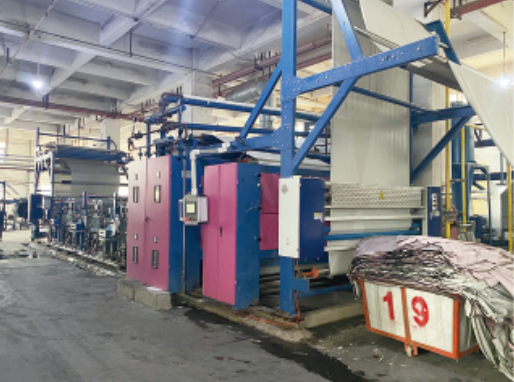
What types of singeing machines are there?
Singeing machines can be categorized by their combustion method, heat source, or treatment target:
| Type of Singeing Machine | Description | Application Area |
| Gas flame singeing machine | Uses open flame to burn off surface fibers | Widely used in cotton and blends |
| Electric singeing machine | Uses heated plates or wires | Used in synthetic fabrics |
| Roller type singeing machine | Fabric passes over rotating rollers and burner heads | Suitable for large batch processing |
| Plate type singeing machine | Fabric contacts a heated metal plate | Fine control, used for silk, viscose |
| Open-width singeing machine | Processes full-width fabrics without folding | Minimizes creasing and deformation |
Singeing Machine Performance Parameters
The following key technical parameters are particularly important during model selection and operation:
| mechanical width | 1600-3600mm |
| mechanical speed | 40-120m/min. |
| singeing mode | 1 normal 1 reversal or 2 normal 2 reversal |
| heating source | LPG or natural gas |
| transmission | AC inverter, PLC control, touch-screen operation |
Singeing machine main components
valves(air-gas proportional control valve, high-pressure protection valve, low-pressure protection valve, gas ball valve, fine adjustment valve, magnetic valve): Germany;
air manometer, gas manometer: Germany;
PLC, inverter, touch-screen: Delta;
circuit breaker, contactor, buttons, electrical components: CHNT, China;
motor reducer: China;
cylinder, pneumatic pressure adjusting valve, and other pneumatic components: AirTAC;
bearing: NSK;
pressure reducing valve,and filter: Fiorentini, Italy;
Ignition transformer: Fida.
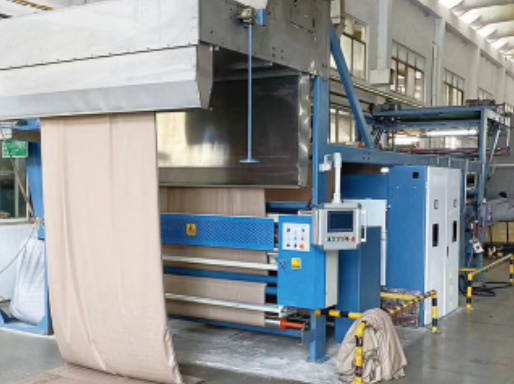
Singeing machine Process
The complete singeing process is as follows:
Cloth feeding → Fabric is introduced via a guide roller
Amplitude modulation and tension control → Prevent wrinkles and skew
Heating/singing → Burning loose fibers with a flame or hot plate
Cooling → Reduces temperature to prevent heat damage
Exhaust → Removes smoke and exhaust gases
Cloth removal → Winding or output
This process ensures uniform, safe, and optimal fabric treatment.
What role does a singeing machine play in the textile process?
Singeing is more than just a surface enhancement process; its deeper benefits include:
Improving printing and dyeing uniformity and quality
Reducing color spots caused by loose fibers during dyeing
Enhancing adhesion for subsequent finishing (such as calendering and coating)
Improving the product’s finish, gloss, and feel
Functions of a singeing machine
The main functions of a singeing machine can be summarized as follows:
Removing loose fibers
Enhancing surface finish
Reducing static electricity buildup
Improving product consistency
Reducing linting and pilling
Main Applications of a singeing machine
Singeing machines are widely used in the following industries:
| Industry Sector | Typical Fabric Processed |
| Apparel textiles | Cotton, polyester, viscose |
| Home textiles | Bed linen, curtains |
| Industrial textiles | Filter fabrics, cleaning cloths |
| Denim and jeans fabrics | Preprocessing before dyeing |
| Printing fabrics | Surface preparation |
Comparison and Analysis of Singeing and Sueding Machines
Although both are used for fabric surface treatment, their processes and purposes are completely different:
| Aspect | Singeing Machine | Raising Machine |
| Working principle | Burning off surface fibers | Mechanically brushing up fine fibers |
| Texture effect | Smooth, sleek surface | Soft, fuzzy feel |
| Suitable materials | Cotton, polyester, blends | Wool, brushed cotton, flannel |
| Speed | Faster processing speed | Slightly slower due to multiple passes |
| Main purpose | Clean surface, enhance printing | Improve softness and warmth |
Singeing Machine Usage and Maintenance Guide
To ensure long-term stable operation of the singeing machine, please follow the following recommendations:
Usage Recommendations:
Strictly control the singeing temperature and distance to avoid damage to the fabric due to excessive temperatures or inadequate singeing due to excessive distance.
Appropriately set the tension and speed based on the properties and type of fabric.
Regularly inspect and maintain the fabric guide to prevent deviations.
Maintenance Tips:
Weekly clean the burner, nozzle, and exhaust system.
Inspect the air duct and drive belt monthly for wear and replace if necessary.
Regularly verify the sensitivity of the temperature control system and tension feedback device to avoid affecting performance.
Conclusion
As a core piece of equipment in the modern textile pre-treatment process, the singeing machine plays an irreplaceable role in improving fabric quality, ensuring printing and dyeing results, and enhancing product added value. With the continuous trend toward functionalization and high-end textiles, the intelligence and energy efficiency of singeing machines are also increasing.
For both apparel and industrial fabrics, the appropriate singeing process will significantly optimize their final performance and market acceptance. When purchasing and using singeing equipment, companies should comprehensively consider factors such as product type, process compatibility, equipment parameters, and maintenance costs to maximize benefits.