

 English
 Hungarian
 Indonesian
 Bulgarian
 Turkish
 Polish
 Russian
 Spanish
 Portuguese
 Korean
 French


Global demand for high-quality denim is booming. Building a modern production line is highly complex. An efficient factory requires precise, automated machinery from start to finish. In this guide, you will discover the complete equipment list needed for a successful denim facility.
Understanding the Denim Manufacturing Process Machinery List
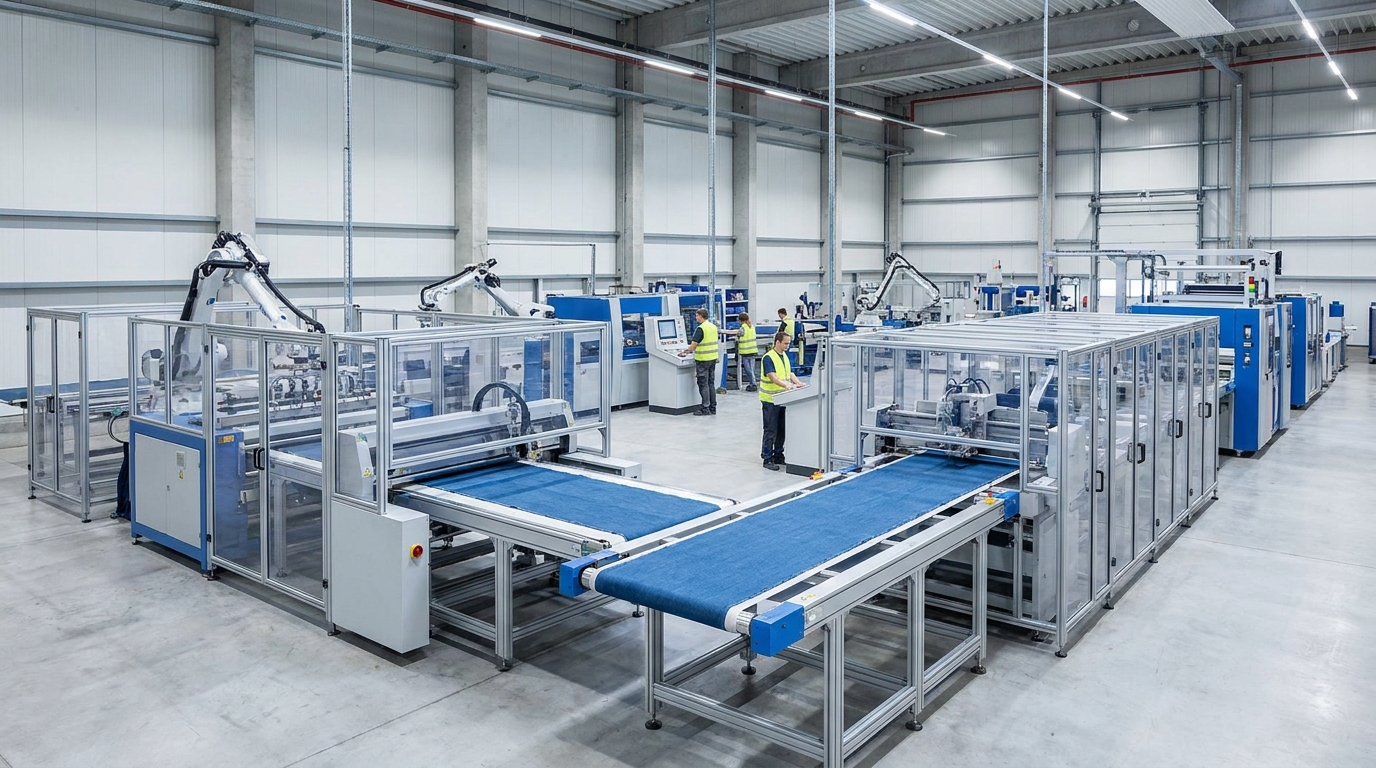
Building a modern denim facility requires a clear roadmap. We just highlighted the need for precise, automated machinery from start to finish. Now, let’s look at exactly what goes into a complete denim manufacturing process machinery list.
Transforming raw cotton into classic blue jeans is a multi-stage journey. First, facilities spin 100% cotton fibers into strong warp and weft yarns. Warp yarns then move to high-speed warping and indigo dyeing. They dip through six to eight vats to achieve a deep blue shade. Next comes the sizing process. This adds a protective coating to prevent yarn breakage. High-speed looms then weave the warp and weft together. Finally, the fabric enters the finishing stage. Facilities use a denim singeing and sanforizing machine to remove surface fuzz and control shrinkage.
You need specific equipment for each production phase. Here is a breakdown of the core machines required for a complete denim line.
| Production Stage | Essential Machinery | Primary Purpose |
|---|---|---|
| Spinning | Carding machines, Ring/OE Spinners | Clean, align, and spin raw cotton into yarn. |
| Warping & Dyeing | Ball Warpers, Indigo Dyeing Range | Bundle warp yarns and apply indigo dye evenly. |
| Sizing (Slashing) | Sizing Machine (Slasher) | Apply protective starch (8-12% pick-up) for weaving strength. |
| Weaving | Air-jet or Rapier Looms | Interlace warp and weft yarns into twill fabric. |
| Finishing | Singeing Machine, Stenter, Sanforizer | Stabilize fabric width and reduce residual shrinkage below 1%. |
Choosing the right setup dictates your factory’s success. Modern air-jet looms can exceed 1,000 RPM. They demand flawless yarn preparation. If your sizing machine applies uneven coats, yarn breakage halts production entirely. You must select equipment that guarantees stable performance and high automation.
SutexMach has helped textile mills build complete production lines since 1985. We manufacture intelligent dyeing, drying, and stenter machines. Our equipment ensures energy efficiency and strict environmental compliance. Wastewater and energy use remain major concerns in denim production. Eco-friendly machinery directly reduces your daily operating burdens.
We provide one-stop solutions for your entire facility. This covers machine selection, custom layout design, installation, and after-sales service. Proper integration prevents bottlenecks between the weaving and finishing stages. Reliable machinery keeps your defect rates low and your output highly consistent.
Yarn Preparation and Spinning Machinery

We just discussed how proper equipment integration prevents bottlenecks across your facility. Flawless yarn preparation is where this journey actually begins. The very first step in a denim production line involves converting raw cotton fibers into strong, uniform yarn. Denim typically relies on 100 percent cotton. You must process these raw bales carefully to ensure high fabric quality later.
The process starts in the blow room. Machines open the compressed cotton bales and remove dirt, seeds, and impurities. Next, the cleaned cotton moves to carding machines. They untangle the fibers and align them into a continuous, loose rope called a sliver. Drawing machines then blend multiple slivers together. This step straightens the fibers further and ensures uniform weight and thickness.
After drawing, roving frames draft the sliver into a thinner strand. They add a slight twist to hold the fibers together. Now the material is ready for the actual spinning process. Spinning dictates the final strength and texture of your denim.
Ring Spinning vs. Open-End Spinning
Factories primarily use two spinning methods for denim yarn. Your choice depends on the desired fabric quality and production goals. Warp yarn counts usually range from 6s to 16s for heavy denim. Lightweight denim uses 16s to 30s. Weft counts generally fall between 6s and 20s.
| Spinning Method | Characteristics | Best Used For |
|---|---|---|
| Ring Spinning | Produces highly durable, tightly twisted yarn. Slower production speed. | Premium denim, vintage styles, and fabrics requiring high tensile strength. |
| Open-End (OE) Spinning | Faster and highly efficient. Produces slightly bulkier, less strong yarn. | Mass-market commodity denim and high-volume production runs. |
Ring spinning delivers premium strength. It creates the classic, uneven “slub” texture many brands want. Open-end spinning offers high-speed efficiency. It works perfectly for standard, everyday jeans.
Choosing the right spinning machinery sets the foundation for your entire facility. Weak yarn will snap during high-speed weaving. It will also cause uneven color absorption during the indigo dyeing stage. SutexMach provides one-stop factory solutions for textile mills. We ensure your spinning capacity perfectly matches your downstream weaving and finishing equipment. This careful planning keeps your operations running smoothly from raw cotton to finished fabric.
Indigo Dyeing Machine for Denim: The Heart of the Color
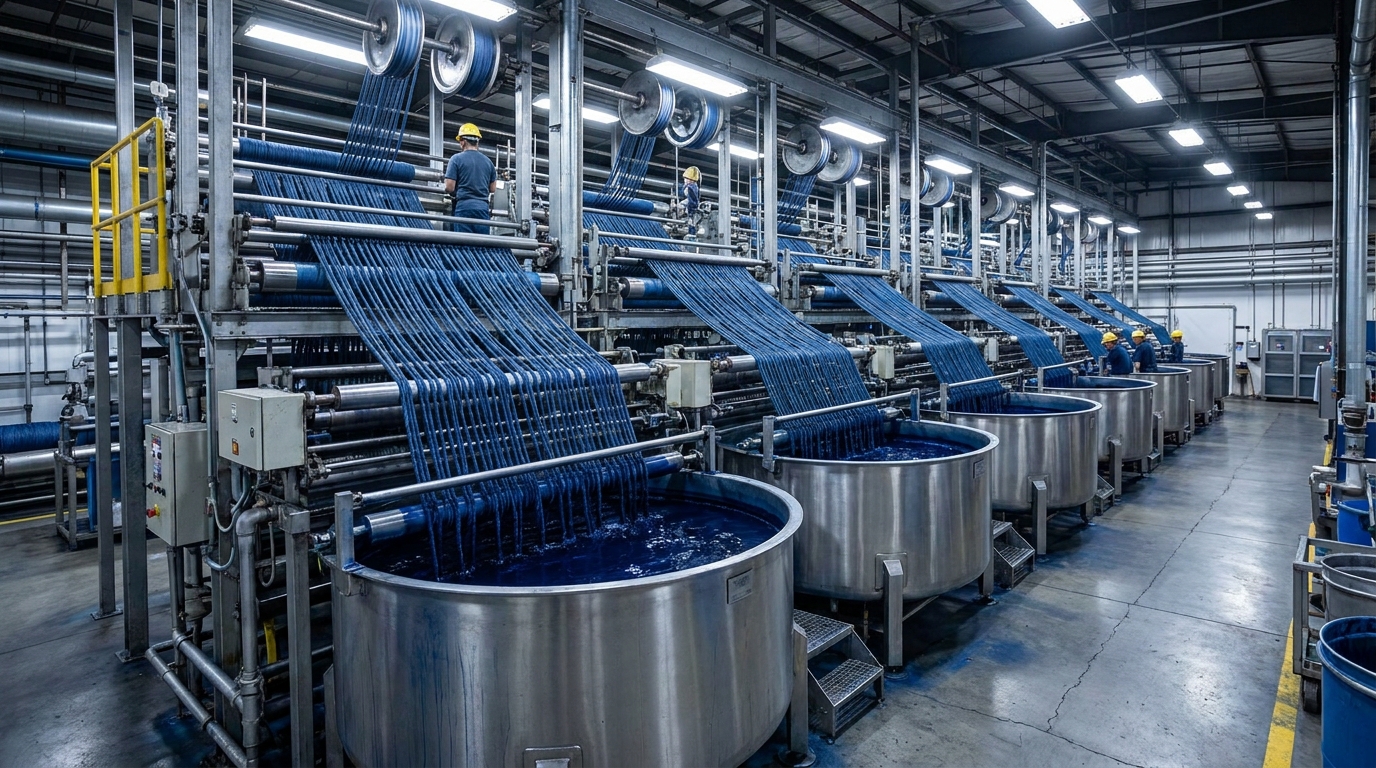
We just noted how spinning quality impacts color absorption. Now, your spun yarns enter the most iconic stage of production. Authentic denim relies entirely on its signature blue color. This deep color comes from indigo dye. The application process requires highly specialized equipment.
Indigo dye behaves uniquely on cotton fibers. It only coats the surface of the yarn. The core of the yarn remains completely white. Industry experts call this a ring-dyed effect. This specific technique allows jeans to fade naturally over time. Consumers expect this exact wash-down effect in their garments. You need a reliable indigo dyeing machine for denim to achieve this precise surface coating.
The dyeing process involves multiple dipping vats. The yarn passes through six to eight vats to build a deep color. Between each dip, the yarn travels upward into the air. This step is called skying or oxidation. Oxygen reacts with the dye to fix the blue color. Each oxidation phase takes 60 to 90 seconds. The machine runs at speeds of 20 to 40 meters per minute.
Rope Dyeing vs. Slasher Dyeing
Facilities generally choose between two primary dyeing methods. Your choice depends on your production volume and flexibility needs.
| Dyeing Method | Process Details | Best Application |
|---|---|---|
| Rope Dyeing | Bundles 300 to 400 yarns into a thick rope for uniform dipping. | High-volume production requiring maximum color consistency. |
| Slasher (Sheet) Dyeing | Dyes yarns flat in a continuous sheet. Skips the re-beaming stage. | Smaller fashion runs and highly flexible manufacturing setups. |
Key Features for Modern Dyeing Equipment
Modern indigo dyeing ranges are massive structures. A complete setup often extends 60 to 80 meters. You must control dye penetration precisely across this entire length. Poor control causes severe shade variation across the fabric. This inconsistency ruins thousands of meters of denim.
Environmental impact remains another major concern. Indigo dyeing generates significant chemical and water waste. You need equipment designed for eco-friendly operation. SutexMach specializes in intelligent dyeing machines. Our equipment guarantees high automation and stable performance. We design our machines to maximize energy efficiency. They feature advanced water-saving capabilities to reduce your environmental footprint. Upgrading to modern machinery directly addresses these heavy operational burdens.
Weaving the Fabric: Denim Weaving Machines
We just explored how indigo dyeing gives yarn its signature ring-dyed color. Now, those dyed warp yarns must become fabric. This transformation happens in the weaving department. Here, blue warp yarns interlace with white weft yarns. They create the classic denim twill weave.
Denim typically uses a warp-faced twill pattern. You will often see a 3/1 right-hand twill. This means three warp yarns cross over one weft yarn. It creates the iconic diagonal ribbing on the fabric surface.
Types of Industrial Looms
Weaving requires heavy-duty industrial looms. You have three main options for a complete denim production line. Your choice depends entirely on your fabric weight and style goals.
| Loom Type | Operating Speed | Best Application for Denim |
|---|---|---|
| Air-jet Looms | Exceeds 1,000 RPM | High-volume commodity denim (12-14 oz). Requires flawless yarn sizing. |
| Rapier Looms | 400 to 600 RPM | Heavy-duty workwear (16+ oz) and highly elastic stretch denim. |
| Projectile/Shuttle Looms | Slower, traditional speeds | Premium selvedge denim requiring a unique edge and vintage texture. |
Air-jet looms operate at incredible speeds. They work perfectly for standard, everyday jeans. However, the high tension demands perfect yarn preparation. If your earlier sizing process fails, yarn breakage will halt production entirely. Rapier looms offer much higher versatility. They handle sensitive stretch weft yarns beautifully.
Evaluating the Denim Weaving Machine Price
You must carefully evaluate the denim weaving machine price before purchasing. Several key factors directly influence this investment. Operating speed impacts the upfront cost significantly. Faster machines cost more but produce more fabric daily. Fabric width also matters greatly. Wider looms require much more robust engineering.
Automation levels play a huge role in pricing. Highly automated looms monitor yarn tension perfectly. They automatically detect breaks and reduce your daily labor needs. Brand reputation serves as the final factor. Established manufacturers charge a premium for proven reliability and global support.
Balancing Budget and Production Capacity
How do you balance your investment budget with production capacity? Do not just buy the fastest loom available. You must match the loom type to your target market. Choose air-jet looms for mass-market fashion. Select rapier looms if you plan to weave heavy workwear.
You should also consider your overall factory layout. SutexMach helps textile mills design this exact setup. We offer one-stop solutions from machine selection to complete installation. Our team ensures your weaving capacity aligns perfectly with your upstream and downstream equipment.
We prioritize stable performance and high automation in every project. Our intelligent machinery integrates smoothly into your production line. This careful planning keeps your daily defect rates extremely low. It guarantees your denim output remains highly consistent from the first roll to the last.
Denim Finishing Machinery: Perfecting the Fabric
We just discussed how carefully selected weaving machines turn dyed yarns into consistent twill fabric. Straight off the loom, however, this raw denim remains stiff and unstable. It requires further processing before anyone can wear it. The finishing stage is highly critical for your denim production line. It dictates the final texture, dimensional stability, and visual appeal of your jeans.
Singeing and Sanforizing
Raw denim has a hairy, rough surface. A singeing machine burns off these loose surface fibers. This step creates a cleaner look and prevents future pilling. Next, the fabric must undergo sanforization. Untreated cotton shrinks significantly after washing. Consumers hate jeans that change size. Sanforizing mechanically compresses the fabric. Commercial viability requires reducing residual shrinkage to less than 1 percent. Regular maintenance is crucial here. You must frequently check the rubber belt inside the sanforizer. Wear and tear on this belt causes inconsistent fabric shrinkage.
Drying and Stentering for Dimensional Stability
Wet processing leaves the fabric heavy and misshapen. You need high-efficiency drying and stenter machines to correct this. A stenter frame stretches the denim to its precise, final width. It applies heat to lock the fibers into place. This stabilizes the entire fabric structure. SutexMach specializes in manufacturing highly automated stenter and drying machines. Our equipment ensures stable performance and maximum energy efficiency. This eco-friendly approach directly reduces your daily factory operating burdens.
Sueding and Calendering for a Premium Finish
Modern consumers demand comfortable jeans right off the shelf. Professional sueding and calendering machines create this premium, soft hand-feel. Sueding uses abrasive rollers to gently sand the fabric surface. This gives the denim a peach-skin texture. Calendering uses heavy, heated rollers to iron the fabric flat. It produces a dense, smooth finish. You can also implement mercerization during finishing. This chemical treatment increases the fabric’s luster. It also improves dye affinity for brighter blues and deeper blacks. SutexMach provides intelligent sueding and calendering equipment. We design these machines for precise control and highly consistent results.
Final Touch-Ups with Dewatering and Air-Softening
The final steps in your facility ensure ultimate quality. Dewatering machines remove excess moisture quickly and evenly. This prepares the fabric for final softening treatments. Air-softening machines then use high-velocity airflow to tumble the denim. This mechanical action breaks down stiffness without harsh chemicals. It enhances the natural drape of the fabric.
| Finishing Machine | Primary Function | Key Benefit |
|---|---|---|
| Singeing Machine | Burns off loose surface fibers | Prevents pilling and creates a clean look |
| Sanforizer | Mechanically compresses the fabric | Reduces residual shrinkage below 1% |
| Stenter | Stretches and heats the fabric | Locks in exact dimensional width |
| Sueding Machine | Sands the fabric surface | Creates a soft, premium hand-feel |
| Air-Softening Machine | Tumbles fabric using high-velocity air | Breaks down stiffness naturally |
SutexMach offers one-stop solutions for these crucial final stages. We help textile mills build complete production lines globally. Our advanced finishing machinery ensures your denim meets the highest international standards. We handle everything from machine selection and customization to installation and after-sales service.
Building an Intelligent Denim Production Line with SutexMach
We just outlined the crucial finishing stages. They give denim its final texture and stability. Achieving that perfect hand-feel requires highly specialized equipment. If you are using this denim production line complete machinery guide to plan your facility, partnering with an experienced manufacturer makes a massive difference. SutexMach has been a professional manufacturer of intelligent textile machinery since 1985. We are affiliated with Jiangsu SoHo Honry Import & Export Co., Ltd. With over 30 years of hands-on industry experience, we know exactly how to optimize your factory floor.
You already know raw denim needs precise processing. We help you integrate specialized finishing equipment seamlessly. Our core expertise covers the exact machines you need. We manufacture top-tier sueding, calendering, drying, and stenter machines. We also provide advanced dyeing ranges, warp knitting equipment, dewatering units, and air-softening machines. Each piece of equipment connects smoothly to the next. This eliminates bottlenecks between your weaving and finishing departments.
The Benefits of Upgrading to Intelligent Machinery
Upgrading to intelligent machinery transforms your daily operations. Modern denim production consumes massive amounts of water and power. Our machines tackle this problem directly. We prioritize stable performance and high automation across our entire product catalog. Automated systems reduce manual errors. They keep your fabric quality highly consistent.
Furthermore, we design every machine for maximum energy efficiency and environmental friendliness. Eco-friendly operations help you meet strict global compliance standards. They also lower your daily utility consumption significantly. High automation means your operators spend less time adjusting settings and more time monitoring output.
Comprehensive One-Stop Solutions for Textile Mills
Setting up a facility requires more than just buying heavy machinery. You need a reliable partner for the entire journey. We offer comprehensive one-stop solutions for textile mills worldwide. We guide you through every single step of the process.
| Service Phase | SutexMach Support Details | Direct Benefit to Your Mill |
|---|---|---|
| Machine Selection | We match equipment specs to your target fabric weight and volume. | Prevents costly purchasing mistakes. |
| Custom Layout Design | We tailor machine footprints to fit your exact factory floor plan. | Maximizes your available workspace. |
| Installation & Setup | Our technicians oversee the physical assembly and initial testing. | Ensures flawless equipment integration. |
| After-Sales Service | We provide ongoing maintenance support and reliable spare parts. | Minimizes unexpected production downtime. |
Building a successful factory demands precise planning and robust technology. We deliver the intelligent machinery you need to produce premium denim efficiently.
Conclusion
Building a successful denim production line requires essential machinery.
Investing in highly automated, energy-efficient equipment brings great long-term value.
Trust an experienced partner like SutexMach.
Our intelligent machines ensure seamless production and premium fabric quality.
- Assess your current factory layout for new machine integration.
- Calculate your target daily fabric output to size equipment.
- Contact SutexMach for a customized machinery consultation today.
Frequently Asked Questions About Denim Production Line
What is the difference between rope dyeing and slasher dyeing?
Rope dyeing bundles 300 to 400 yarns into a thick rope. This method offers excellent color consistency for large batches. Slasher dyeing coats yarns in a flat sheet instead. This flat method skips a re-beaming stage. Slasher dyeing works best for smaller, fast-changing fashion runs. Rope dyeing remains the standard for classic denim.
Why is indigo dye applied only to the yarn surface?
Indigo dye does not fully penetrate the thick cotton yarn. The core of the yarn remains completely white. This surface dyeing allows the fabric to fade over time. Fading creates the popular wash-down effects seen in jeans. If the dye soaked through, jeans would never get that worn look. This unique process makes denim special.
Which type of loom is best for weaving denim fabric?
The best loom depends on your specific production needs. Air-jet looms are incredibly fast for standard commodity denim. They can easily exceed 1,000 revolutions per minute. Rapier looms operate slower, usually around 400 to 600 RPM. However, rapier looms handle heavy-duty or stretch yarns much better. Vintage projectile looms are great for premium selvedge denim.
How do textile mills control denim fabric shrinkage?
Mills use a mechanical process called sanforization to control shrinkage. A sanforizer shrinks the fabric before it becomes a garment. This ensures residual shrinkage stays below one percent. Regular maintenance of the rubber belt is crucial here. Worn belts often cause inconsistent fabric shrinkage. SutexMach offers reliable finishing machines to keep shrinkage perfectly controlled.
What machines are needed for the denim finishing process?
Finishing requires several machines to perfect the final fabric. You will need singeing machines, stenters, and drying equipment. SutexMach provides highly automated stenters and drying machines. Our intelligent textile machinery ensures stable performance and energy efficiency. We also supply reliable calendering and sueding machines. These tools give the denim a smooth and finished texture.
Building a successful denim production line requires careful machinery selection. From spinning and rope dyeing to weaving and finishing, every step matters. Choosing the right air-jet looms or stenters impacts your overall fabric quality. Partnering with experienced manufacturers ensures your factory runs smoothly. High automation and energy efficiency will keep your operational costs low.
- Evaluate your current factory space to plan the machinery layout.
- Compare air-jet and rapier looms based on your fabric goals.
- Contact SutexMach for a customized textile machinery solution today.
- Schedule a maintenance check for your existing sanforizer rubber belts.