


 Portuguese
 English
 Hungarian
 Indonesian
 Bulgarian
 Turkish
 Polish
 Russian
 Spanish
 Korean
 French


Core Stages of a Warp Knitting Mill Setup
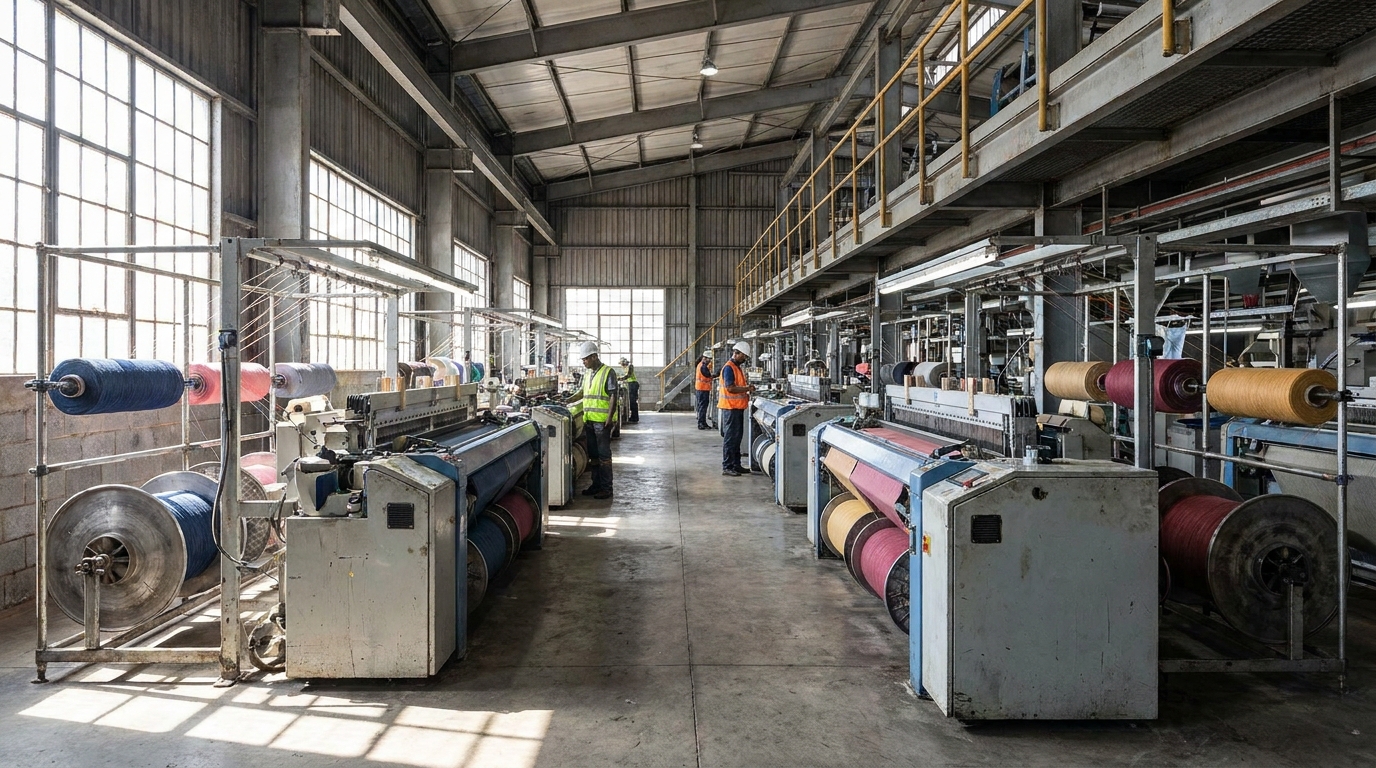
A successful warp knitting mill setup relies on continuous material flow. Every machine must work in sequence. The process moves from raw yarn to finished fabric through three primary stages.
Stage 1: Yarn Preparation and Beam Handling
Before knitting begins, raw yarn must be wound onto large spools called beams. This preparatory stage uses specialized warping equipment. Different yarn materials require specific handling to prevent tension issues.
- Direct warping machines: Used for standard continuous filament yarns.
- Spandex warping machines: Designed to handle highly elastic yarns safely.
- Split warping machines: Used for processing specific synthetic mother yarns.
Proper beam preparation is critical. Incorrect yarn tension during warping causes thread breakage during high-speed knitting.
Stage 2: The Primary Knitting Process
Prepared beams move directly to the warp knitting machines. Mills configure this stage based on their target textile market. Different machine categories handle distinct fabric types.
- Tricot machines: Ideal for high-speed production of lightweight apparel and home textiles.
- Raschel machines: Used for complex patterns and technical textiles like geogrids or flex banners.
- Double needle bar Raschel machines: Produce seamless goods, jacquard shoe uppers, and plush blankets.
- Terry machines: Specifically engineered to knit microfiber terry towels.
- Stitch-bonding and Weft-insertion machines: Create heavy-duty technical and industrial fabrics.
Stage 3: Post-Knitting Fabric Finishing
Raw knitted fabric requires post-treatment to stabilize its structure. This final inline stage involves dyeing, drying, and mechanical finishing. SutexMach manufactures advanced finishing equipment to complete your warp knitting production line.
Key finishing machines include:
- Dyeing and dewatering machines: Apply color and remove excess moisture efficiently.
- Stenter machines: Heat-set the fabric to its final width and prevent future shrinkage.
- Sueding and calendering machines: Modify the fabric surface for a softer hand feel or glossy finish.
- Air-softening machines: Improve the drape and texture of the finished textile.
Synchronizing the Production Line
A continuous production line requires exact timing across all three stages. Unmatched speeds between warping, knitting, and finishing cause severe bottlenecks.
| Production Stage | Primary Equipment | Core Function |
|---|---|---|
| Stage 1: Preparation | Direct, Spandex, or Split Warping Machines | Winds raw yarn onto beams with uniform tension. |
| Stage 2: Knitting | Tricot, Raschel, Terry, or Lace Machines | Interlocks warp yarns into specific fabric structures. |
| Stage 3: Finishing | Stenter, Dyeing, Sueding, and Drying Machines | Sets the fabric dimensions, color, and texture. |
Always source compatible machines and reliable spare parts. Equipment mismatches lead to costly downtime and wasted materials across the entire line.
Yarn Preparation: Warping Machine for Warp Knitting
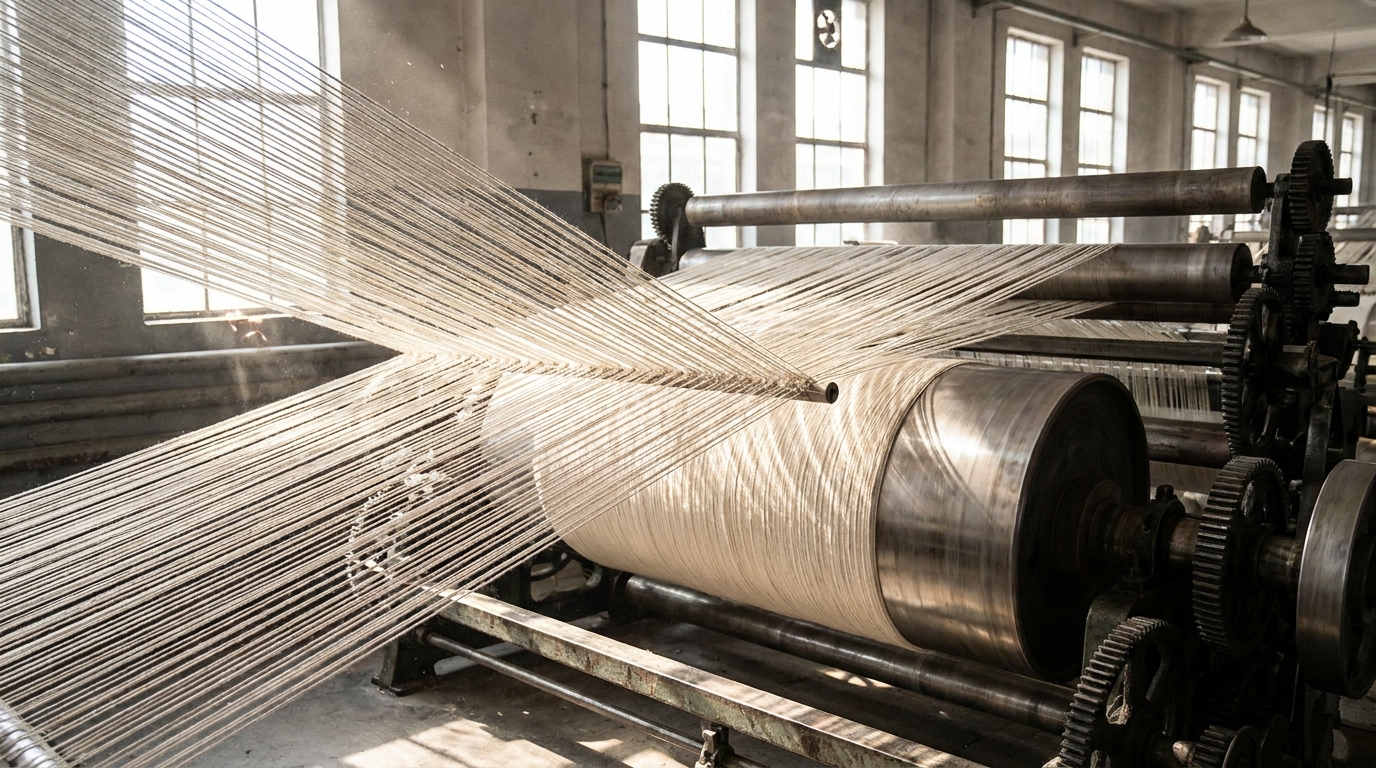
Flawless beam preparation is the foundation of high fabric quality. If yarns are wound with uneven tension, they will snap during high-speed knitting. Broken ends force the entire production line to halt. Even minor tension variations create visible stripes or structural defects in the final textile.
To prevent these issues, mills must select the correct warping machine for warp knitting based on their raw materials. Each machine type handles specific yarn properties to maintain exact tension control.
Direct Warping Machines
Direct warping is the standard method for rigid, continuous filament yarns like polyester and nylon. These machines operate at very high speeds. They pull yarn directly from a creel and wind it onto a beam in a single, uniform sheet. This equipment is essential for bulk production runs where consistency and high throughput are critical.
Spandex Warping Machines
Elastomeric yarns require highly specialized handling. Spandex stretches easily under normal pulling forces. A spandex warping machine uses active, motor-driven rollers to feed the yarn at a precise, controlled rate. This prevents the spandex from over-stretching, losing its elasticity, or snapping before it ever reaches the knitting needles.
Split Warping Machines
Some technical textiles require ultra-fine monofilament yarns. Instead of warping individual fragile threads, mills use split warping machines. This equipment takes a thicker synthetic mother yarn and separates it into individual monofilaments right before winding. It simplifies material handling and significantly reduces the risk of fine threads tangling or breaking during preparation.
Impact on Line Configuration
Choosing the right preparatory equipment directly impacts your overall tricot and Raschel line configuration. A mismatched warping machine will severely limit the maximum speed of your knitting machines. By matching the warping technology to the specific yarn type, mills maximize uptime, reduce material waste, and ensure continuous inline production.
Primary Knitting: Tricot Raschel Line Configuration
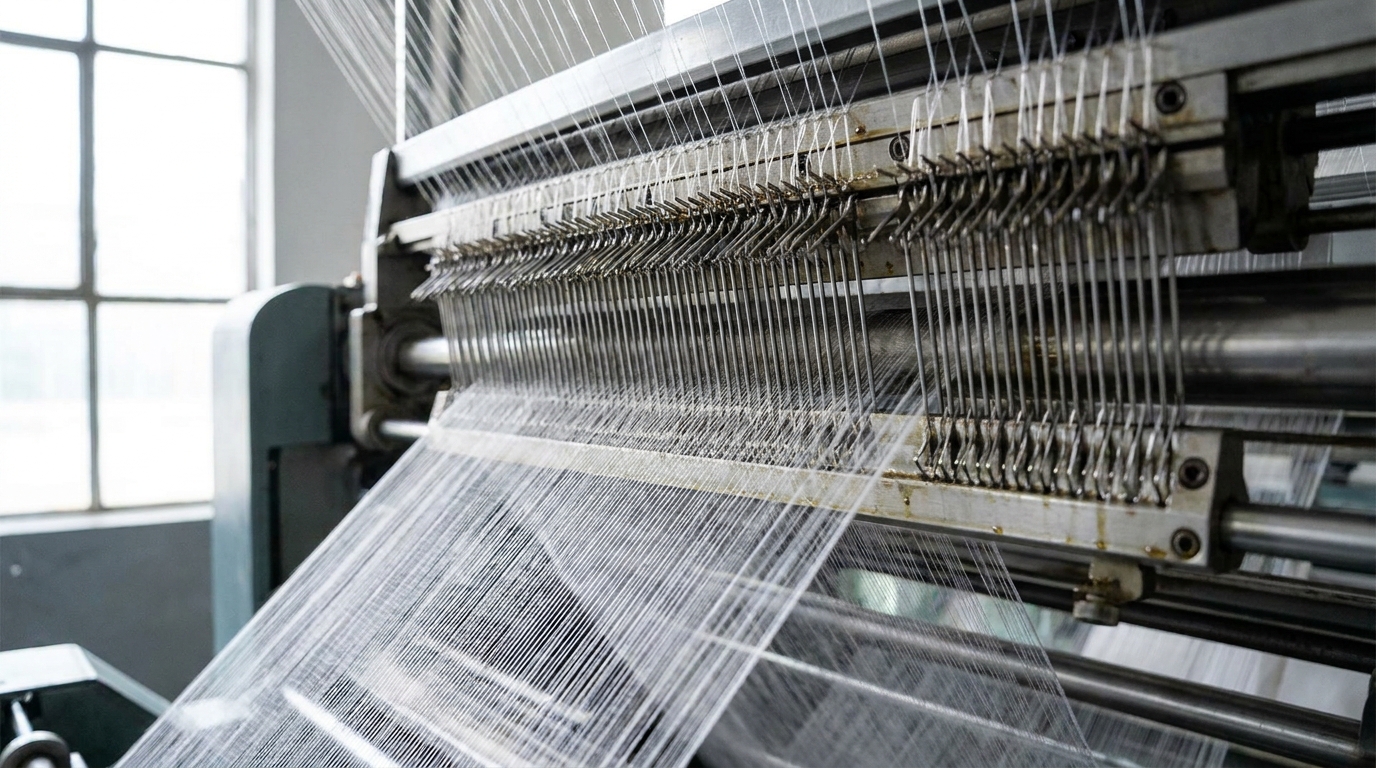
Once beam preparation is complete, yarns move directly to the knitting floor. The core of your factory’s output depends on your tricot and Raschel line configuration. These two primary machine categories dictate exactly what fabrics you can manufacture. Mills must carefully select their equipment mix based on specific target markets.
Tricot Machines for High-Speed Production
Tricot machines are engineered for rapid, continuous fabric output. They handle fine yarns to create simple, lightweight fabric structures. These machines are the standard choice for producing apparel, swimwear, and lightweight home textiles. Because the knitting elements operate with a short stroke, tricot equipment achieves exceptional production speeds. However, they are generally limited to simpler stitch patterns compared to other machine types.
Standard Raschel Machines for Complex Patterns
If your production line requires intricate designs or heavy-duty materials, standard Raschel machines are necessary. They use a distinct needle bar setup that comfortably accommodates coarser yarns. These machines also support complex pattern mechanisms. Mills use standard Raschel equipment to produce technical textiles, heavy laces, geogrids, and industrial flex banners. While they operate at slower speeds than tricot machines, their versatility is essential for specialized outputs.
Double Needle Bar Raschel Machines
This specialized Raschel variation features two separate needle bars working in tandem. It allows the production of thick, three-dimensional textiles. Common outputs include spacer fabrics for athletic footwear and seamless tubular garments. Specific double needle bar configurations are also required to knit plush materials, such as dense Raschel flannel blankets and faux rabbit fur. Adding this equipment enables highly profitable, specialized textile production.
Balancing Speed and Versatility
Mill owners must balance production volume against product variety when configuring their lines. A factory dominated by tricot machines maximizes daily yardage for basic, lightweight fabrics. Conversely, prioritizing Raschel equipment trades raw speed for the ability to knit complex, high-margin technical textiles.
| Machine Characteristic | Tricot Machines | Raschel Machines |
|---|---|---|
| Yarn Compatibility | Fine, uniform filament yarns | Coarser, varied, and heavy yarns |
| Fabric Weight | Lightweight to medium | Medium to heavy-duty |
| Velocidade de produção | Very high throughput | Moderate to high throughput |
| Aplicações típicas | Apparel, home textiles, swimwear | Technical textiles, plush blankets, geogrids |
Selecting the right mix of these machines ensures your factory can adapt to changing market demands. Properly matched knitting equipment also prevents bottlenecks before the fabric reaches your inline finishing machines.
Specialized In-Line Warp Knitting Machinery
While standard tricot and Raschel setups handle bulk production, many markets demand specialized textiles. Mills must integrate niche machinery into their lines to manufacture complex fabrics. These specialized machines expand factory capabilities beyond basic apparel and home textiles. Manufacturers like SutexMach provide advanced warp knitting equipment to support these highly specific production requirements.
Lace Machines
Lace machines utilize multi-bar and jacquard fall plate systems to create highly detailed patterns. These machines are essential for producing delicate apparel textiles and decorative home goods. For example, specific lace machine configurations are required to manufacture vertical curtains and heavy blackout curtains. The complex jacquard mechanisms allow precise control over individual yarns. This enables endless design possibilities without sacrificing fabric stability.
Terry Warp Knitting Machines
Standard knitting equipment cannot produce looped pile fabrics efficiently. Terry warp knitting machines are specifically engineered to create highly absorbent materials. They securely lock the pile loops directly into the ground fabric. This prevents the loops from pulling out during heavy use. Mills rely on these machines to produce durable microfiber terry towels. They are also used to manufacture specialized superpol fabrics for commercial cleaning applications.
Stitch-Bonding Machines
Technical textile production often requires bonding different material layers together. Stitch-bonding machines pierce through webs of loose fibers or substrate layers. They knit a strong thread through the materials to create a unified fabric. This process is heavily used in the automotive and industrial sectors. Common outputs include fiberglass stitch-bonding for construction and heavy-duty composite materials.
Weft-Insertion Machines
When a fabric needs exceptional dimensional stability, weft-insertion machines are the optimal solution. These machines lay straight, un-crimped yarns across the width of the fabric. The warp yarns then knit securely around these inserted threads. This unique structure provides extreme tensile strength for industrial applications. Manufacturers use weft-insertion technology to produce heavy-duty reinforced fabrics. Typical products include building mesh, geogrids, and industrial flex banners.
| Specialized Machine Type | Key Structural Mechanism | Typical Textile Products |
|---|---|---|
| Lace Machine | Jacquard fall plate systems | Blackout curtains, delicate apparel lace |
| Terry Machine | Pile loop locking | Microfiber terry towels, superpol fabrics |
| Stitch-Bonding Machine | Substrate and web piercing | Fiberglass composites, automotive textiles |
| Weft-Insertion Machine | Un-crimped cross-yarn laying | Geogrids, flex banners, building mesh |
End-Use Applications Across Industries
The specialized machinery discussed earlier directly determines your factory’s market reach. A carefully planned tricot and Raschel line configuration allows manufacturers to serve highly diverse sectors. From heavy industrial goods to delicate garments, warp-knitted fabrics are essential across multiple global industries.
Apparel and Footwear
The fashion and athletic sectors rely heavily on warp-knitted materials. High-speed tricot machines produce vast quantities of lightweight sportswear. Meanwhile, double needle bar setups excel at manufacturing seamless dresses. For the footwear industry, specialized jacquard machines knit breathable, structured jacquard shoe uppers. These uppers require precise yarn placement to balance flexibility and foot support.
Têxteis-lar
Interior furnishings demand both aesthetic appeal and everyday durability. Home textile producers use multi-bar lace machines to manufacture intricate vertical curtains and heavy blackout curtains. Dense plush materials, such as Raschel flannel blankets and faux rabbit fur, require specialized Raschel equipment. Additionally, terry warp knitting machines supply the market with highly absorbent microfiber terry towels.
Technical and Automotive Textiles
Heavy-duty applications require exceptional structural fabric stability. Weft-insertion machines produce high-tensile building mesh, industrial flex banners, and geogrids. Automotive manufacturers utilize stitch-bonding machines to create durable composite textiles for vehicle interiors. Warp knitting lines are also adapted to manufacture artificial turf. They provide a secure ground structure that prevents synthetic grass blades from pulling out under stress.
Têxteis médicos
The healthcare sector requires strictly controlled textile manufacturing environments. Warp knitting machines produce stable, breathable meshes used in surgical applications and specialized bandages. Because medical textiles must meet rigorous safety standards, accurate beam preparation is critical. This ensures uniform yarn tension, preventing structural fabric defects. Flawless production is necessary to avoid compromising sensitive patient care applications.
Optimizing the Line with Finishing and Maintenance
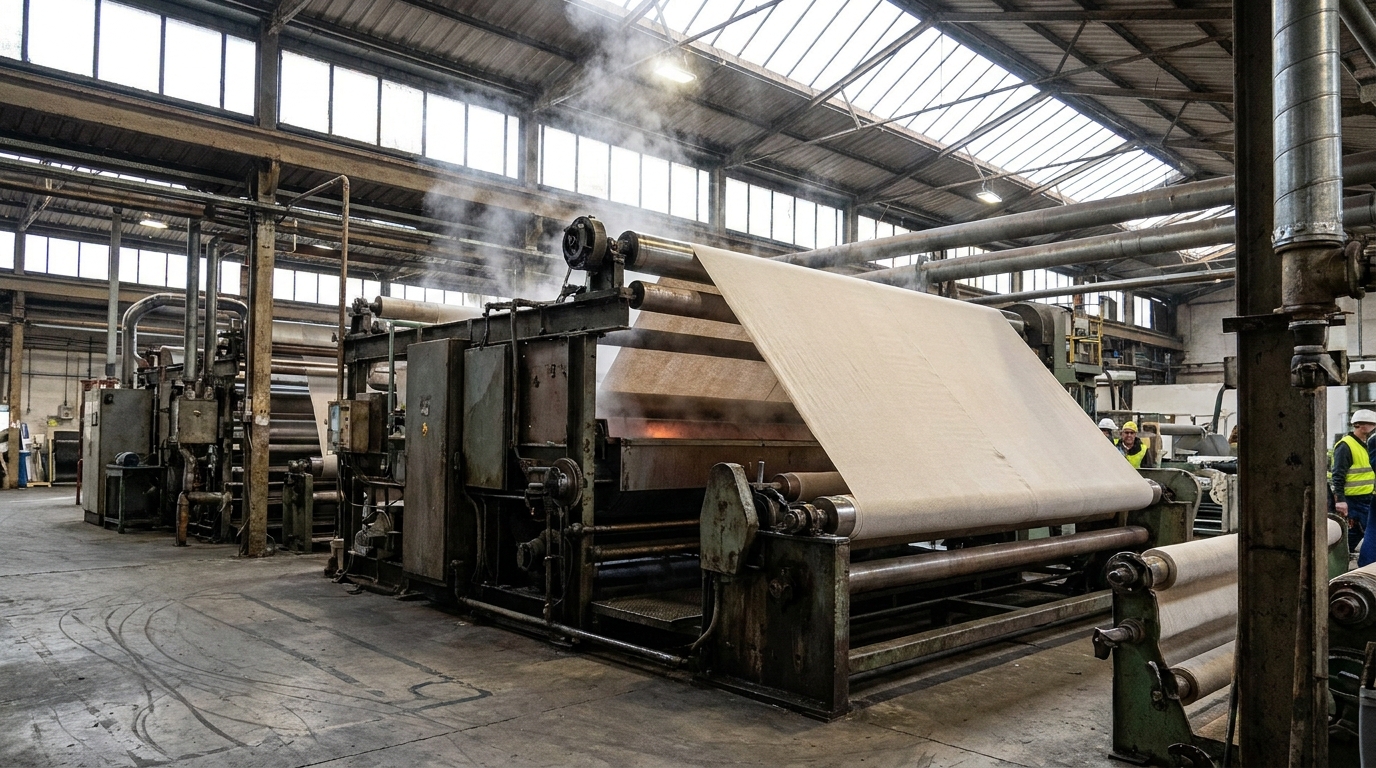
The production process does not end when fabric leaves the knitting machine. Raw textiles require extensive downstream processing to achieve their final texture and appearance. Integrating specialized finishing equipment is just as critical as your knitting configuration. SutexMach leverages over 30 years of experience to supply intelligent finishing machinery for global fabric mills.
Essential Downstream Finishing Processes
Moving from knitting to finishing requires careful handling. Mills must process the raw fabric to enhance its softness, density, or surface finish. SutexMach manufactures a comprehensive range of downstream equipment for these specific tasks. These include advanced sueding, calendering, drying, stenter, dyeing, dewatering, and air-softening machines.
Sueding machines create a soft, brushed surface ideal for apparel textiles. Calendering machines apply heat and pressure to smooth fabrics or create specialized finishes. Dewatering and air-softening machines efficiently remove moisture while improving the fabric’s final drape.
| Finishing Machine Type | Primary Function | Ideal Fabric Application |
|---|---|---|
| Máquina de sementeira | Brushes the fabric surface for softness | Apparel, Raschel flannel blankets |
| Máquina de calandragem | Applies heat and pressure for smoothness | Blackout curtains, technical textiles |
| Máquina de desidratação | Removes excess moisture rapidly | Microfiber terry towels, heavy knits |
| Air-Softening Machine | Enhances drape and hand-feel | Delicate garments, home textiles |
Avoiding Common Mill Management Mistakes
Factory managers often make errors that compromise the entire line. One major failure point occurs before knitting even begins. Neglecting tension control during beam preparation leads to severe fabric defects. Inconsistent yarn tension causes vertical streaks or structural weakness in the final product.
Another frequent mistake is mismatching finishing equipment to the fabric type. For example, using aggressive sueding on delicate lace will destroy the jacquard pattern. Always verify that your downstream machines match the structural limits of your knitted textiles.
Sourcing Spare Parts for Maximum Uptime
High-speed knitting puts immense physical stress on moving components. Needle bars, guide blocks, and sinkers wear down over time. Sourcing reliable spare parts for both warping and knitting machines is essential. Mills must maintain a readily available inventory of critical replacement components.
Relying on low-quality parts can damage delicate jacquard mechanisms or cause unexpected production halts. Proper maintenance scheduling minimizes downtime and ensures consistent fabric quality across long production runs.
Frequently Asked Questions About Warp Knitting Production Lines
How do I choose the right warping machine for my yarn?
You must select a warping machine based on your raw material. Direct warping machines are best for standard, continuous filament yarns like polyester. If you use highly elastic yarns, you need a spandex warping machine with motor-driven rollers to prevent over-stretching. For ultra-fine monofilaments, a split warping machine is required to separate thicker mother yarns and prevent tangling.
Which warp knitting machine is best for making curtains and heavy fabrics?
For intricate home textiles like vertical and heavy blackout curtains, lace machines with multi-bar and jacquard fall plate systems are the best choice. If you need to produce heavy-duty industrial fabrics, such as building mesh, geogrids, or flex banners, you should use weft-insertion or stitch-bonding machines. Standard tricot machines are generally too lightweight for these specialized products.
What happens if yarn tension is uneven during beam preparation?
Uneven yarn tension during the warping stage leads to major production issues. If the tension is too high, the yarn can snap during high-speed knitting, forcing the entire line to stop. Even minor tension differences can create visible vertical stripes, weak spots, or structural defects in the final fabric. Proper tension control is essential for continuous, high-quality production.
Why is regular maintenance and sourcing spare parts critical for these lines?
High-speed warp knitting puts intense physical stress on moving parts like needle bars, guide blocks, and sinkers. Over time, these components wear down. Using low-quality parts or failing to replace worn pieces can damage delicate mechanisms and cause unexpected factory downtime. Keeping a reliable inventory of compatible spare parts ensures your production line stays active and maintains consistent fabric quality.
What finishing equipment does SutexMach offer for warp-knitted textiles?
SutexMach manufactures a wide range of intelligent finishing machines to complete your production line. Their equipment includes dyeing and dewatering machines for color and moisture management, and stenter machines to heat-set the fabric’s final width. They also provide sueding, calendering, and air-softening machines to improve the fabric’s texture, smoothness, and drape.
Conclusão
A successful warp knitting production line relies on connected machines, from precise warping to advanced finishing. Selecting the correct equipment configuration is vital for your textile applications. Since 1985, SutexMach has provided complete, intelligent machinery solutions to support global fabric mills.
- Evaluate your current yarn preparation setup.
- Match your machinery configuration to target fabrics.
- Contact SutexMach to explore our textile equipment.