

 Korean
 English
 Hungarian
 Indonesian
 Bulgarian
 Turkish
 Polish
 Russian
 Spanish
 Portuguese
 French


Did you know luxury hotels demand thousands of premium terry towels daily?
Starting a profitable factory meets this need but brings complex machinery challenges.
In this guide, you will learn how to start a terry towel making machine production line.
Market Research and Business Planning
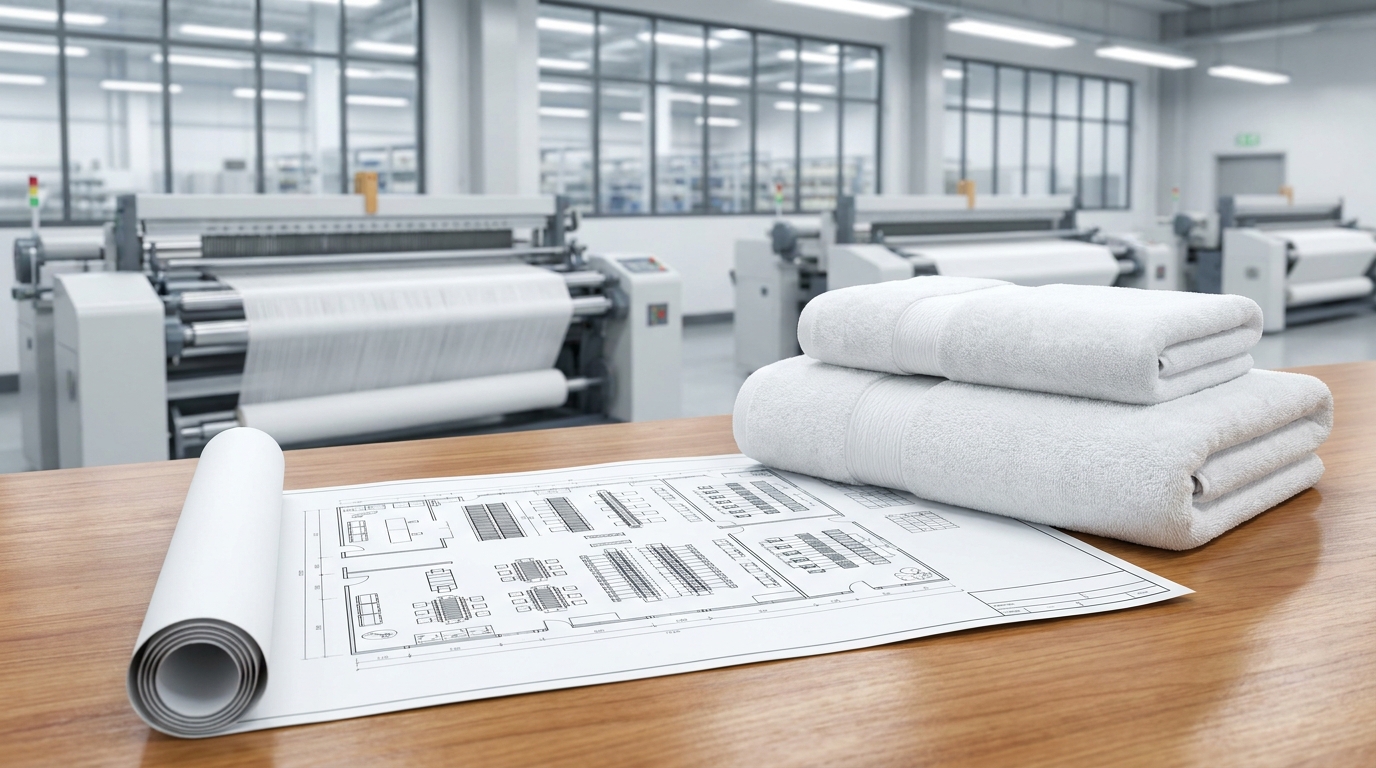
Luxury hotels demand thousands of premium towels daily. To capture this demand, you need a solid foundation before buying equipment. Market research dictates your entire setup when learning how to start a terry towel making machine production line.
Identifying Your Target Audience
You must know your buyers before spinning a single yarn. Different markets require completely different towel specifications. Luxury hotels usually demand heavy, plush towels. These range from 600 to 900 GSM. They prioritize durability and a premium feel. Spas constantly look for supreme softness. Everyday home consumers often prefer 300 to 500 GSM towels. These lighter towels dry much faster.
| Target Market | Recommended GSM | Yarn Type | Key Priority |
|---|---|---|---|
| Luxury Hotels | 600 – 900 | 16s / 20/2 Ring-spun | Durability & Plushness |
| Spas & Salons | 400 – 600 | Combed Cotton / Bamboo | Supreme Softness |
| Everyday Home Use | 300 – 500 | Carded Cotton | Quick Drying |
Analyzing Competitor Products and Trends
Study established manufacturers to find market gaps. Many successful brands start as Private Label or OEM manufacturers. This model allows them to supply global retail chains directly. Look closely at their material choices. Competitors often use 16s or 20s ring-spun cotton for institutional durability. Combed cotton always offers premium softness. Carded cotton remains a cost-effective choice. Analyze global manufacturing hubs like Yiwu City, China. This helps you understand export logistics and current design trends.
Creating a Robust Business Plan
A detailed business plan keeps your factory on track. You need 5,000 to 10,000 square feet minimum. This space fits a small-scale integrated production unit. Map out your material flow from raw yarn to finishing. Estimating your 테리 타월 제조 공장 비용 requires careful equipment selection. High-speed looms need 5 to 15 kW of power each. Finishing equipment demands significant thermal energy.
Choosing experienced suppliers simplifies this planning phase. SutexMach leverages over 30 years of industry experience. We offer complete one-stop solutions for your factory. We guide you from machine selection to final installation. Our intelligent textile machinery ensures stable performance and high automation.
Navigating Regulatory Compliances
Textile manufacturing involves strict environmental regulations. The 테리 타월 생산 공정 consumes massive amounts of water. Dyeing and bleaching require 50 to 100 liters per kilogram. You must install a proper Effluent Treatment Plant. This plant handles all chemical discharge safely.
Governments strictly monitor wastewater treatment and energy efficiency. Choosing eco-friendly equipment helps you meet these standards easily. SutexMach designs drying, stenter, and dyeing machines specifically for environmental friendliness. Energy-efficient setups reduce your carbon footprint. They keep your operations fully compliant.
Step-by-Step Terry Towel Production Process

You just learned how eco-friendly equipment helps meet strict environmental regulations. Now, let’s see these machines in action. Understanding the complete manufacturing flow is crucial when figuring out how to start a terry towel making machine production line. The journey from raw yarn to a plush luxury towel involves several precise stages. Each step requires specific machinery to ensure high absorbency and durability.
Yarn Preparation
Before weaving begins, you must prepare the raw material. Workers wind, warp, and size the cotton yarn. Terry fabrics uniquely require two separate warp beams. One handles the ground warp. The other handles the pile warp. The pile warp eventually creates the soft loops. During this stage, sizing machines coat the ground warp yarns in starch. This prevents yarn breakage during high-speed weaving. You should maintain 65% to 75% relative humidity in your weaving shed. This reduces yarn brittleness significantly.
Weaving the Terry Fabric
Weaving is where the towel takes its true form. Specialized looms use a unique “terry motion” to create the signature uncut loop pile. A standard fabric loom cannot weave terry. It lacks the necessary three-pick or four-pick pile-forming motion. The machine maintains a specific ratio of ground yarn to pile yarn. This ratio usually falls between 1:6 and 1:8.
| Loom Technology | Operating Speed | Best Application |
|---|---|---|
| Rapier Looms | 300 – 600 RPM | Complex Jacquard designs and frequent pattern changes. |
| Air-jet Looms | 800 – 1,200+ RPM | High-volume standardized production (Plain or Dobby). |
Evaluating the towel weaving machine price against your production goals helps you choose the right loom technology for your factory layout.
Wet Processing and Dyeing
Woven fabric looks dull and feels harsh initially. Wet processing changes this completely. The fabric goes through scouring and bleaching. This removes natural impurities from the cotton. Next comes the coloring phase. Luxury hotels demand vibrant and fade-resistant colors. Using a specialized 호텔 타월용 타월 염색기 production ensures deep color penetration.
SutexMach offers advanced dyeing machines designed for stable performance and environmental friendliness. We highly recommend using “Soft-flow” dyeing setups. They prevent pile flattening and surface abrasion. This keeps the loops intact and plush.
Finishing and Drying
Wet towels need careful drying to achieve maximum plushness. First, hydro-extractors or dewatering machines spin the fabric. This centrifugal action removes excess water quickly. Then, the fabric enters the thermal drying phase.
SutexMach specializes in intelligent drying, stenter, and air-softening machines. Our highly automated equipment provides energy-efficient solutions for this energy-intensive stage. A stenter machine controls the fabric width and heat-sets the material. You must account for an 8% to 10% shrinkage allowance during this phase. Proper pH control and silicone-based softeners prevent the towels from feeling harsh. Finally, air-softening machines fluff the loops. This delivers supreme softness to the end user.
Cutting and Sewing
The continuous fabric rolls now become individual towels. Automated cutting machines slice the fabric along the flat-woven cross-borders. Sewing machines then handle the confection stage. This includes automatic longitudinal hemming and cross-hemming. The selvedge edges get tightly stitched to prevent fraying during heavy commercial washing. Finally, workers attach brand labels and package the finished towels for global shipment.
Estimating Your Terry Towel Manufacturing Plant Cost

You just saw how continuous fabric rolls transform into packaged towels ready for global shipment. Now you need to know what it takes to fund this entire operation. Breaking down the total terry towel manufacturing plant cost is essential for new entrepreneurs. Figuring out how to start a terry towel making machine production line requires a realistic budget. Let’s explore the financial requirements for land, machinery, and daily operations.
Land and Infrastructure
As we covered earlier, you need a minimum of 5,000 to 10,000 square feet. This space houses a small-scale integrated production unit. A continuous production layout requires distinct zones. You must separate the weaving shed from the wet processing area. This prevents high humidity from affecting dry yarn. You also need space for raw material storage and an Effluent Treatment Plant. Proper factory flooring remains crucial. It must withstand heavy machinery vibrations and chemical spills.
Machinery Investment
Equipment takes up the largest portion of your budget. First, you must evaluate the towel weaving machine price based on your target market. High-speed air-jet looms cost more upfront but deliver massive output. Rapier looms offer a lower entry price for complex jacquard designs.
Next, budget for wet processing and finishing equipment. SutexMach provides one-stop solutions from machine selection to final installation. Our dyeing, dewatering, and stenter machines feature high automation. This reduces your reliance on expensive manual labor. We design our intelligent textile machinery for stable performance and energy efficiency. Buying reliable equipment prevents expensive breakdowns later.
Operational Costs
Daily expenses keep your factory running smoothly. Raw materials like ring-spun cotton consume a large chunk of your working capital. You also need a steady supply of dyes and sizing chemicals. Utility bills add up quickly during continuous production. Dyeing and bleaching require massive amounts of water. Finishing equipment demands heavy thermal and electrical loads. Finally, factor in skilled labor costs. You need machine operators, quality control inspectors, and maintenance technicians.
Tips for Optimizing Your Budget
You can optimize costs without sacrificing towel quality. Start by investing in energy-efficient machinery. SutexMach drying and air-softening machines lower your monthly utility bills. They are environmentally friendly and highly automated. Review the table below for actionable budget optimization strategies.
| Cost Category | Optimization Strategy | Impact on Quality |
|---|---|---|
| 기계 | Buy highly automated, energy-efficient equipment. | Improves consistency and reduces fabric defects. |
| Raw Materials | Source carded cotton for everyday consumer towels. | Maintains durability while lowering yarn costs. |
| Utilities | Install heat recovery systems on stenter machines. | Zero impact; keeps loops plush and intact. |
| Labor | Utilize one-stop supplier installation and training. | Ensures operators handle complex equipment correctly. |
Choosing the Right Weaving Equipment and Understanding Towel Weaving Machine Price
You just explored actionable budget optimization strategies to control your plant expenses. Now you must allocate those funds wisely on the production floor. The weaving stage defines the plushness and quality of your final product. When figuring out how to start a terry towel making machine production line, selecting the right loom is critical. You must balance speed, automation, and the overall towel weaving machine price.
Matching Loom Types to Your Business Model
As we covered earlier, your target market dictates your machinery. Rapier looms handle frequent design changes easily. They are perfect for weaving complex Jacquard patterns or custom hotel logos. Air-jet looms push production speeds to the maximum. They dominate high-volume output for standard dobby or plain towels. You should align your loom choice directly to your initial business plan. Buying high-speed equipment for small custom orders wastes capital.
Key Factors Influencing Loom Prices
Several variables impact the towel weaving machine price. Operating speed is the biggest cost driver. Faster machines require robust components to handle intense vibrations. Automation level also shifts the price tag significantly. Looms featuring automatic pick finding and electronic shedding cost more upfront. Brand reputation plays a major role too. Established manufacturers charge premium prices for proven reliability. You are paying for the specialized terry motion mechanics. This complex system ensures perfect loop formation.
| Price Factor | Low-Cost Looms | Premium Looms |
|---|---|---|
| Speed & Output | Lower RPM requiring manual adjustments. | Maximum RPM delivering continuous high-volume output. |
| 자동화 | Basic mechanical shedding systems. | Electronic shedding and auto-pick finding. |
| Build Quality | Lighter frames prone to intense vibration. | Heavy-duty frames ensuring stable performance. |
Evaluating Your Return on Investment
Investing in high-automation looms pays off quickly. Intelligent textile machinery reduces your daily reliance on manual labor. It minimizes costly fabric defects like missing loops. SutexMach provides one-stop solutions for your complete production line. Founded in 1985, we leverage over 30 years of industry experience. We ensure your equipment delivers stable performance and high automation. Reliable machines prevent sudden and expensive factory breakdowns. This keeps your luxury hotel clients completely satisfied.
Integrating Smart Technology
Modern weaving equipment relies heavily on smart sensors. These digital systems monitor warp tension continuously. Consistent tension prevents uneven pile heights across the fabric width. Smart technology also detects yarn breakage instantly. The loom stops automatically before weaving a defective section. Operators can fix the issue immediately. This precise control reduces raw material waste. It ensures your factory maintains premium towel standards daily.
Achieving Premium Quality: Towel Dyeing Machine for Hotel Towel Production

You just learned how smart sensors maintain premium towel standards during weaving. Flawless loops are only half the battle. When figuring out how to start a terry towel making machine production line, coloring is equally vital. Achieving a vibrant, long-lasting color requires immense precision. This section explores why luxury hospitality demands strict dyeing standards. You will discover how to select the right equipment. This ensures consistent batch colors and maintains fabric integrity.
Why Hotel Towels Require Specific Standards
Luxury hotels put their linens through intense stress daily. They wash them using harsh industrial chemicals and high heat. These extreme commercial conditions quickly fade poor-quality dyes. Hotel towels require exceptional colorfastness to survive this relentless cycle. Guests expect pristine, vibrant towels every time they visit. As we covered earlier, durability is just as important as plushness. The dye must penetrate deeply into the ring-spun cotton fibers. Deep penetration prevents uneven fading across the fabric. It keeps the towels looking brand new after hundreds of washes.
Selecting the Ideal Dyeing Equipment
Achieving consistent colors across massive orders is difficult. You need specialized equipment to handle this operational challenge. A reliable towel dyeing machine for hotel towel production ensures perfect color matching. Traditional winch dyeing often flattens the delicate loops. It causes unwanted surface abrasion on the fabric. Instead, you should use soft-flow dyeing technology. This method moves the fabric gently through the dye bath. It keeps the terry loops completely intact and plush.
| Dyeing Technology | Water Consumption | Loop Integrity | Best Application |
|---|---|---|---|
| Traditional Winch | High (80-100 L/kg) | Prone to flattening | Lower-grade disposable fabrics |
| Soft-Flow Dyeing | Low (40-60 L/kg) | Keeps loops plush | Premium luxury hotel towels |
SutexMach provides advanced dyeing machines designed for these high standards. Since 1985, we have manufactured intelligent textile machinery globally. Our equipment guarantees stable performance during continuous factory operations. We ensure consistent batch colors while protecting your valuable terry loops.
Energy-Efficient and Eco-Friendly Dyeing Technologies
Wet processing consumes massive amounts of natural resources. Standard dyeing requires up to 100 liters of water per kilogram. This creates a huge environmental footprint for your factory. Modern production lines must adopt eco-friendly dyeing technologies today. Energy-efficient machines drastically reduce both water and steam usage. They lower your daily utility bills directly. They also generate significantly less wastewater. This makes managing your Effluent Treatment Plant much easier. SutexMach prioritizes environmental friendliness in all our machinery designs. Our setups help you meet strict government regulations easily. You achieve this without sacrificing any color quality.
Pairing Dyeing with Efficient Dewatering and Drying
The coloring process continues after the fabric leaves the dye bath. Wet towels are extremely heavy and fragile. You must remove this excess moisture carefully to maintain fabric integrity. First, high-speed dewatering machines extract the bulk of the water centrifugally. This crucial step prepares the fabric for thermal drying. Next, the towels enter a stenter or drying machine. This equipment controls the fabric width perfectly during heat-setting. Finally, specialized air-softening machines fluff the terry loops.
SutexMach offers complete one-stop solutions for this entire sequence. Our highly automated drying and air-softening systems work seamlessly together. They integrate perfectly with our dyeing machines. This seamless connection locks in vibrant colors permanently. It delivers supreme softness directly to the end user.
Building a Complete Production Line with SutexMach
We just discussed how seamless connections between dyeing, dewatering, and air-softening lock in vibrant colors permanently. Now you need a reliable partner to bring these crucial stages together. Figuring out how to start a terry towel making machine production line requires more than just buying separate machines. You need a fully integrated system.
Leveraging Decades of Industry Expertise
SutexMach was founded in 1985. We are proudly affiliated to Jiangsu SoHo Honry Import & Export Co., Ltd. Our team leverages over 30 years of deep expertise in intelligent textile machinery. We understand the complex challenges new entrepreneurs face today. We know exactly what it takes to build a profitable and compliant factory from the ground up.
Our Core Equipment Offerings
You need machines designed specifically to work together. Our core equipment offerings fit seamlessly into your factory layout. We manufacture specialized dyeing, dewatering, drying, stenter, and air-softening machines. We also provide sueding, calendering, and warp knitting equipment for diverse textile applications. Connecting these units ensures your material flows smoothly from wet processing directly to final finishing.
Key Advantages of Our Machinery
Global textile mills trust our equipment daily. We engineer every machine focusing on four critical pillars. These advantages directly improve your operational success and product quality.
| Equipment Advantage | Direct Benefit to Your Factory |
|---|---|
| Stable Performance | Prevents sudden breakdowns and keeps your production schedules on track. |
| High Automation | Reduces your reliance on costly manual labor and minimizes human error. |
| 에너지 효율성 | Lowers heavy thermal and electrical utility bills significantly every month. |
| Environmental Friendliness | Helps you meet strict government wastewater and emission regulations easily. |
Providing Complete One-Stop Solutions
Starting a new factory often feels overwhelming initially. We remove this stress by offering comprehensive one-stop solutions. Our experts help you select the exact machines for your specific production goals. We customize the equipment to fit your available floor space perfectly. Our team then handles the complete installation process onsite. Finally, our dedicated after-sales service keeps your machinery running at peak capacity for years.
결론
Starting a terry towel production line requires careful planning and budgeting. You must understand the entire manufacturing process first. Partnering with experienced manufacturers like SutexMach ensures premium quality and long-term profitability. Their sustainable machines help your textile mill succeed.
- Draft a detailed budget for your new factory.
- Research local environmental laws for textile mills.
- Contact SutexMach to customize your equipment layout.
Frequently Asked Questions About Terry Towel Making Machine Production Lines
Can I convert a standard fabric loom to make terry towels?
No, you cannot use a standard fabric loom. Terry towels require a very specific weaving method. The machine needs a special pile-forming motion. It must handle two separate warp beams. One beam holds the ground warp yarns. The other beam holds the pile warp yarns. Standard looms lack this complex mechanical setup. You must buy dedicated terry towel making machines. This ensures proper loop formation and fabric quality.
What is the best yarn for weaving hotel-grade towels?
Hotel towels need to be highly durable and soft. The best choice is 16s ring-spun cotton. This yarn type withstands frequent washing very well. Combed cotton offers a more premium, soft feel. However, it costs more than standard carded cotton. Carded cotton is highly durable and cost-effective. It remains the top choice for most hospitality needs. Select the yarn based on your specific target market.
How can I prevent terry towels from feeling harsh?
Harshness is a common issue during towel production. You must maintain proper pH control during finishing. Using silicone-based softeners greatly improves the fabric texture. The right finishing machinery makes a huge difference. SutexMach offers advanced air-softening and drying machines. These machines help maintain the perfect towel softness. Always avoid heavy tension during the drying process. Soft-flow dyeing machines also stop the pile from flattening.
Should I choose a rapier loom or an air-jet loom?
Your choice depends on your production volume and designs. Rapier looms operate at 300 to 600 RPM. They are perfect for complex designs and frequent changes. Air-jet looms run much faster, reaching over 800 RPM. They are excellent for high-volume, standardized towel production. Rapier machines offer more versatility for custom orders. Air-jet machines provide maximum efficiency for simple patterns. Evaluate your business goals before buying the loom.
What equipment do I need for the finishing process?
The finishing stage requires several specialized textile machines. You will need high-quality dyeing and dewatering equipment. Stenter machines are crucial for drying and width control. SutexMach provides intelligent stenter, drying, and calendering machines. We offer complete solutions for your entire finishing line. Our equipment ensures energy efficiency and stable performance. Proper finishing machines guarantee the final towel quality. Partner with experienced manufacturers for the best results.
Start your terry towel production journey today. Follow these exact steps to build your production line.
- Calculate your initial budget for specialized weaving machinery.
- Source durable ring-spun cotton for your raw materials.
- Contact SutexMach for intelligent stenter and drying equipment.
- Design an efficient factory layout for smooth material flow.