


 Spanish
 English
 Hungarian
 Indonesian
 Bulgarian
 Turkish
 Polish
 Russian
 Portuguese
 Korean
 French


¿Está arriesgándose a obtener tonalidades desiguales por utilizar la máquina equivocada? El éxito del teñido depende de unos parámetros de equipo adecuados. Conocer las especificaciones de las máquinas de teñido tipo jigger evita tiempos de inactividad costosos. Una comparación inteligente garantiza una alta calidad del tejido y una eficiencia en los costos. En este artículo, aprenderá qué aspectos debe evaluar primero. Abordamos la capacidad, la velocidad, el control de la tensión y la temperatura.
Core Jigger Dyeing Machine Specifications to Evaluate
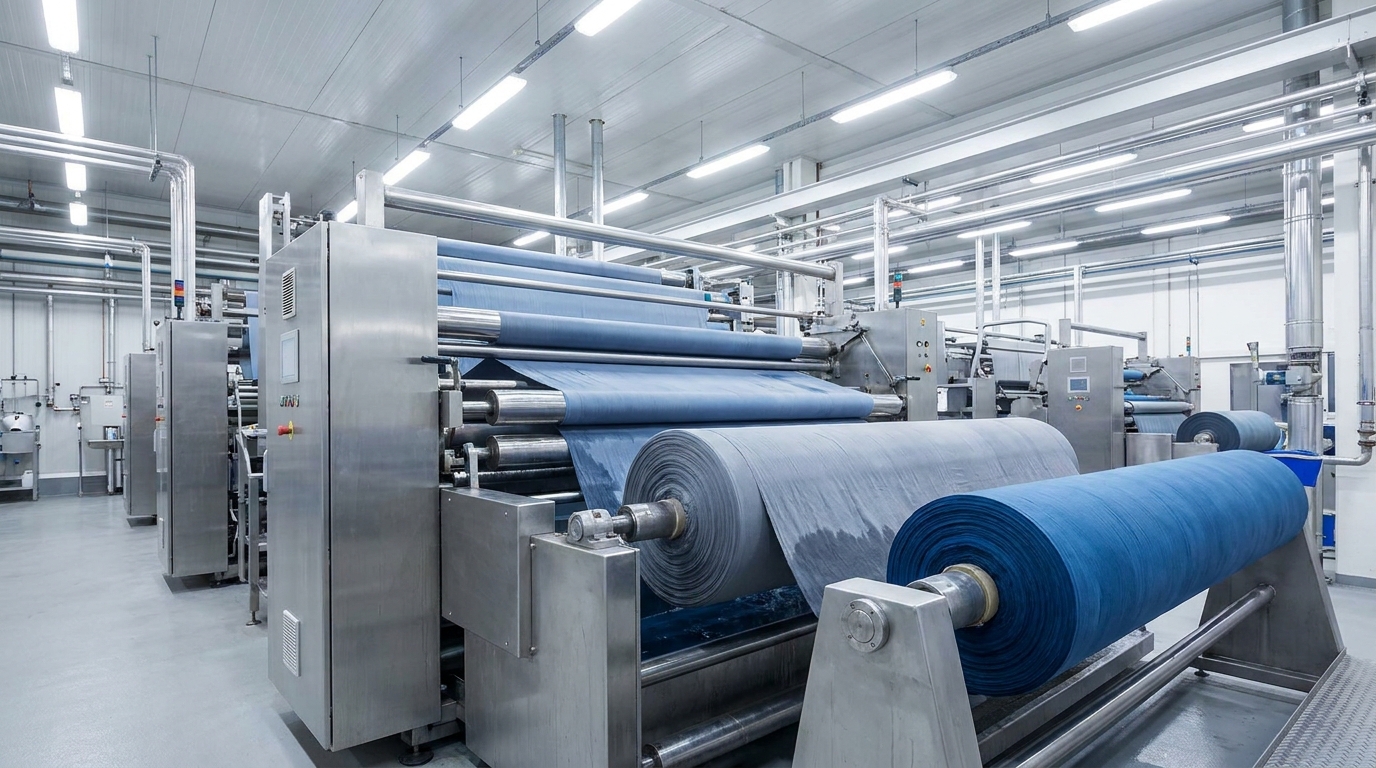
Evaluating especificaciones de la máquina de teñido jigger is the first step to building a reliable production line. You must review fundamental parameters to avoid mismatched equipment. Matching these specs to your fabric types ensures smooth operations. Natural fibers behave differently than synthetics during processing. Delicate silk requires gentler handling than heavy cotton. When you align machine capabilities to your textiles, you prevent costly fabric damage. This proactive approach also stops uneven dyeing before it starts.
Assessing Jigger Dyeing Machine Capacity
Defining capacidad de la máquina de teñido jigger involves three main factors. You must check maximum fabric width, maximum roll diameter, and weight limits. Standard fabric widths range from 1600mm to 3400mm. Common roll diameters sit between 600mm and 1400mm.
To calculate your ideal batch size, look at daily production demands. Never overload the machine past its rated limits. A unit built for 1000kg needs specific minimum liquor levels. Running a 200kg batch in it might waste valuable resources.
Liquor ratio directly impacts this working capacity. Standard ratios range from 1:2 to 1:5. Ultra-low liquor ratios reduce water consumption by up to 50%. They also lower chemical usage and save heating energy.
You should compare lab-scale models against heavy-duty industrial units. Lab jigs handle small batches between 5kg and 20kg. Industrial units process massive loads from 500kg to 1500kg. At SutexMach, we have over 30 years of experience. We manufacture intelligent textile machinery for global fabric mills. Our team helps facilities choose exact capacities to scale production efficiently.
| Tipo de máquina | Load Capacity Range | Common Roll Diameters | Typical Mill Application |
|---|---|---|---|
| Lab-Scale Jigger | 5kg – 20kg | Under 600mm | Sampling and color matching |
| Industrial Jigger | 500kg – 1500kg | 600mm – 1400mm | Global fabric mills and mass production |
Analyzing Jigger Machine Fabric Speed
En velocidad de la máquina jigger para tejidos dictates your overall dyeing cycle time. Faster speeds mean shorter cycles, but you must maintain control. Variable speed drives are essential for this task. Dual AC frequency conversion motors handle different fabric weights easily. They prevent physical distortion in sensitive materials.
Typical operating speeds adjust from 10 to 150 meters per minute. Some high-speed models even reach 200 meters per minute. You should select a speed range based on production goals. Always consider the tensile strength of your specific textiles.
Consistent fabric speed remains non-negotiable for high quality. If linear speed fluctuates, dwell time in the dye bath varies. This variation causes a frustrating “tailing” effect. The beginning and end of a roll will show different shades. Reliable drive systems ensure uniform dye penetration from start to finish. They keep your color shading perfectly consistent across every batch.
Advanced Features: Tension and Temperature
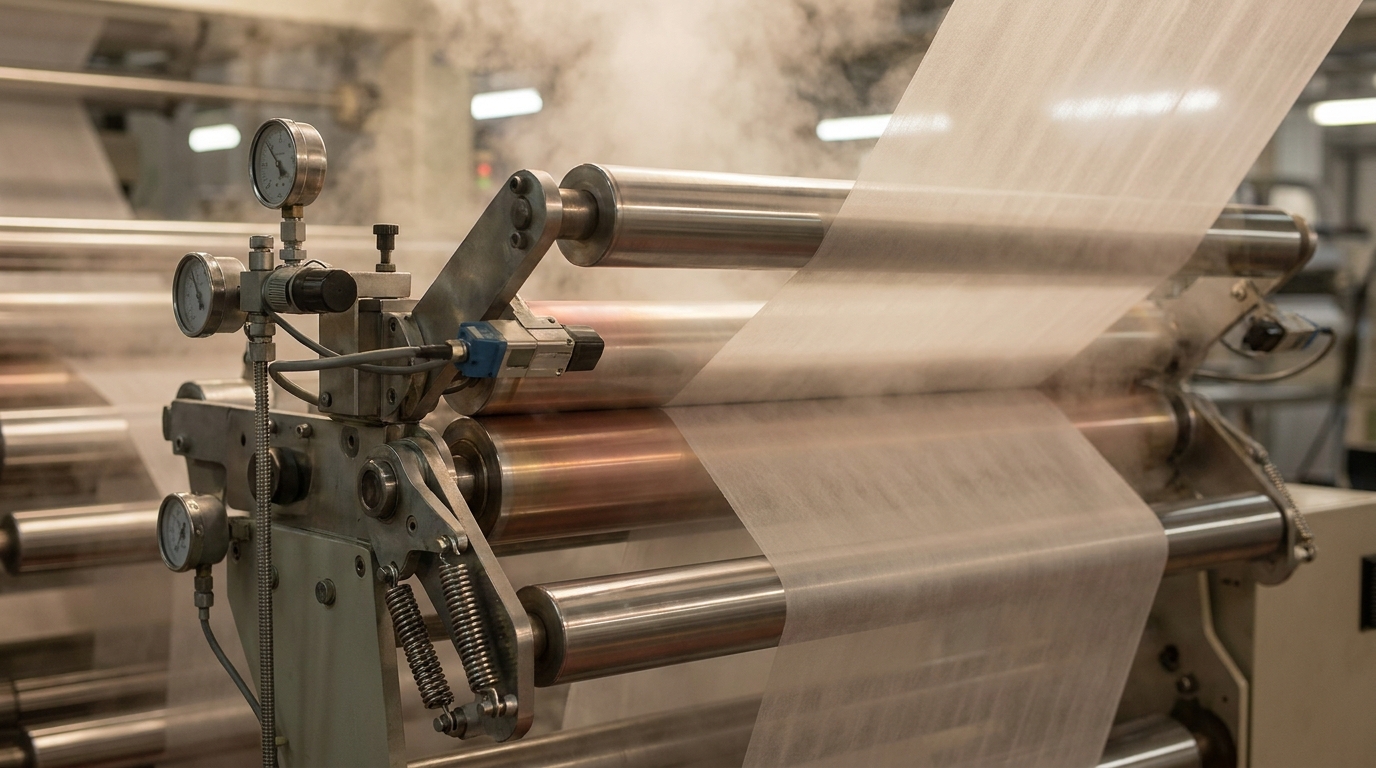
Just as fabric speed and batch capacity determine your daily output, mechanical handling and thermal limits dictate your final quality. Moving beyond basic dimensions means evaluating how a machine physically treats your textiles. You must look closely at tension mechanisms and heating capabilities to ensure perfect results.
The Importance of Jigger Machine Tension Control
Evaluating control de tensión de la máquina jigger is arguably your most critical step. Poor tension setup ruins delicate fabrics fast. It causes permanent elongation, deep creases, and frustrating edge curling. Older machines rely on simple mechanical brakes. Today, the industry shifts heavily toward intelligent, sensor-driven systems.
We use precision load cells in modern equipment. They constantly measure the physical pull on the fabric. A PLC algorithm then adjusts the drive motors instantly. This closed-loop feedback keeps tension perfectly constant from the first yard to the last.
Delicate materials demand this exact precision to survive the dye bath. Silk, rayon, and spandex blends stretch easily under stress. You must set tension as low as 5kg (50N) for these sensitive items. Heavy cottons might need up to 100kg (1000N). At SutexMach, we build intelligent textile machinery to handle these extremes. Since 1985, we have engineered systems that protect your most fragile textiles during every single pass.
- Mechanical Control: Relies on manual friction brakes. Prone to human error and inconsistent pull.
- Electronic Control: Uses load cells and PLC feedback. Adjusts instantly to maintain exact tension limits.
- Fabric Integrity: Prevents edge curling and center-to-selvedge shading on highly elastic blends.
When to Choose a High Temperature Jigger Dyeing Machine
Your specific fabric type dictates your thermal requirements. Natural fibers like cotton process perfectly in atmospheric jigs. These normal temperature machines operate up to 98°C. However, synthetic materials require a much more aggressive approach. You must invest in a máquina de teñido jigger de alta temperatura for polyester and synthetic blends.
Disperse dyes only penetrate polyester under extreme heat. These specialized machines reach temperatures between 135°C and 140°C. They operate safely under high pressure ratings, typically 3.0 to 3.5 bar. Tightly woven fabrics also benefit greatly from this intense environment. The pressure forces dye molecules deep into the core fibers.
You should carefully evaluate heating and cooling gradient specifications. A standard high-temperature unit heats at about 3°C per minute. It cools at around 2°C per minute. Faster rates might shock the fabric and cause permanent creases.
Safety remains paramount when operating pressurized vessels. You must look for robust door sealing mechanisms and automatic depressurization valves. The main dye vat must use high-grade SUS316L stainless steel. Lower grades corrode quickly under high heat, salts, and harsh chemicals.
| Especificación | Atmospheric Jigger | High Temperature (HTHP) Jigger |
|---|---|---|
| Max Temperature | Up to 98°C | 135°C – 140°C |
| Operating Pressure | Ambient (Normal) | 3.0 – 3.5 bar |
| Ideal Fabrics | Cotton, Silk, Viscose, Natural Fibers | Polyester, Synthetic Blends, Tightly Woven |
| Construction Material | Standard Stainless Steel | SUS316L Stainless Steel (Corrosion Resistant) |
Intelligent Control and Automation in Textile Machinery
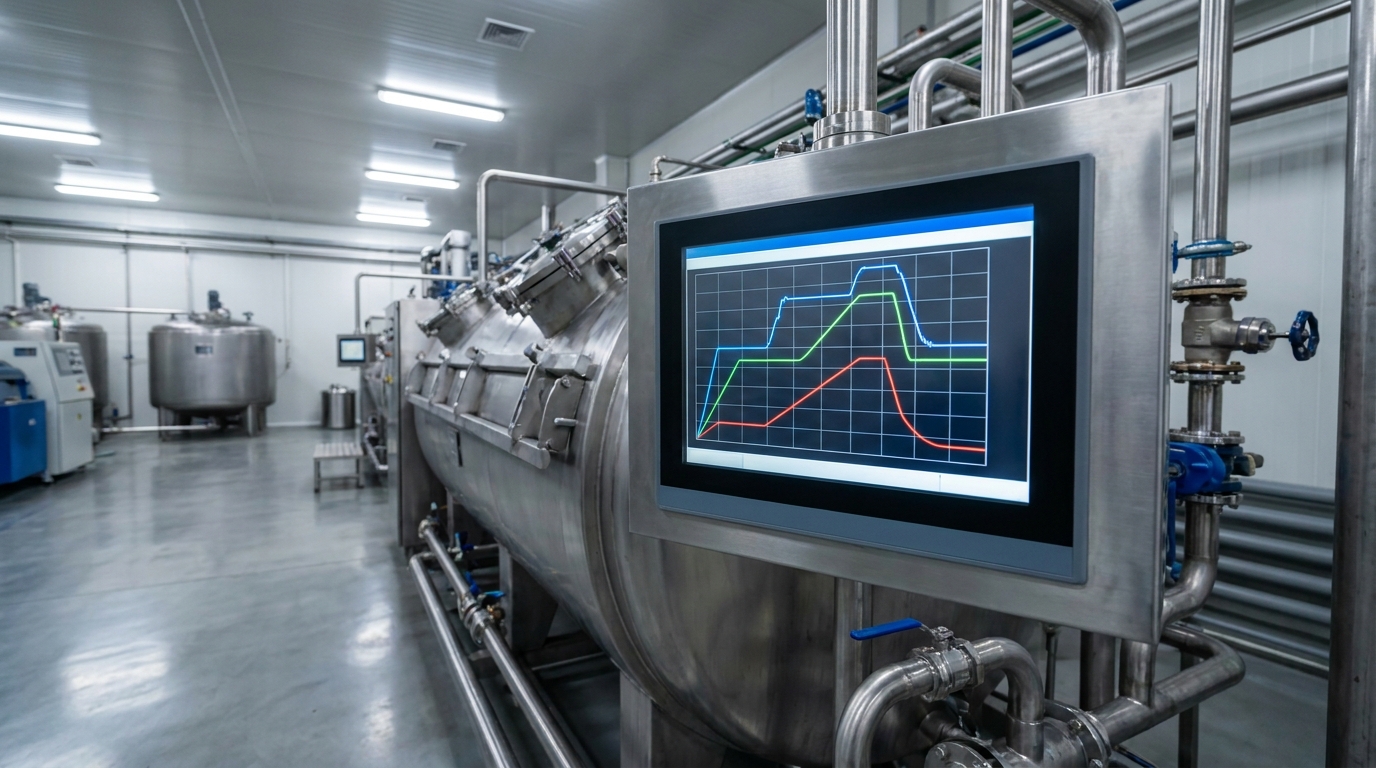
Achieving the precise tension and exact heating gradients we just discussed is impossible with manual controls. The industry has moved far beyond hand-operated valves and mechanical brakes. Today, upgrading to intelligent textile machinery is essential for consistent fabric quality. You must evaluate how a machine’s digital brain handles complex dyeing cycles.
Evaluating Core Automation Specifications
Look closely at the Programmable Logic Controller (PLC). It acts as the central command for your jigger. A robust PLC processes data from load cells and temperature sensors instantly. It ensures your machine reacts faster than any human operator could. This rapid processing keeps your entire dyeing cycle stable.
Pair the PLC with a user-friendly Human Machine Interface (HMI). Operators need a responsive touch screen to monitor the dye bath actively. Programmable recipe management is another must-have specification. It allows you to save hundreds of specific dye cycles directly to the machine. You simply select a saved recipe, and the equipment perfectly replicates the process. This consistency eliminates frustrating batch-to-batch color variations.
Reducing Human Error with Smart Features
Manual chemical additions often ruin entire batches of expensive fabric. Automated dosing systems solve this problem completely. When comparing jigger specifications, look for machines offering different dosing curves. Linear, progressive, and regressive dosing options give you total exhaustion control over the dye bath.
Automatic temperature control is equally vital for fabric safety. It manages the strict heating and cooling rates required to prevent thermal shock. You also need highly reliable auto-reversing functions. When the fabric reaches the end of a roll, the machine must switch directions seamlessly. This immediate reversal prevents the fabric from sitting idle in the dye liquor. Idle fabric quickly develops dark patches and permanent crease marks.
- Automated Dosing: Utilizes specific curves to prevent uneven dye uptake and chemical spotting.
- Auto-Reversing: Triggers instantly at the roll’s end to prevent center-to-selvedge shading.
- Temperature Regulation: Locks in precise heating gradients without manual steam valve adjustments.
Integrating Jiggers into Digital Factory Systems
Standalone machines limit your overall production visibility. Modern jigger dyeing machines must connect easily to your broader digital management systems. Factory-wide networks track water usage, steam consumption, and cycle times in real time. This connectivity helps mill managers spot hidden inefficiencies immediately.
At SutexMach, we specialize in building intelligent textile machinery. Since 1985, we have helped global fabric mills integrate smart dyeing units into their larger digital ecosystems. Our equipment communicates smoothly with central factory networks and ERP systems. This level of automation streamlines your daily workflow and protects your production quality.
| Process Area | Manual Operation Risks | Intelligent Automation Benefits |
|---|---|---|
| Chemical Dosing | Uneven pouring causes color patches. | PLC-controlled curves ensure even exhaustion. |
| Cycle Management | Relies on operator memory and timing. | Programmable recipes guarantee exact replication. |
| Roll Reversal | Delays cause “tailing” and dark ends. | Auto-reversing triggers instantly to protect fabric. |
Equipment Durability and Material Specifications

While intelligent controls protect your fabric from human error, this digital brain requires a rugged physical body. You must evaluate equipment durability to ensure your machine survives daily abuse. Harsh chemicals, extreme heat, and constant mechanical stress wear down inferior equipment quickly. Comparing material specifications upfront prevents unexpected breakdowns.
Why Construction Material Matters
The dye bath is a highly corrosive environment. It holds aggressive salts, alkalis, and reactive dyes. Standard stainless steel cannot handle this chemical mixture long-term. You must select machines constructed from high-grade SUS316L stainless steel.
Lower grades like SUS304 will pit and corrode over time. Corrosion introduces rust spots into the dye liquor. These spots permanently stain your textiles. At SutexMach, we strictly use premium SUS316L stainless steel for all wetted parts. Our 30 years of manufacturing experience prove this material grade is non-negotiable. It protects your fabric quality and keeps your dye bath perfectly clean.
Evaluating Internal Component Specifications
Beyond the main tank, you must inspect the internal parts doing the heavy lifting. The dye vat design directly impacts your liquor ratio. A well-engineered V-shaped vat minimizes the water needed to cover the fabric. This smart geometry allows you to run those ultra-low liquor ratios we discussed earlier.
Next, check the circulation pumps. Powerful pumps keep the dye liquor moving constantly. Stagnant liquor leads to uneven chemical concentration and patchy colors. Reliable circulation ensures uniform dye exhaustion across the entire batch.
You also need to review the heat exchanger specifications. They must support the precise heating and cooling gradients controlled by your PLC. Efficient heat exchangers reach target temperatures quickly without wasting valuable steam energy.
Roller Lifespan and Maintenance Requirements
The main driving rollers and guide rollers handle constant mechanical stress. They pull heavy, wet fabric back and forth for hours. You must evaluate their surface treatments and overall build quality. Smooth, perfectly aligned rollers prevent fabric creases and edge damage.
Regular maintenance keeps these moving parts running smoothly. Look for machines featuring easily accessible lubrication points. High-temperature models require special attention to mechanical seals. These seals degrade naturally under high pressure and heat. You should ask manufacturers about the expected lifespan of these critical seals. Replacing them should be a simple, straightforward process for your maintenance team.
| Component | Ideal Specification | Primary Function |
|---|---|---|
| Main Dye Vat | SUS316L Stainless Steel | Resists corrosion from harsh salts and dyes. |
| Circulation Pump | High-flow, continuous operation | Prevents stagnant liquor and uneven shading. |
| Heat Exchanger | Rapid thermal transfer design | Maintains precise heating and cooling gradients. |
| Driving Rollers | Smooth surface, heavy-duty bearings | Pulls fabric evenly without causing creases. |
SutexMach: Your Partner in Intelligent Textile Machinery
You need durable materials and smart digital controls to succeed. Finding a manufacturer who delivers both is your next logical step. At SutexMach, we build equipment to meet these exact demands. Founded in 1985, we are affiliated to Jiangsu SoHo Honry Import & Export Co., Ltd. We have spent over 30 years manufacturing premium, intelligent textile machinery. Global fabric mills trust us to upgrade their production lines and protect their investments.
Integrating Advanced Control Systems
As we covered earlier, sensitive fabrics require exact mechanical handling. We engineer our dyeing units to protect your most delicate textiles. Our systems integrate precise tension parameters directly into the main PLC. This closed-loop feedback ensures the physical pull stays perfectly constant. We also optimize linear speeds across our entire machine lineup.
Our dual AC frequency conversion motors prevent the dreaded tailing effect. They keep your cycle times short and your color shading even. You get rugged SUS316L stainless steel construction combined with a highly intelligent digital brain. This powerful combination prevents unexpected breakdowns and eliminates ruined batches.
A Comprehensive Range of Textile Machinery
Our manufacturing expertise extends far beyond the dye house. We support your entire textile finishing process from start to finish. You need reliable equipment for every single step of production. We specialize in a wide range of intelligent machines designed for seamless factory integration.
| Equipment Category | Aplicación principal |
|---|---|
| Máquinas de teñido | Precise color application for natural and synthetic fabrics. |
| Stenter & Drying Machines | Rapid moisture removal and exact fabric width stretching. |
| Sueding & Calendering | Advanced surface finishing for enhanced texture and smoothness. |
| Máquinas de tejer por urdimbre | High-speed, stable production of knitted textiles. |
| Dewatering & Air-Softening | Efficient water extraction and superior mechanical softening. |
Conclusión
Comparing jigger dyeing machine specifications ensures a successful equipment investment. You must balance capacity, fabric speed, tension control, and temperature capabilities. Partnering with an experienced intelligent textile machinery manufacturer simplifies this process.
- Review your daily fabric production volume today.
- Identify your exact temperature and tension needs clearly.
- Contact SutexMach to find your perfect dyeing solution.
Frequently Asked Questions About Jigger Dyeing Machine Specifications
What is the difference between atmospheric and HTHP models?
Atmospheric jigs work up to 98°C for natural fibers like cotton. HTHP machines reach 140°C for tougher synthetic materials. You need HTHP units for polyester and synthetic blends. This ensures the disperse dyes penetrate the fabric properly. High-pressure models also use stronger seals to handle pressure safely.
How does a jigger dyeing machine control fabric tension?
Modern machines use dual AC motors and smart load sensors. They easily maintain constant tension between 5kg and 100kg. This precise control prevents stretching in lightweight or elastic fabrics. Closed-loop feedback systems adjust the linear speed instantly. This keeps your fabric moving smoothly without any unwanted distortion.
Can a large capacity jigger handle smaller fabric batches?
Running a 200kg batch in a 1000kg machine is tricky. You still must meet the minimum liquor level requirements. This practice can waste a lot of water and chemicals. It is always better to match batch size to capacity. Some advanced models offer adjustable liquor ratios to help slightly.
How do you prevent color differences from end to end?
Uneven shades often happen if the linear speed fluctuates. You must maintain a constant speed throughout the whole process. This ensures the fabric spends equal time in the bath. Advanced PLC controls from experienced makers like SutexMach help greatly. With over 30 years of experience, we ensure perfect consistency.
What materials should the dye vat be made of?
Always look for SUS316L stainless steel when checking vat materials. Lower metal grades like SUS304 can easily rust over time. Harsh salts and reactive dyes will damage weak metals quickly. High-grade stainless steel ensures your dyeing machine lasts much longer. It also keeps the dye bath clean and safe.
Comparing jigger dyeing machine specifications helps you choose the perfect equipment. You must check temperature ranges, tension controls, and liquor ratios. Always match the machine capacity to your typical fabric batches. High-quality materials like SUS316L stainless steel ensure long-term durability. Smart drive systems prevent uneven colors and fabric stretching. A careful review of these features guarantees better efficiency overall.
Next Steps
- Measure your factory floor space to ensure the machine fits properly.
- List your most common fabric types to determine required temperature settings.
- Contact SutexMach experts to discuss custom automation options for your facility.
- Compare water recycling features to lower your future daily operating costs.