


 Turkish
  English
  Hungarian
  Indonesian
  Bulgarian
  Polish
  Russian
  Spanish
  Portuguese
  Korean
  French


Introduction: The Place of the Warp Knitting Machine in Textile Manufacturing
Today, the term “çözgü örme makinesi” is associated with specialized, high-speed equipment that produces stable, high-quality fabrics with complex structures. As the demand for stretch fabric, shapewear, activewear, and technical textiles continues to increase, manufacturers are often asked: Can a loom machine with a warp design create fabric that contains spandex (elastane)? The short answer is yes, but the description necessitates understanding both the technology of warping and how spandex fibers are incorporated into structures that are knitted.
This article will discuss the mechanisms and design of warp knitting machines; the nature of spandex (also known as elastane) fabric; how spandex is incorporated into machines and processes to produce dependable, spandex-based fabric; and how manufacturers configure machines and processes to achieve specific spandex content. We will also discuss the design of equipment and the issues that textile engineers, production managers, and purchasing decision makers must consider when purchasing machines, yarns, and fabric components.

Understanding the Warp Knitting Machine: Fundamentals and Mechanics
A warp knitting machine is a machine that employs a series of needles to create patterns that are perpendicular or nearly perpendicular to the fabric’s length (the warp direction). These machines create loops via the use of needle yokes or guide plates that move in a vertical or lateral direction, which form a pattern of loop structures.
One summary states that “Warp knitting machines employ multiple needle configurations and rapid rotation, which enables the production of quality fabrics with a high degree of productivity.”
Different varieties of Warp Knitting Machines
The two primary types of machines used for warping industrial products are:
Tricot machines: Typically 2-4 guide rails, which produce thin, ribbed fabric that is often used in lingerie, swimming gear, and stretchy fabrics.
Raschel machines: More versatile, often having multiple guide rails, they are capable of heavier fabric structures-meshes, laces, spacer materials, or technical textiles. The strands of warp fabric are surrounded by needles that latch and a system that sinks them.
The components of the key machine and the procedure.
In a loom that employs warps, you will encounter:
Warping beams: Yarn packages that are wound for use in warp knitting.
Carrier proteins: Yarn is fed to them to maintain their shape.
Guide rails: Converted into patterns by moving to the desired position.
Bed sheets with latchable needles or additional needles: Create the loops.
Take-down and fabric delivery system: The formation of control loops, tension, and an example width.
Control systems: For needle patterns, speed, fabric tension, and others.
The process of warping begins with the fabric’s yarns, which are fed through guide channels to needles. Loops are formed and held by sinks or springs; the fabric is then drawn off under constant tension.
Because the yarns in the warp of knitting travel across the length of the fabric, the warp of knits is typically more stable against dimensional changes; it will not ladder or unravel, and can be produced with a wide variety of widths and speeds.
Why are machines that stretch fabric important?
One of the primary benefits of warp knitting machines is their capacity to combine multiple types of yarn- including elastic yarns like spandex- and to create structures that have a consistent stretch, recovery, and deformation behavior. From sources that specialize in the industry: “Warp knits tend to resist the curl around the edge… they are both efficient and quick, which makes them ideal for large-scale production.”
For fabric manufacturers that require high production volume, consistent width, and a stretchable behavior under pressure (for sportswear, shapewear, or compression garments), machines that use the warp method are typically chosen.
Spandex (Elastane) Yarns: Characteristics and Integration into Knits
Before studying the way spandex is stitched on a machine with a warp, it’s crucial to understand the nature of spandex fibers and the requirements they have for performance.
What is Spandex (Elastane) known as?
Spandex is also known as Lycra and is a synthetic fiber that possesses high elasticity, a property that is used to cover (wrap) it in other fabric or to integrate it directly into fabric structures. It’s frequently employed in activewear, fashion-related products, sportswear, casualwear, and technical textiles that require stretch and recovery. The presence of spandex facilitates significant stretchiness, maintains the shape of the fabric, and provides stability in fit.
Unique Requirements for Handling Spandex Yarns
Spandex fibers are delicate to handle because of their high stretchiness and sensitivity:
Tension management is essential—over tension may lead to permanent damage or failure; under tension may lead to slack, loops, or flawed fabric presentation. For instance, an article on spandex warping machines emphasized that ” precise control of the tension of the yarn is crucial to improving the quality of fabric products.”
The design of the yarn, the way it is fed, the take-up speed, and the mechanical steps must all take into account the elastic behavior.
The integration of knitting or weaving often necessitates covering the yarns (to shield the spandex core) or specific patterns of stitching that effectively bind the elastic fibers.
The importance of Spandex in Warp-Knit fabric.
Spandex fabric with a warp design offers a balanced amount of stretch, recovery, stability, and structural integrity. For instance, a patent document describes a fabric that is manufactured via a loom that has a circular motion. This fabric is said to have elastic fibers that are spandex-integrated via a bar system that guides the fabric.
This clearly demonstrates that spandex is compatible with machines that use warps to knit, and is commonly utilized in high-elasticity fabrics (e.g., underwear, body suits).
Combining Spandex with a Warp Knitting Device: How It Works
Having comprehended both components—the machine that wears the fabric and the spandex fibers that are produced by it, the next step is to explain how spandex is created with (or without) a machine that wears the fabric. What considerations should be taken into account during the process?
The preparation of yarn and the warping of spandex to integrate it into fabric.
Before the knitting process can begin, yarns (including spandex) must be organized on the warps or rakes. Typically, the process involves:
Spandex fabric is gathered and pulled under a low density of tension.
Other non-elastic fibers (nylon cord, polyester sheet) may be employed to cover or provide support.
The warps are transported to the machine’s area; some machines may require special spandex components to prevent stretchiness.
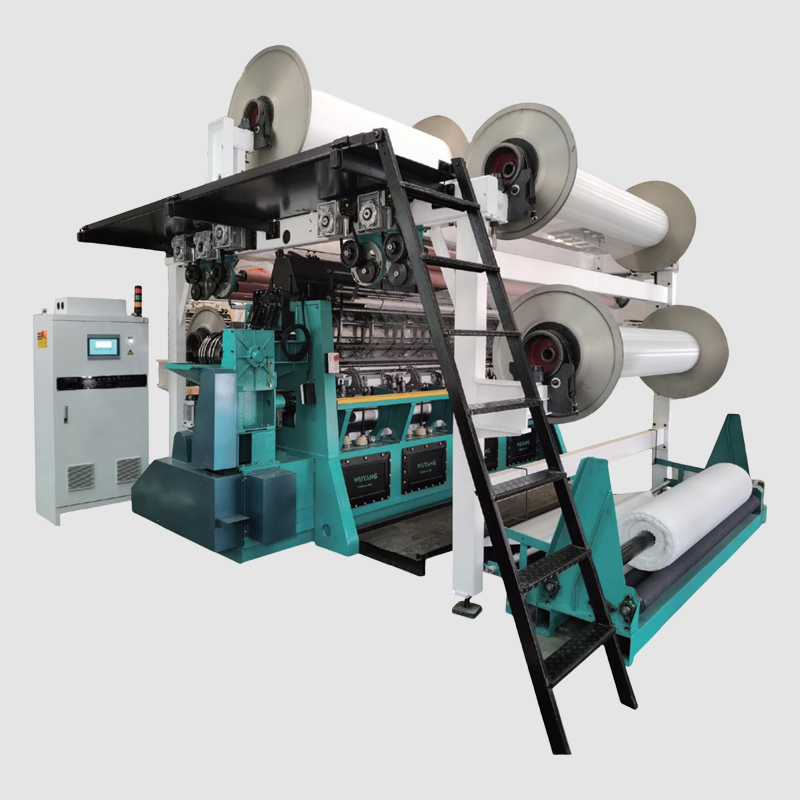
How to set up a warp knitting machine for spandex?
On the loom that creates fabric:
One or more bars are dedicated to carrying the spandex fibers; other bars may carry fibers that are not elastic.
The design of the stitch patterns must take into account the elasticity: for example, a 1 × 1 closed pillar style stitch for the elastic yarn, and a 1 × 2 open Koper style stitch for non-elastic yarns, as demonstrated in the patent case that was earlier described.
The machine must have sufficient downtime tension, a speed that forms loops, a needle, and a sinker that is appropriate for the elastic behavior.
Loops formation, stretch, and recovery mechanisms
During the knitting process:
- The loop structure that includes spandex must have the ability to stretch in both the warp and weft directions (if necessary, a bidirectional stretch is required).
- The elastic fabric is formed by the elastic fibers being knitted into the structure. This causes the non-elastic fibers to be pre-tensioned, which results in the fabric having a recovery property.
- The machine that wears the fabric must therefore be designed to accommodate the spandex’s stretchiness, recovery, and prevention of distortion during the knitting process.
- fabric removal, completion, and testing.
After weaving in a row:
The fabric is removed by controlled tension, and it is often subjected to heat-setting or relaxation to stabilize the behavior of the elastic fibers.
All finished fabric with spandex must be evaluated for stretch, recovery, modulus, shrinkage, and stability in dimensions.
The number of strands of fabric that can be processed by the machine and the consistency of the process directly affect the consistency of the fabric, particularly for elastic fabric.
Applications: What Fabrics and End‐Uses Are Manufactured Using a Warp Knitting Machine with Spandex?
When spandex is incorporated into fabric created by a loom, the fabric is utilized in multiple industries. Below are common usage domains.
Fashionable shapewear, Underwear, and Personalized clothing
Because of their high recovery and elasticity, spandex-wearable structures are commonly employed in bras, body suits, shapewear, and compression garments. The referenced patent describes these uses explicitly.
imwear and activewear
Stretch, stability, and recovery are all necessary components of activewear andimwear. Spandex-based warps have a controlled stretch in both directions; they are also stable in terms of width, and production is quick on machines that are wide.
Fashionable fabric and everyday wear
Some fashion fabric types contain spandex, which produces wrinkled, conforming garments. Spandex fabric with a warp is employed in the production of dresses, loungewear, and other items.
Technical textiles, cushioning, and supplementary materials
Other than apparel, fabric with spandex may be employed to create performance textiles (such as compression socks), seating fabric with elastic rebound, or automotive fabric that is intended for use in seats. All of these options have in common the requirement for durability and stretch.
Comparing Warp Knitting vs Weft Knitting for Spandex Fabrics: Implications of the machine and process.
Understanding the way the warp knitting machine is compared to the weft knitting machine (commonly employed for elastic fabric) facilitates the identification of the appropriate equipment strategy.
Main Difference in Fabric Composition
As one source explains:
Warp stitch: the yarns travel in a straight line, creating closed loops that have a consistent size.
Weft binds: the yarns travel in one direction, which increases the mechanical tension and creates a more flabby structure.
For a spandex combination:
Weft knitting machines (circular, flat) are commonly utilized for high mechanical stretch clothing (T-shirts, socks), but these machines may not have the same width stability or high volume as warp machines.
Warp knitting machines have a successful reputation for producing large widths of fabric with a fast production rate and a consistent fabric edge (no stairings). They are particularly beneficial when elastic fibers are employed, but stability, recovery, and control of dimensions are all important.
The selection of a machine is considered
If your intended fabric type has spandex in it, and it is desired to have high performance with speed, a machine that wears spandex may be beneficial:
larger capacity
increased production rates
regulated stretch and recovery
However, weft knitting machines are still beneficial if you want to achieve the greatest possible stretch in terms of width and have a specific interest in particular apparel markets.
When a Warp Knitting Machine Isn’t Ideal
If your product’s design necessitates extremely high direction of stretch (e.g., socks or fabric that is fully four-way stretchable), or if financial limitations tend to favor circular direction of wefting, then machines that use the direction of stretch may be more beneficial. However, the majority of garments fabricated with spandex utilize this fabric type and are produced in large quantities with consistent width; machines that use warps to fabricate them are still viable.
Equipment and Process Factors: What You Must Verify When Indicating a Warp Knitting Device for Spandex textiles.
When crafting a machine that warps fabric or requesting spandex to be integrated into the fabric, the following factors must be considered.
The tension and feeding systems of yarn
Because spandex is metabolically flexible, the machine must have precise tension control systems in the spandex creels, guide rails, and take-down. Low tension causes missed turns, fabric stretchiness, or elastic slack. The spandex warping machine’s literature focuses on closed-loop tension detection.
Design of The Guide Bar and the Stitch Patterns
Machines must have independent movements that can be guided by a bar, which allows for the control of both elastic and non-elastic fibers.
Patterns like 1×1 or 1×2 stitches are common in elastic fabric designed on machines that warp fabric. The patent example demonstrates non-elasticity in a 1×2 open Koper and elasticity in a 1×1 closed pillar style.
The speed of the machine, the gauge, and the yarn’s compatibility.
For fabric made from spandex, the required gauge (the number of needles per inch) must be matched to the type of fabric.
Wobbles must deal with the extra specialty fibers that are being warped; guide rails must have enough space to accommodate thicker or covered spandex fibers.
The machine’s width and beam size
Many machines that warp fabric are built with a wide width and have multiple thousands of terminations. To effectively process spandex fabric, the machine’s width and beam must be appropriate for the end product’s width. A fabric manufacturer utilized 32 different types of warp machines, 12 of which were used to beam fabric products that were spandex-knit.
Controls and Automation
Modern machines that use warps to knit have been equipped with control computers, yarn loss detection, tension control and automatic pattern alteration. For spandex processes, lower downtime and high consistency are crucial.
Maintenance and Yarn Switching
Because spandex fabric is unique, an effective design of the machine promotes easier transition, less waste, and superior quality control. Producers often devote funds to machines that can process spandex as well as regular polyester fibers. Machine manufacturers commonly claim that they’ve “15 years of experience in the design and creation of warp-knit machines, double-needle bar scallops and tricot machines” for spandex utilization.
Case Studies and Industry Insights
Let’s discuss how fabricators employ warp knitting machines with spandex attachment.
Example: A fabric that is warped and includes Spandex on its Raschel or Tricot machine.
The patent US20120297840A1 describes a fabric with non-elastic fibers and elastic fibers (spandex) that is produced by way of tricot or raschel type of fabricating.
The fundamental insight: Spandex is appropriate for use in warped fabric structures, and the machine must be designed accordingly.
Textile Producer Example: The Chinese Stretch fabric manufacturer.
A fabric company in China employs 32 different types of loom machines, 12 different types of beaming machines, and 5 different types of texturing machines to create fabric that is stretchy and called “Hongyi”.
This demonstrates the practicality of deploying warp-knitting machines for fabric production in volume.
Supplying machines example: Stitching machines for use with Spandex fabric.
A machine-maker promotes the use of warping machines (tricot, raschel) and spandex-based solutions that stating that they are compatible with the use of spandex.
These examples demonstrate that the industry is expecting machines that use warps to process spandex fabric.
Summary: Yes — A Warp Knitting Machine Can Produce Spandex Fabrics—and Here’s How
Let’s recapitulate the important points:
A machine with a warp design can create fabric with elastic fibers like spandex. If the fibers are fed in properly, the tension is controlled, the guide bar is configured properly, and the stitching is designed correctly.
Spandex fabric’s special requirements regarding tension, stretch recovery, feed control, and finality—but many existing configurations of warp knitting machines are already designed for this purpose (see examples in patents and industry studies).
When contrasted with weft knitting, warp knitting machines have benefits associated with their larger size, higher productivity, and the ability to incorporate elastic fibers into intricate structures. These properties are ideal for apparel, shapewear, activewear, and technical fabrics that employ spandex.
The equipment’s specifications should focus on the design of the yarn’s creel, including the spandex feed; the multiple guides that allow flexibility; the speed and gauge; the dedicated patterns for elastic yarn; and the processes that stabilize the recovery of elasticity.
The textile industry is still evolving: warp knitting machines and spandex are increasingly likely to support environmentally friendly materials, multifaceted fabrics, and digital manufacturing systems.
In practical terms, if your company is manufacturing textiles with a spandex component in their design (e.g., underwear, activewear, compression garments), then it is recommended and feasible to select the appropriate type of warp knitting machine. The secret is to coordinate the capabilities of the machine, the process parameters, and the finishing system in order to produce quality fabric, have elasticity, and produce efficiently.