

 Russian
 English
 Hungarian
 Indonesian
 Bulgarian
 Turkish
 Polish
 Spanish
 Portuguese
 Korean
 French


Швейные нитки буквально скрепляют вместе всю мировую текстильную промышленность. Выбор правильного оборудования для производства швейных ниток имеет ключевое значение. Надлежащее оборудование гарантирует высококачественный и долговечный продукт. В этом руководстве вы ознакомитесь с основными этапами производства. Мы также поможем вам выбрать наилучшее оборудование для мельницы.
Understanding the Sewing Thread Manufacturing Process
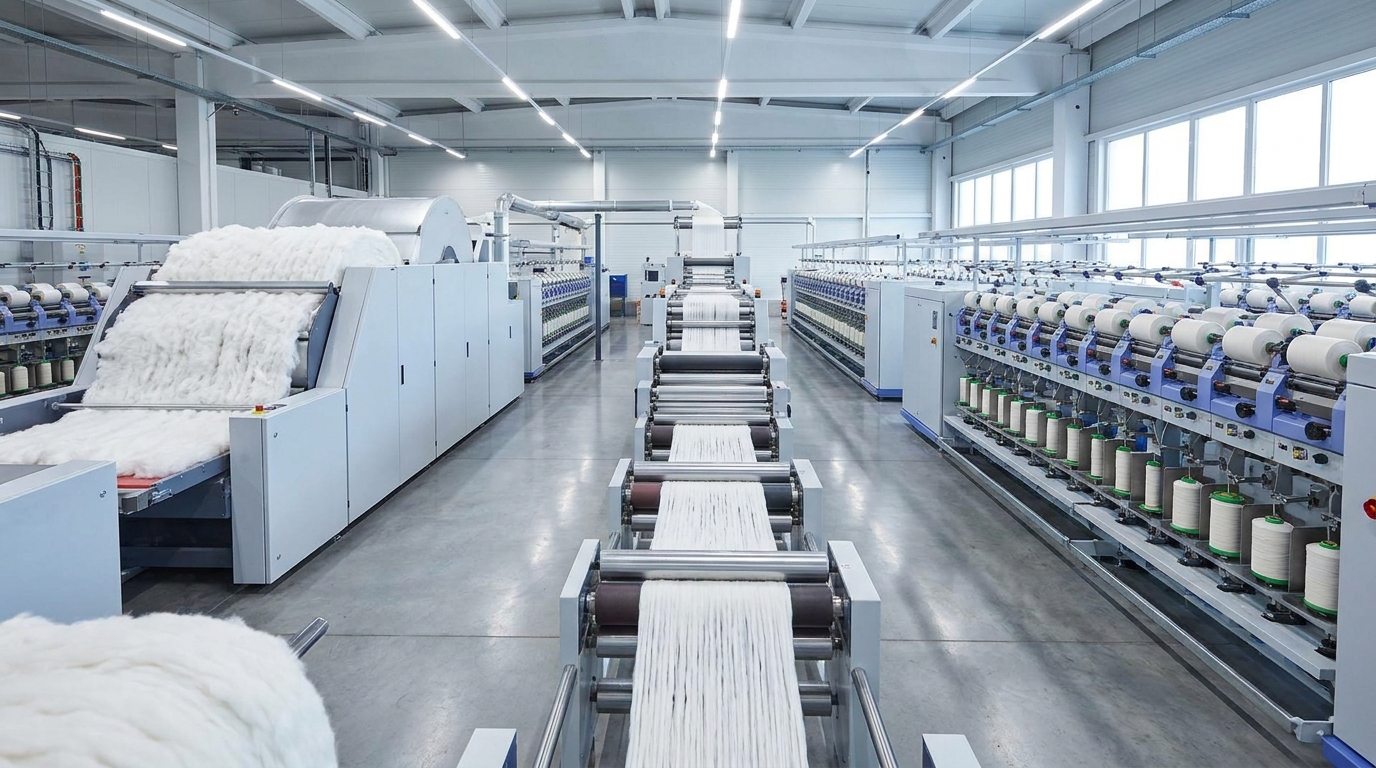
To select the best mill equipment, you first need a clear understanding of the процесс производства швейных ниток. Converting raw fibers into durable thread involves several precise stages. Each step requires specific machinery to ensure high-speed sewability and prevent thread breakage. Let’s break down these essential production phases.
Raw Material Selection and Preparation
The journey begins with choosing the right fibers. Manufacturers typically work with spun polyester, high-tenacity nylon, cotton, or core-spun yarns. Synthetic fibers like polyester and nylon are popular for their strength. They handle the stress of industrial sewing extremely well. Cotton offers excellent heat resistance for specialized applications. Core-spun yarns combine a polyester filament core wrapped in cotton or staple polyester. This structure gives you both high tensile strength and a smooth surface.
Spinning and Doubling
Once you select the raw material, it moves to spinning and doubling. Spinning draws out the fibers and twists them into a single continuous yarn. However, a single yarn is rarely strong enough for commercial sewing. We use doubling, also known as plying, to combine two or more single yarns together. This step balances the yarn. It prepares the material for the final twist.
Twisting, Dyeing, and Finishing
Twisting is where the thread gains its true strength. Machines apply either an ‘S’ or ‘Z’ twist direction. A двухниточный скручиватель для швейных ниток is highly efficient here. It inserts two twists for every spindle revolution. This creates uniform Turns Per Meter (TPM) across thousands of meters of thread.
After twisting, the thread requires heat-setting. This stabilizes synthetic fibers and prevents melting from friction later on. Next comes dyeing and finishing. At SutexMach, we draw on over 30 years of experience to provide advanced textile dyeing and drying machines. Our intelligent equipment ensures even dye uptake and stable performance. This helps textile mills achieve consistent color matching while maintaining high energy efficiency.
Winding, Lubrication, and Packaging
The final stage converts bulk twisted yarn into commercial spools or cones. During this step, specialized machinery applies vital lubrication. Industrial threads often need 3% to 5% silicone or wax lubricant by weight. This guarantees smooth operation during high-speed sewing.
We highly recommend in-line lubrication during final winding. It gives you much better pick-up control than a separate dipping process. Finally, precision winding ensures the tension stays as low as possible. This maintains the natural elasticity of the thread. It also prevents the material from creeping on the spool over time.
| Production Stage | Primary Goal | Key Machinery Component |
|---|---|---|
| Preparation | Select and align raw fibers | Spinning frames |
| Doubling (Plying) | Combine multiple single yarns | Ring doubler |
| Скручивание | Add strength and uniform TPM | Single spindle or TFO twister |
| Отделка | Stabilize, color, and dry thread | Dyeing and drying machines |
| Winding | Apply lubricant and spool thread | Precision winding machine |
Core Machinery for Sewing Thread Manufacturing
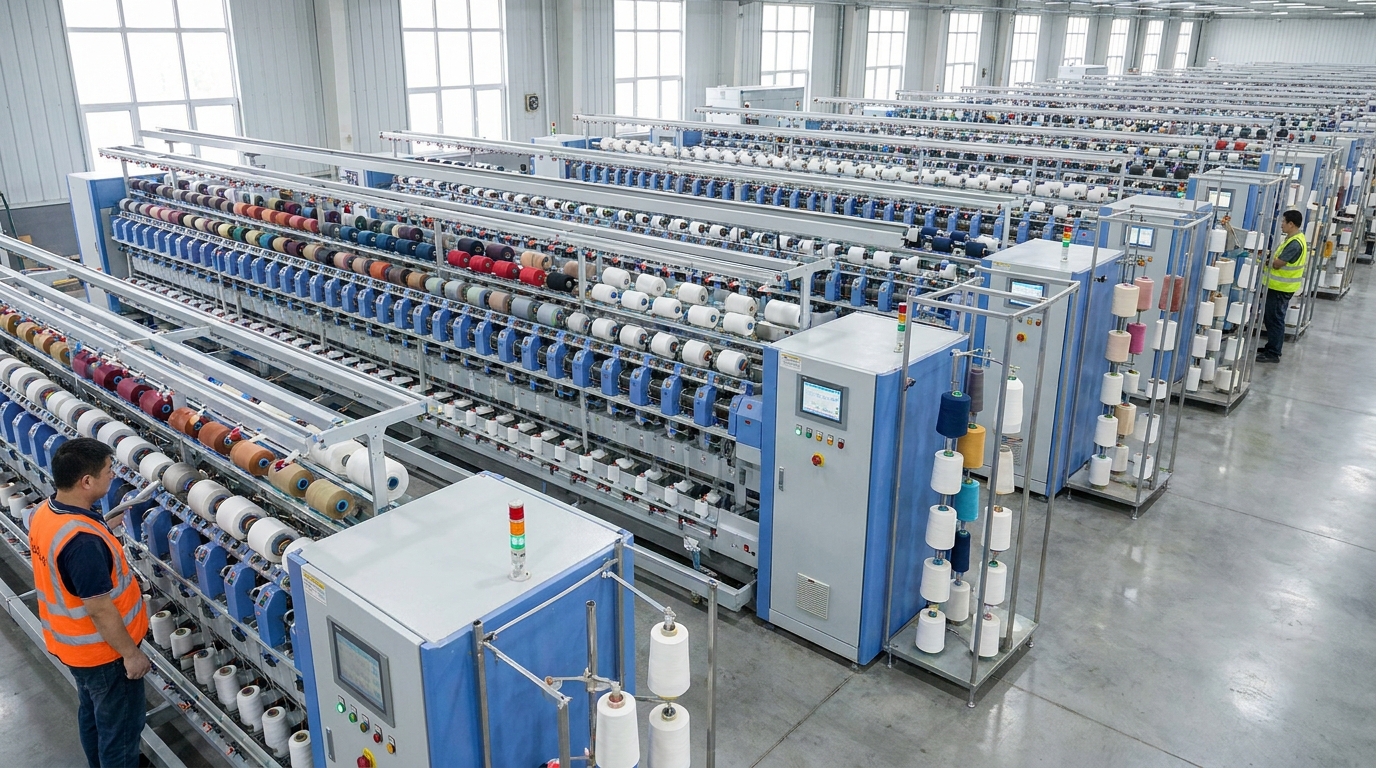
As we outlined during the final winding stage earlier, finishing thread properly is vital. Now we will explore the core machinery for sewing thread manufacturing. Selecting the right equipment builds a highly efficient production line. Each machine plays a specific role in ensuring durability.
Spinning Frames and Doubling Machines
Spinning frames take raw fibers and align them perfectly. They prepare the initial continuous yarn. As covered previously, doubling balances this yarn before twisting. Ring doublers handle this exact process. They combine multiple single yarns to prevent tension fluctuations. This machinery stops thick and thin spots from forming. It ensures uniform dye uptake later on.
Advanced Twisting Machines
Twisting technology directly dictates final thread strength. Traditional ring twisting remains highly versatile for various counts. Modern Two-For-One (TFO) twisters prioritize high-volume production. They insert two twists per spindle revolution. This method significantly reduces knots in the final product. When planning your mill budget, the цена на машину для скручивания нитей reflects these efficiency upgrades.
Single-spindle designs process high-speed filament yarn and twine. Spindle speeds often exceed 10,000 to 15,000 RPM. You must use ceramic-coated guides for synthetic fibers. They prevent abrasive nylon from grooving your metal components. They also manage heat to stop synthetic filament melting.
| Характеристика | Ring Twisting Machine | Two-For-One (TFO) Twister |
|---|---|---|
| Production Volume | Moderate volume | High-volume mass market |
| Twist Efficiency | One twist per revolution | Two twists per revolution |
| Yarn Versatility | Highly versatile for all counts | Best for continuous uniform runs |
| Knot Frequency | Higher knot count | Fewer knots per package |
Dyeing and Drying Machinery
Color fastness requires strict moisture and heat control. You need specialized dyeing and drying machinery here. SutexMach has manufactured intelligent textile machinery since 1985. Our equipment delivers stable performance and high automation. We offer energy-efficient and environmentally friendly drying machines. We provide one-stop solutions for your entire mill. This includes machine selection, customization, installation, and after-sales service. Our systems help you build a complete, seamless production line.
Spooling and Packaging Equipment
The final package requires a precision машина для намотки швейных нитей. This equipment converts bulk twisted yarn into commercial spools. It keeps tension as low as possible during winding. This practice maintains the natural elasticity of the thread. It also stops the material from creeping over time.
Integrated lubrication systems apply silicone directly during this stage. They ensure even distribution for high-speed sewing applications. Industrial threads require 3% to 5% lubricant by weight. In-line application gives you much better pick-up control. It creates the perfect final package for end-users.
Deep Dive: The Two-For-One Twister for Sewing Thread
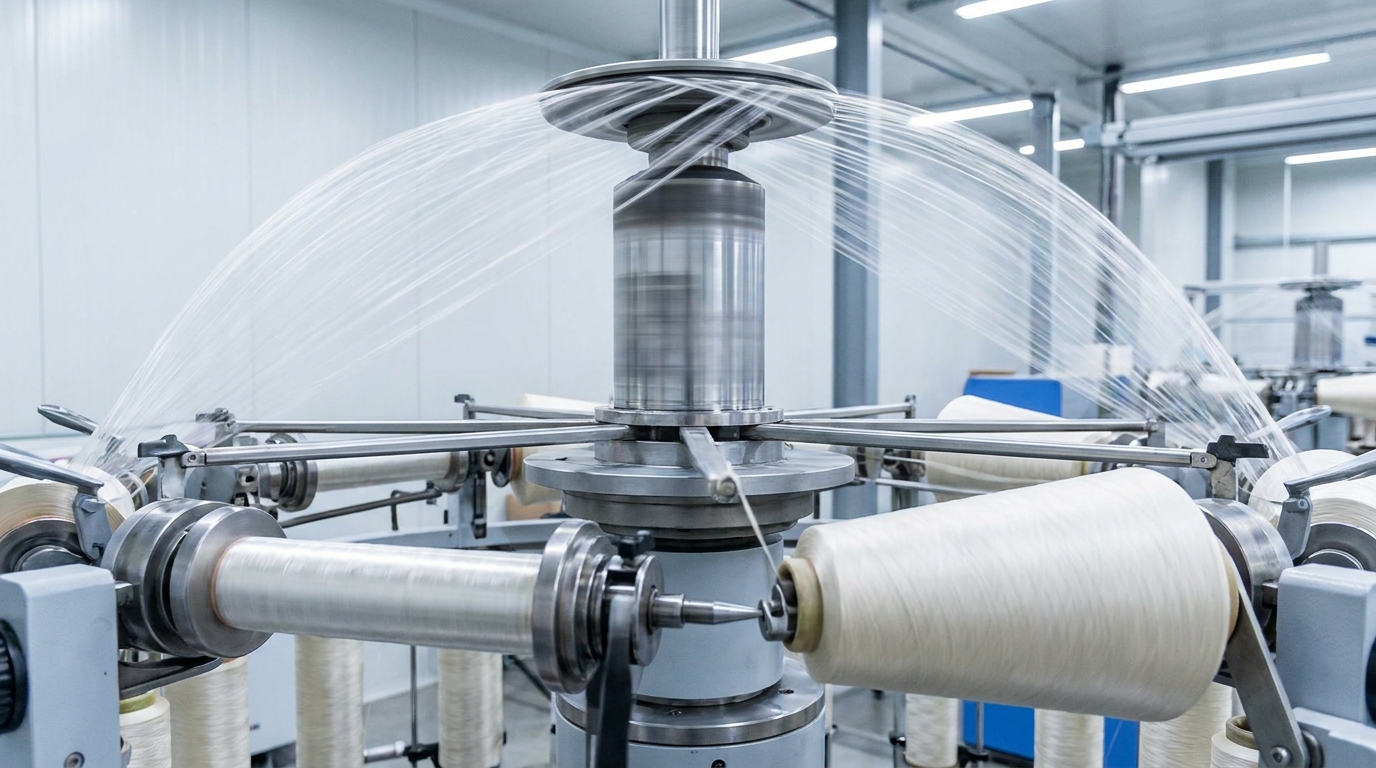
We just explored how precision winding and integrated lubrication create the perfect final spool. However, achieving a flawless package relies heavily on the twisting stage before it. Let’s take a closer look at the two-for-one (TFO) twister. This specific machinery for sewing thread manufacturing revolutionizes how mills handle high-volume production.
Working Principle: TFO vs. Traditional Methods
What exactly is a TFO twister? As we covered earlier, traditional ring twisting inserts one twist per revolution. A TFO machine doubles this output. It inserts two twists for every single turn of the spindle.
The yarn travels from a stationary feed package. It goes down through the spindle rotor and balloons outward. Finally, it winds onto the take-up package above. This continuous double twist mechanism eliminates the need for a traveler ring. It allows much higher processing speeds without damaging delicate synthetic filaments.
Key Advantages of TFO Technology
This continuous process delivers major advantages for your production line. You will immediately notice improvements in overall output quality.
- Higher Production Efficiency: You get double the output at the exact same spindle speed.
- Fewer Knots: Larger supply packages run longer without breaking. This creates massive knot-free lengths of thread.
- Superior Thread Uniformity: Consistent tension during the ballooning phase ensures perfectly even Turns Per Meter (TPM).
Essential Features for Mill Upgrades
Upgrading your mill requires careful equipment selection. You need machinery built for long-term reliability. Modern TFO twisters must include specific features to maximize your investment.
Look for high automation to streamline daily operations. Stable performance is non-negotiable when spindles run continuously at 15,000 RPM. Energy efficiency also plays a massive role in modern manufacturing. Since 1985, SutexMach has manufactured intelligent textile machinery meeting these exact standards. Our equipment guarantees stable performance and high automation. We provide energy-efficient systems designed for environmental friendliness. We offer one-stop solutions to help you select the exact specifications needed for your production line.
Reducing Labor Costs
High automation directly impacts your daily operating expenses. TFO twisters significantly reduce labor costs across the mill floor. Operators spend less time tying knots or replacing small bobbins. Automated tension control systems require fewer manual adjustments.
One operator can easily manage multiple machines simultaneously. This shifts your workforce from manual handling to system monitoring. It makes your entire sewing thread manufacturing process much more efficient.
| Operational Area | Impact of TFO Twisters | Direct Benefit to Mill |
|---|---|---|
| Spindle Speed | Delivers two twists per single revolution | Doubles production output instantly |
| Package Size | Accommodates larger stationary feed packages | Dramatically reduces thread knots |
| Контроль натяжения | Maintains consistent ballooning tension | Ensures uniform dye uptake later |
| Human Intervention | Automates winding and twisting cycles | Lowers daily labor requirements |
Precision Packaging: The Sewing Thread Winding Machine
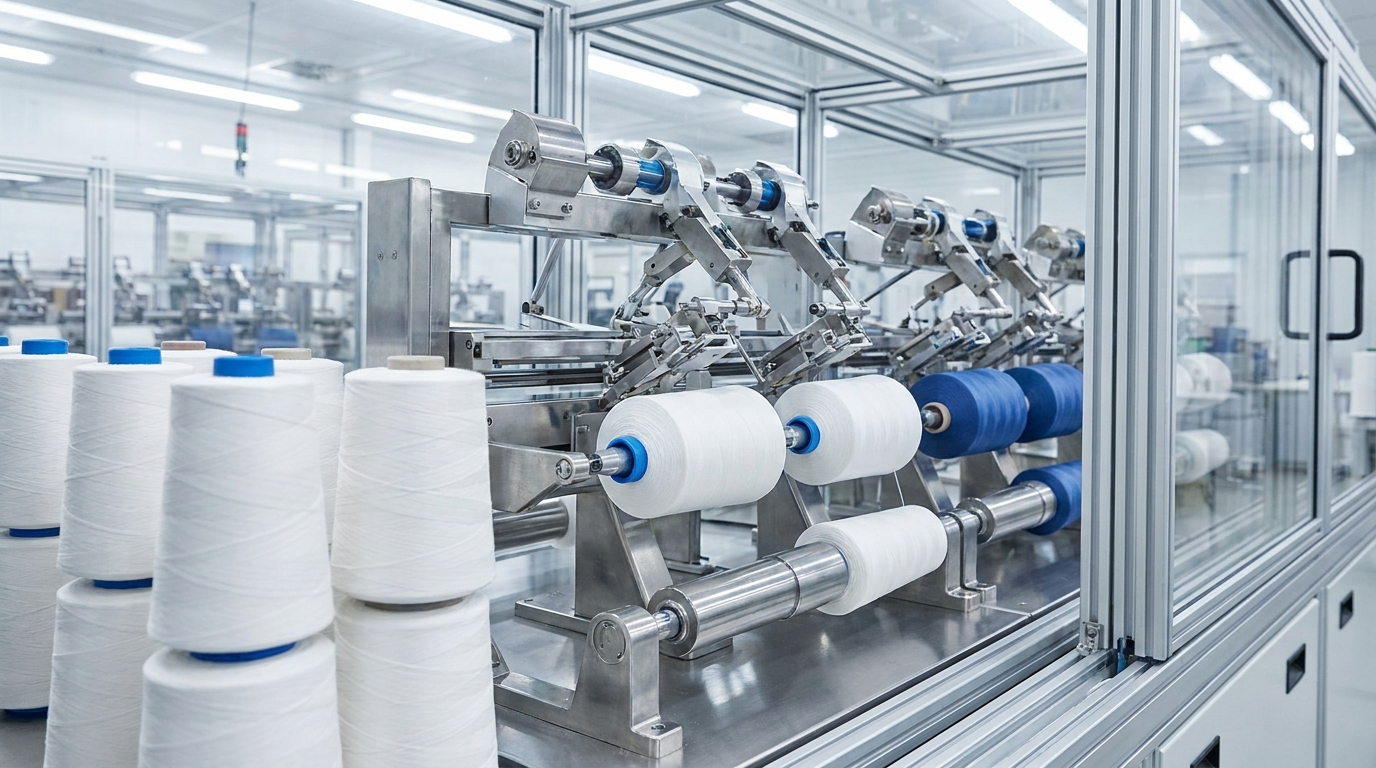
We just saw how TFO twisters deliver perfectly twisted, knot-free yarn while reducing labor. However, that high-quality thread still needs to reach the end-user in a usable format. This brings us to the final stage of your production line. A winding machine determines both the final product quality and its commercial presentation.
Proper packaging ensures the thread unwinds smoothly during high-speed sewing. If a spool looks sloppy, buyers immediately question the thread quality inside. You must maintain strict control over this final step. As a general rule of thumb, tension should remain as low as possible during winding. This preserves the thread’s natural elasticity. It also prevents the material from creeping or crushing the spool over time.
Types of Winding Equipment
Different applications require different spool shapes. You must select the right winding format for your specific target market. The three most common formats include cones, tubes, and king spools.
Cone winders create tapered packages. These are highly popular for industrial sewing because the thread pulls off the top effortlessly. Tube winders produce straight, cylindrical packages. They work perfectly for standard domestic threads or specific industrial setups. King spool winders feature a wide base and a straight or slightly tapered top. They are ideal for slippery synthetic fibers like high-tenacity nylon. The wide base stops the thread from sloughing off and tangling.
| Winder Type | Package Shape | Best Used For |
|---|---|---|
| Cone Winder | Tapered | High-speed industrial sewing |
| Tube Winder | Straight Cylinder | Standard apparel thread |
| King Spool Winder | Wide Base, Tapered Top | Slippery synthetic filaments |
Intelligent Features of Modern Machinery
Upgrading to intelligent textile machinery drastically improves your packaging consistency. Modern winders rely on high automation to eliminate human error. They incorporate three vital features to protect your bottom line.
- Auto-Doffing: The machine automatically removes full spools and loads empty ones. This keeps production running without constant operator intervention.
- Precise Tension Control: Automated sensors adjust tension continuously. They prevent tight spots and ensure uniform package density.
- Accurate Length Measurement: Electronic counters stop the spindle at an exact yardage. This guarantees buyers get exactly what they pay for.
At SutexMach, we build our machinery around these intelligent features. Since 1985, we have focused on delivering stable performance and high automation. Our equipment ensures your final packages look flawless every single time.
Matching Equipment to Your Thread Type
You cannot use a one-size-fits-all approach for winding. You must match your equipment directly to your thread type and production volume. High-volume mass market production demands automated cone winders. They handle bulk runs efficiently and reliably.
Material compatibility also dictates your machine setup. If you process abrasive fibers like bonded nylon, your winder needs ceramic-coated guides. These guides prevent the tough filament from grooving metal parts. They also minimize friction to stop synthetic threads from melting. For specialized heavy-duty twine, you need heavy-duty spindles capable of handling the extra weight.
We provide one-stop solutions from machine selection to final installation. We evaluate your specific raw materials and volume goals. This helps us customize the exact winding machinery your textile mill needs to succeed.
Dyeing, Drying, and Finishing Equipment in Thread Production
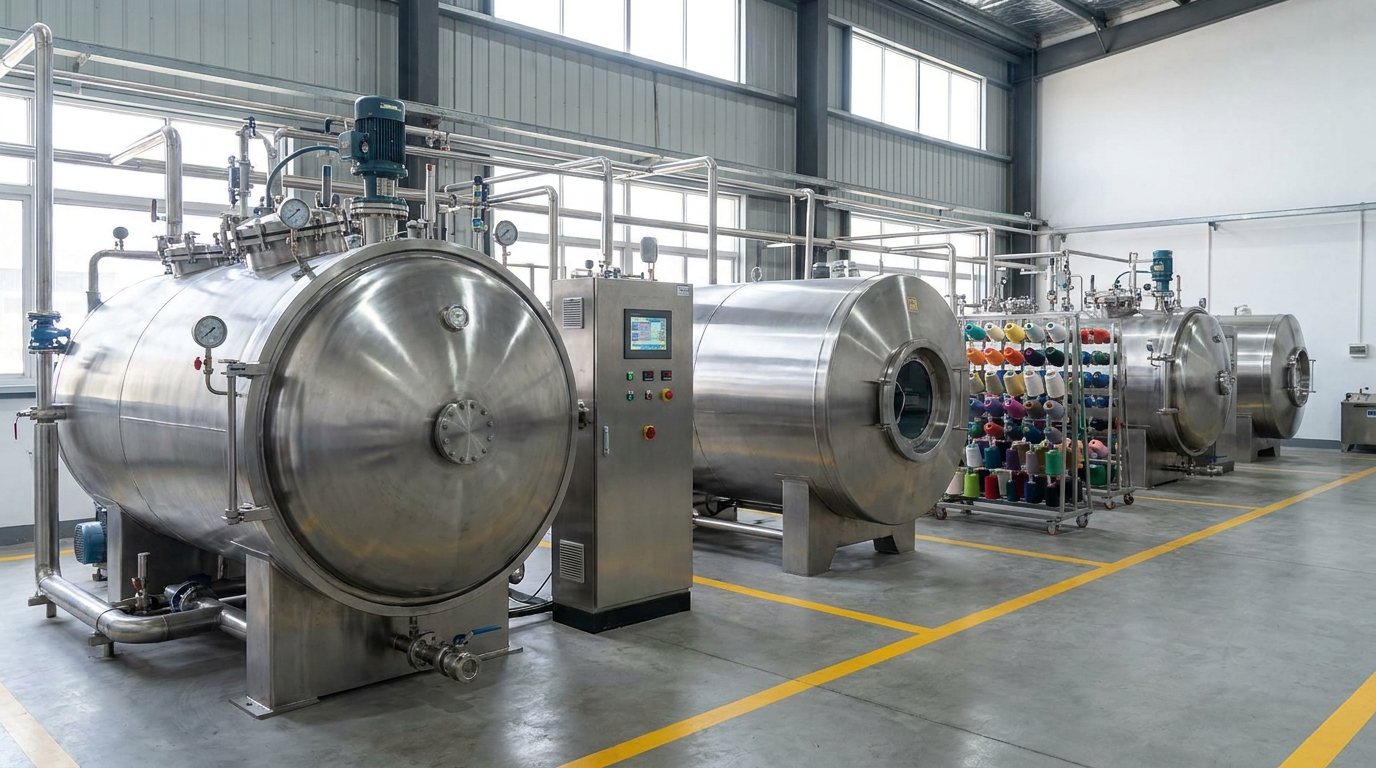
We just discussed how intelligent winding machines create the perfect final spool. However, before the thread ever reaches that packaging stage, it needs precise color and texture. Proper dyeing and finishing determine how the thread looks and behaves. This phase locks in the strength we built during twisting. It prepares the thread for high-speed industrial sewing. Selecting the right machinery for sewing thread manufacturing during this finishing phase guarantees a premium end product.
High-Temperature Dyeing for Synthetic Threads
Most industrial threads use synthetic fibers like spun polyester or high-tenacity nylon. These materials require specialized high-temperature and high-pressure dyeing machines. Standard atmospheric dyeing simply cannot penetrate these tough fibers.
High pressure forces the dye deep into the filament core. This guarantees excellent color fastness. It prevents the color from bleeding when end-users wash their garments. You must maintain strict heat control here. Temperature fluctuations cause uneven dye uptake. They might even melt the delicate synthetic filaments.
Efficient Dewatering and Drying Technology
After dyeing, the wet thread holds excess moisture. You must remove this water quickly but gently. This prevents yarn damage and improves overall mill efficiency. The process starts with a dewatering machine. It extracts the bulk of the water mechanically without stretching the yarn.
Next, the thread moves to the drying stage. Since 1985, SutexMach has specialized in intelligent textile machinery. Our drying and dewatering machines deliver stable performance and high automation. We utilize advanced drying technology to evaporate remaining moisture evenly. This environmentally friendly approach protects the thread’s natural elasticity. It ensures the yarn does not become brittle before the final winding stage.
Achieving the Perfect Texture
Color and dryness are only part of the equation. The thread also needs the right feel or texture. Professional finishing equipment gives you this perfect result. Air-softening machines use high-velocity airflow to relax the fibers. This process makes the thread much more pliable. It reduces friction during high-speed sewing later on.
For specific industrial applications, you might also use stenter or calendering machines. These systems stabilize the thread dimensions. They apply precise heat and tension to lock the final structure in place. SutexMach offers a complete range of these finishing machines. We provide one-stop solutions from machine selection to installation. This helps you build a seamless production line.
| Finishing Stage | Equipment Used | Primary Function |
|---|---|---|
| Color Application | High-pressure dyeing machine | Forces dye into synthetic filament cores |
| Moisture Extraction | Обезвоживающая машина | Removes bulk water mechanically without damage |
| Moisture Evaporation | Advanced drying machine | Dries thread evenly to preserve elasticity |
| Texture Enhancement | Air-softening machine | Relaxes fibers for better pliability |
| Dimensional Stability | Штендерная машина | Applies heat and tension to lock structure |
Factors Influencing Thread Twisting Machine Price and Investment
We just discussed how precise dyeing and finishing lock in thread quality. You also saw how intelligent winding machines create flawless final spools. Building this complete production line requires capital. You must evaluate your machinery investment carefully. Let’s explore the primary factors influencing your initial equipment costs and long-term financial returns.
Key Variables Driving Equipment Costs
Several technical specifications directly impact the initial price of your machinery. You need to balance these features against your production goals.
- Automation Level: Automated tension control and auto-doffing systems cost more upfront. They drastically reduce daily labor requirements.
- Spindle Count: Multi-spindle units prioritize mass-market volume and carry a higher price tag. Single-spindle designs offer precision for specialized yarns.
- Интеграция технологий: Advanced sensors monitor Turns Per Meter (TPM) continuously. They prevent thread breakage and ensure uniform quality.
Evaluating Long-Term Operational Expenses
The sticker price only tells part of the story. You must account for installation, routine maintenance, and daily energy consumption. High-speed spindles often exceed 15,000 RPM. They consume significant electricity during continuous operation. Choosing energy-efficient motors lowers your monthly utility bills.
Maintenance expenses also add up quickly. Processing high-tenacity nylon requires ceramic-coated guides. These specialized components prevent abrasive fibers from grooving metal parts. They cost slightly more initially. However, they drastically reduce replacement frequency and machine downtime.
Calculating Return on Investment (ROI)
You need a clear path to profitability when buying new machinery for sewing thread manufacturing. Calculate your ROI by comparing the initial equipment price against projected monthly savings.
First, quantify your labor reductions. High automation allows one operator to manage multiple machines simultaneously. Next, measure your material savings. Upgraded twisters produce fewer knots and less wasted yarn. Finally, factor in energy efficiency. Modern equipment uses less power per kilogram of processed thread. These combined savings dictate how fast the machine pays for itself.
| Investment Factor | Initial Impact | Long-Term Financial Benefit |
|---|---|---|
| High Automation | Increases purchase price | Reduces daily labor expenses |
| Ceramic Guides | Slightly higher part cost | Lowers maintenance and downtime |
| Energy Efficient Motors | Premium equipment tier | Cuts monthly utility bills significantly |
Sourcing Cost-Effective and Reliable Machinery
Finding cost-effective equipment does not mean buying the cheapest option available. You need machines built for stable performance. Frequent breakdowns destroy your production schedule and erase any initial savings.
Since 1985, SutexMach has manufactured intelligent textile machinery. We focus on energy efficiency and environmental friendliness. We offer one-stop solutions for textile mills globally. Our team guides you through machine selection and customization. We handle installation and provide reliable after-sales service. This comprehensive approach ensures you get high-quality equipment tailored to your exact budget.
Always partner with manufacturers offering complete production line integration. Seamless communication between your twisters, dyeing units, and winding machines maximizes your overall investment.
Building a Complete Production Line with SutexMach
As we just discussed, seamless communication between your equipment maximizes your overall investment. You need a reliable partner to tie everything together. Buying individual units from different vendors often creates compatibility headaches. This is where SutexMach steps in. We provide the exact machinery for sewing thread manufacturing you need to succeed.
Founded in 1985, we are affiliated to Jiangsu SoHo Honry Import & Export Co., Ltd. We proudly manufacture intelligent textile machinery. Over the past 30-plus years, we have built a global reputation for stable performance. Textile mills worldwide trust our equipment to deliver consistent, high-quality results every single shift.
Comprehensive One-Stop Solutions
We eliminate the stress of building a new production line. We offer true one-stop solutions tailored to your specific mill requirements. Our expert team guides you through the entire process from day one. You never have to guess which machine fits your production volume.
First, we handle initial equipment selection based on your raw materials. Next, we provide deep customization to match your floor space and workflow. Our engineers then manage the complete on-site installation. Finally, we deliver dedicated after-sales service to keep your line running flawlessly.
| Service Phase | SutexMach Action | Direct Benefit to Your Mill |
|---|---|---|
| Selection | Evaluate raw materials and volume goals | Ensures you buy the exact capacity needed |
| Настройка | Engineer equipment for specific thread types | Prevents material damage during processing |
| Installation | Set up and synchronize all machinery | Guarantees seamless equipment communication |
| After-Sales | Provide ongoing maintenance and support | Minimizes downtime and protects your investment |
Integrating World-Class Finishing Equipment
We covered the critical roles of dewatering and high-temperature dyeing earlier. SutexMach specializes in these exact finishing stages. You can easily integrate our world-class drying, dyeing, and dewatering machines into your setup. Our intelligent systems ensure perfectly even dye uptake across thousands of meters of thread.
Our dewatering units remove excess moisture gently. They protect the thread’s natural elasticity before the final winding stage. We also offer a massive catalog of specialized finishing equipment. This includes advanced sueding, calendering, stenter, warp knitting, and air-softening machines. These units help you achieve the perfect texture for high-speed industrial sewing.
The SutexMach Advantage
Modern manufacturing demands strict efficiency. Partnering with a globally trusted supplier gives you a massive competitive edge. Our core machinery focuses on three vital operational pillars.
- High Automation: Automated controls reduce your daily labor requirements. One operator can easily manage multiple integrated systems.
- Энергоэффективность: High-speed spindles and heated dyeing vats consume significant power. Our equipment uses advanced technology to drastically lower your monthly utility bills.
- Environmental Friendliness: We design our drying and dyeing machines to minimize water waste and emissions. This helps your mill meet strict modern environmental standards.
We help you build a highly profitable, fully integrated production line. You get reliable machinery designed specifically for long-term commercial success.
Заключение
High-quality machinery is vital for successful sewing thread production. Balancing automation, energy efficiency, and costs will maximize your profitability. Partner with an experienced one-stop provider like SutexMach today. We help you build a reliable manufacturing line.
- Assess your current thread production needs and daily capacity.
- Contact SutexMach for a custom machinery quote today.
- Calculate your expected return on investment for new equipment.
Frequently Asked Questions About Machinery for Sewing Thread Manufacturing
How can I stop thread breakage during high-speed twisting?
Thread breakage often happens due to high tension or friction. You must keep tension as low as possible during winding. This maintains the natural elasticity of the thread. Modern machines use automated tension control systems to help. Ceramic-coated guides are also great for abrasive fibers like nylon. These guides prevent grooving and protect your yarn. Proper machine setup will greatly reduce your downtime.
What is the difference between ring twisting and TFO twisting?
Ring twisting is a very traditional and versatile method. It works well for many different thread counts. However, Two-for-One (TFO) twisting is much more efficient for high-volume production. TFO machines create fewer knots in the final product. Single spindle machines also offer higher precision for specialized yarns. Choosing the right machine depends on your production volume. SutexMach offers intelligent textile machinery for various factory needs.
Why is lubrication important in sewing thread manufacturing?
Industrial threads need proper lubrication for high-speed sewing. Manufacturers usually add three to five percent silicone or wax. This special coating prevents needle heat during the final end-use. It is best to use in-line lubrication during the final winding stage. This method ensures much better pick-up control than separate dipping. Even distribution of silicone stops the thread from snapping later.
How do machines handle synthetic fibers without melting them?
Synthetic fibers like polyester can melt from high friction. Spindles often spin faster than fifteen thousand revolutions per minute. Machines use advanced heat management to protect the filament yarns. Smooth ceramic guides reduce the abrasive rubbing on the thread. Heat setting stabilizes the synthetic fibers before the final spooling. These smart designs keep the thread strong and perfectly intact.
Can I get a complete production line for my factory?
Yes, building a complete production line is highly recommended. SutexMach has over thirty years of experience in textile machinery. We provide one-stop solutions from machine selection to final installation. Our intelligent equipment is known for high automation and energy efficiency. We help textile mills set up reliable and eco-friendly systems. You will receive excellent after-sales service to keep things running.
- Evaluate your current production volume to choose between ring and TFO twisters.
- Inspect your machine guides for wear and upgrade to ceramic components.
- Contact the SutexMach team to design a customized textile manufacturing line.
- Calibrate your in-line lubrication systems to maintain the ideal silicone ratio.
Investing in the right thread manufacturing equipment boosts your factory output. Modern machines handle everything from precise twisting to essential lubrication. Proper tension control and heat management create stronger, high-quality sewing threads. SutexMach provides intelligent, energy-efficient solutions for all your textile needs. Upgrading your production line ensures better performance and long-term business success.