

 Russian
 English
 Hungarian
 Indonesian
 Bulgarian
 Turkish
 Polish
 Spanish
 Portuguese
 Korean
 French


Мировая текстильная промышленность сегодня стремительно растёт. Заводы требуют высокоэффективных автоматизированных установок. Создание нового завода — процесс чрезвычайно сложный. Стратегический план имеет ключевое значение для успеха. В этом посте вы узнаете точные шаги. Мы предоставляем полный список текстильного оборудования.
Understanding the Complete Textile Processing Line
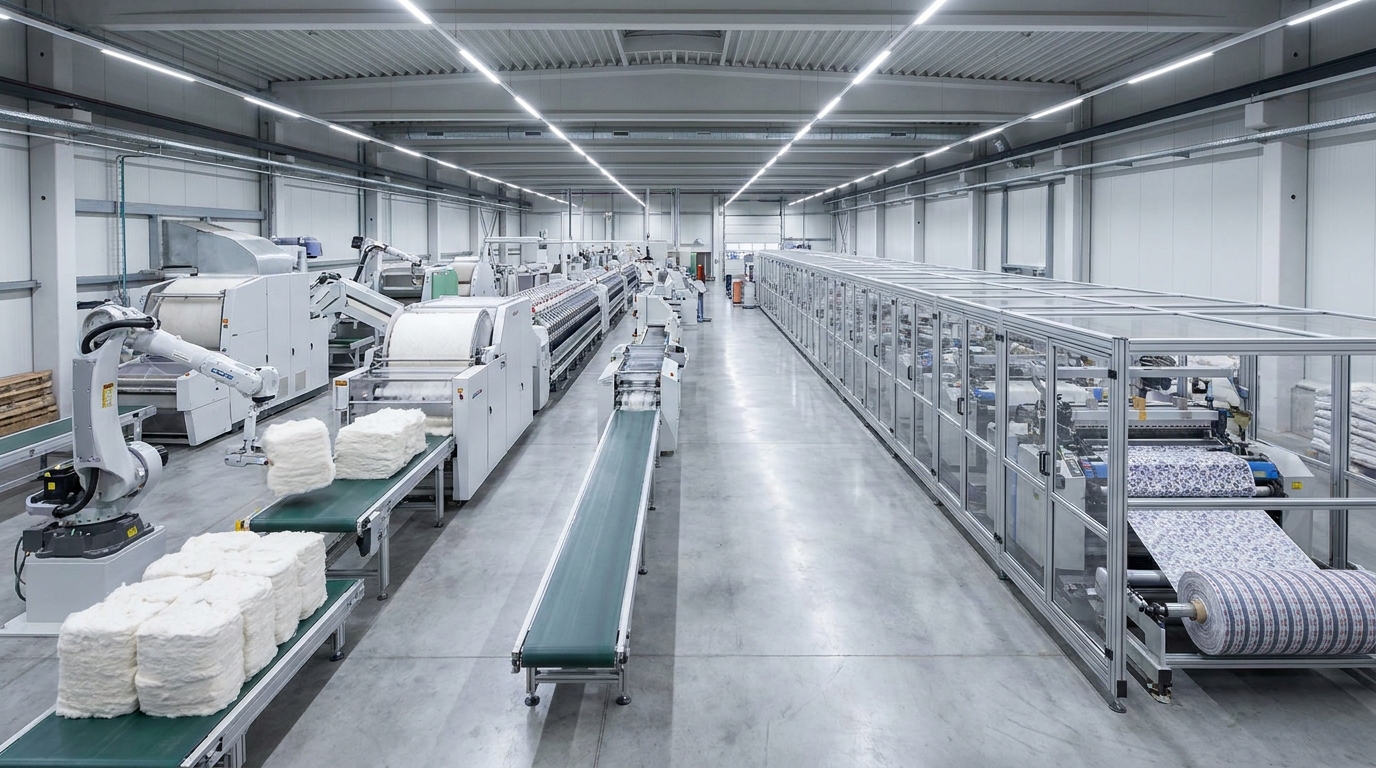
Before diving into the specific equipment list promised earlier, you must grasp the larger picture. Building a successful factory requires more than buying individual units. You need a highly synchronized, efficient system.
What Constitutes a Modern Setup?
A modern линия по переработке текстиля is a fully integrated network. It transforms raw fibers into finished, market-ready fabrics. The system includes spinning, fabric formation, dyeing, and finishing stages. Machine balancing is critical here. Your blowroom production must match your carding capacity. Otherwise, you face idle time and wasted resources.
The Journey: From Fiber to Finished Fabric
Let us trace the path of raw materials through a complete вращение к финишной линии. The process follows four main stages:
- Spinning Preparatory: Machines open, clean, and blend raw bales. They form continuous fiber ropes called slivers.
- Yarn Production: Advanced ring spinning frames draw and twist the fibers. They operate at extreme speeds between 15,000 and 25,000 RPM.
- Fabric Formation: High-speed looms or knitting machines turn yarn into fabric.
- Wet Processing and Finishing: Equipment dyes, dries, and treats the fabric. This improves color and hand-feel.
Each phase demands precise environmental control. Spinning operations need 60–70% relative humidity. Weaving requires 75–85% humidity to prevent yarn breakage.
| Production Stage | Core Machinery Examples | Key Operational Metrics |
|---|---|---|
| Спиннинг | Carding Machine, Ring Frame | Consumes 50–60% of total mill energy |
| Fabric Formation | Air-jet Loom, Warp Knitting | Speeds reach 1,200–1,500 picks per minute |
| Отделка | Stenter, Sueding Machine | Uses 80–150 liters of water per kg |
The Shift Towards Intelligent Machinery
Labor shortages and rising electricity prices challenge modern factories constantly. Spinning alone consumes over half of a mill’s total energy. You must adopt intelligent equipment to stay profitable today.
Automation reduces reliance on manual doffing and material transport. Smart sensors monitor production quality in real time. SutexMach understands these industry demands perfectly. Founded in 1985 and affiliated with Jiangsu Soho Honry Import & Export Co., Ltd., we provide one-stop intelligent machinery solutions. Our dedicated R&D team holds numerous patents for full-process equipment. We design and manufacture advanced sueding, calendering, dyeing, and warp knitting machines.
Trusted globally in markets like Turkey, Indonesia, and Pakistan, we deliver customized setups. Our equipment ensures continuous innovation, a strict quality guarantee, and superior energy-saving performance. For example, implementing heat recovery systems in finishing machines reclaims up to 30% of exhausted thermal energy. This directly boosts your factory’s operational efficiency.
Phase 1: Yarn Preparation and Spinning Equipment
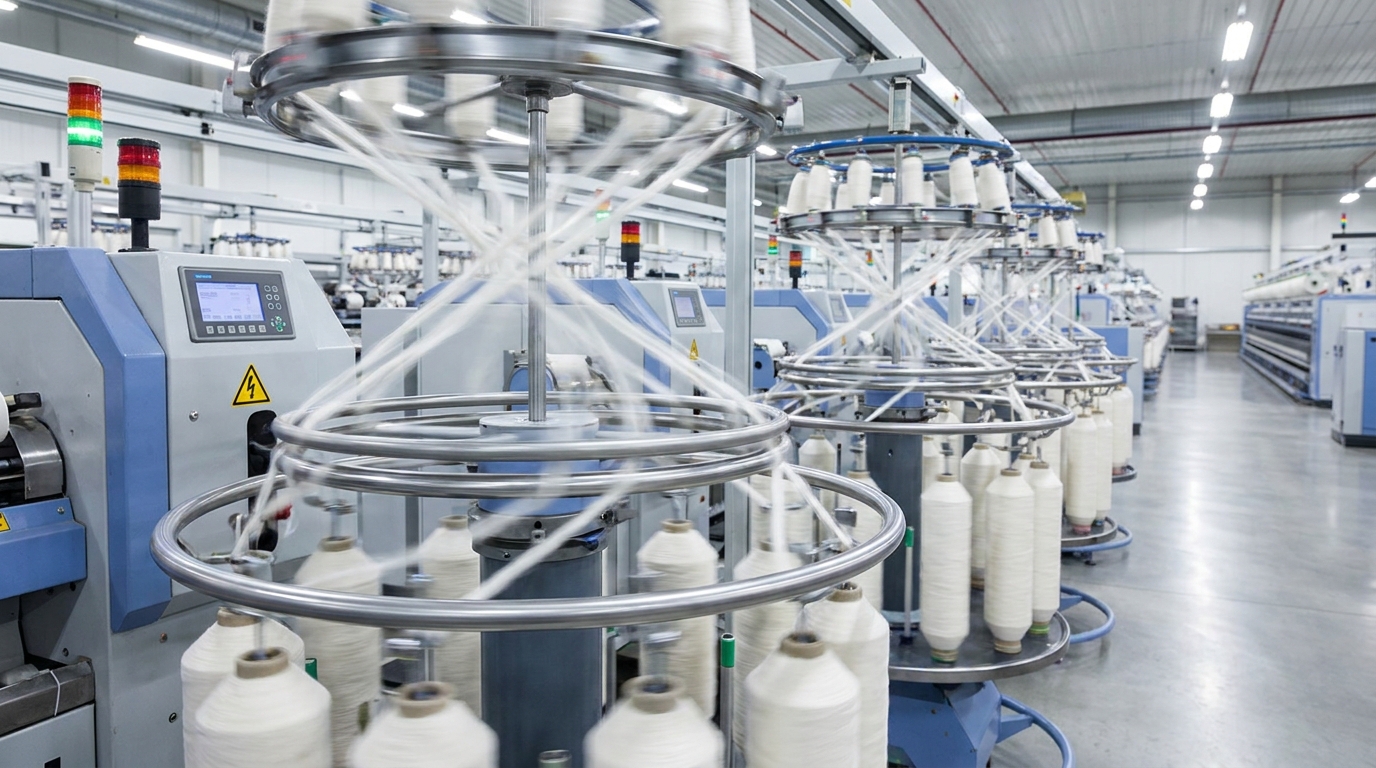
As we covered earlier, spinning operations consume up to 60% of a mill’s energy. Implementing intelligent equipment here is crucial. This phase forms the absolute foundation of your manufacturing process. It transforms raw bales into strong, usable yarn. Selecting items from a comprehensive список текстильного оборудования ensures downstream weaving runs smoothly. Let us break down the exact equipment needed for this critical first phase.
Essential Fiber Preparation Tools
Before fibers can be spun, they require thorough cleaning and alignment. The spinning preparatory stage handles this heavy lifting. You must synchronize these machines perfectly to avoid idle time.
- Blowroom Machinery: This section opens and cleans raw cotton or synthetic bales. Using an automated bale plucker instead of manual feeding reduces fiber damage. It also ensures a much more homogenous blend.
- Carding Machines: Professionals often call this the heart of spinning. Carding untangles fibers and removes remaining impurities. This process typically generates 3–5% waste. It produces a continuous web of fibers called a sliver.
- Draw Frames and Combers: Drafting blends multiple slivers together for uniformity. If you need premium yarn, combers remove 12–25% of short fibers (noils).
Spinning Equipment for High-Quality Yarn Output
Once you prepare the slivers, roving frames reduce their thickness. The material then moves to the actual spinning frames. This is where automation truly shines. Automated roving-to-spinning transport systems drastically reduce labor needs.
You have two primary choices for yarn production. Each option serves different market needs.
| Тип машины | Key Operational Metrics | Best Used For |
|---|---|---|
| Ring Spinning Frames | Operates at 15,000–25,000 RPM. Requires 0.05–0.08 kW per spindle. | Producing superior strength yarn across versatile counts. |
| Rotor (Open-End) Spinning | Offers higher production speeds at a lower operational cost. | Manufacturing coarser yarn counts for denim or heavy fabrics. |
After spinning, the yarn undergoes post-spinning treatments. Autoconers automatically wind the yarn into large cones. They remove defects during the winding process. Finally, we highly recommend installing a Yarn Conditioning Plant (YCP). This equipment stabilizes the moisture content before packing. It prevents yarn snarling and significantly improves your weaving efficiency later.
You need reliable equipment to maintain these high speeds continuously. SutexMach provides robust текстильная производственная машина options designed for stability. Our integrated solutions focus heavily on energy-saving performance. We help you mitigate rising electricity prices through high-efficiency motors and intelligent control systems.
Phase 2: Fabric Production Machinery (Knitting & Weaving)

In the first phase, we transformed raw fibers into strong, conditioned yarn. The Yarn Conditioning Plant stabilized moisture levels perfectly. Now, your yarn is ready for the next crucial step. You must transition this yarn into raw, unfinished fabric. This requires advanced машины для производства тканей. The equipment you choose here determines your factory’s output speed and product versatility.
Weaving Technology: Choosing the Right Loom
Woven fabrics require high-speed looms to interlace warp and weft yarns. Different fabrics demand different loom technologies. Modern factories rely on shuttleless looms to maximize production. Let us compare the most common options.
- Air-jet Looms: These machines operate at extreme speeds. They reach 1,200 to 1,500 picks per minute (PPM). They handle synthetics and light cottons perfectly.
- Rapier Looms: These run slower, typically between 400 and 700 PPM. They offer unmatched versatility. You should choose rapier machines for heavy fabrics, upholstery, and complex patterns.
- Water-jet Looms: These use pressurized water to insert the weft. They work exceptionally well for hydrophobic synthetic fibers like polyester.
As mentioned earlier, weaving requires strict environmental control. Maintaining 75–85% relative humidity prevents yarn breakage. You must also implement smart sensors to minimize maintenance downtime. This keeps your high-speed looms profitable.
Knitting Technology: High-Speed Warp Knitting
Knitting offers an alternative approach to fabric formation. Instead of interlacing, knitting machines loop yarns together. This creates versatile, durable, and stretchable fabrics. They are ideal for activewear, automotive interiors, and technical textiles.
Warp knitting machines play a critical role here. They feed multiple yarns simultaneously to form loops along the fabric’s length. This method produces highly stable and run-resistant materials at incredible speeds.
SutexMach excels in this specific area. We design and manufacture intelligent warp knitting machines. Backed by over 30 years of experience, our R&D team holds numerous patents for full-process equipment. Our machinery delivers continuous innovation and a strict quality guarantee. Factories across Turkey, Indonesia, and Pakistan rely on our customized knitting solutions. They trust our equipment for its superior energy-saving performance and reliable output.
| Fabric Formation Type | Key Machinery | Best Application |
|---|---|---|
| Weaving (High Speed) | Air-jet Looms | Lightweight cottons, high-volume synthetics |
| Weaving (Versatile) | Rapier Looms | Heavy denim, upholstery, complex patterns |
| Knitting | Машины для вязания на основе основы | Stretchable sportswear, technical textiles |
Phase 3: Dyeing and Coloration Systems
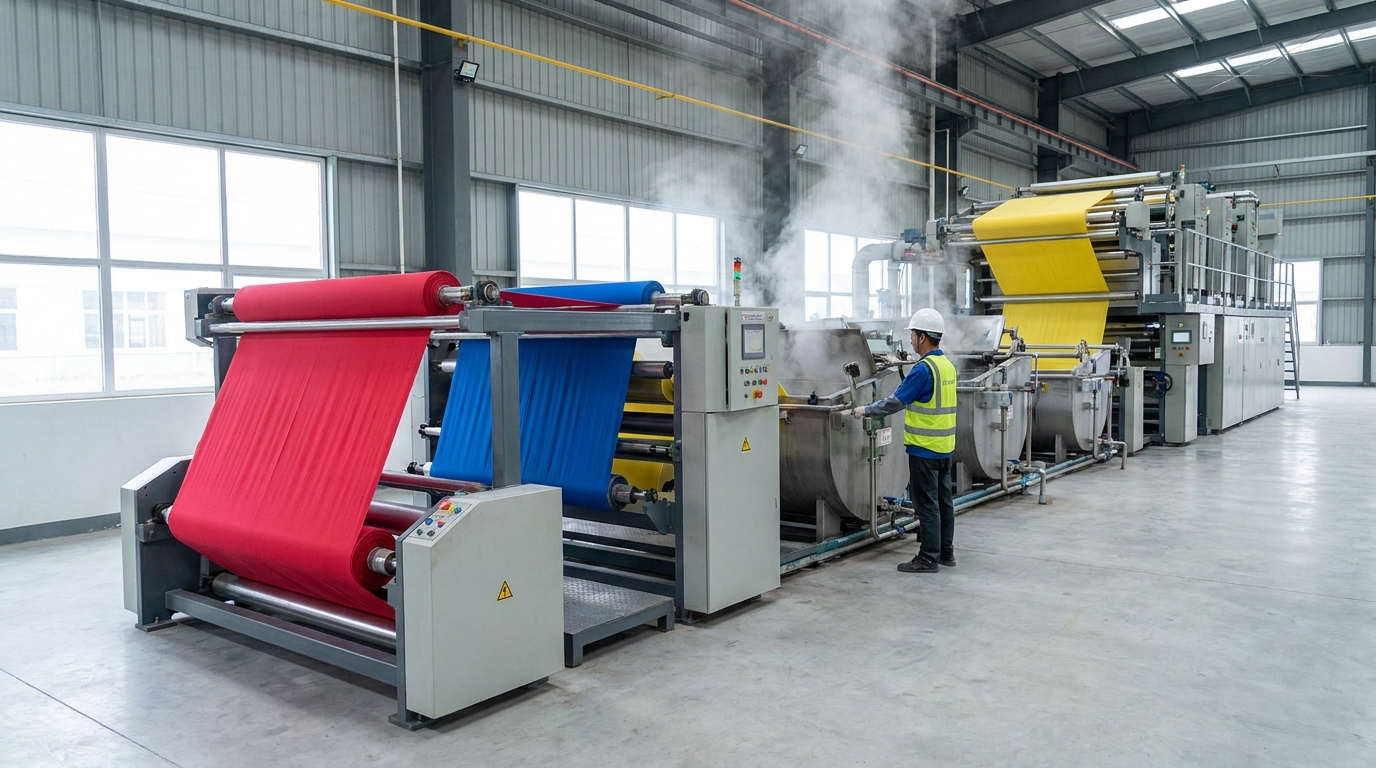
In Phase 2, you successfully transformed conditioned yarn into raw fabric. You utilized high-speed looms or advanced warp knitting machines. However, this “grey” fabric is not ready for the market yet. It lacks color, softness, and visual appeal. When finalizing your how to build a textile production line: complete machinery list, you must carefully select wet processing equipment. Phase 3 introduces the essential dyeing and coloration systems.
Preparing the Raw Fabric for Color
Before adding any dye, you must prepare the fabric thoroughly. Raw materials contain natural oils, waxes, and sizing chemicals. These impurities block moisture. If you skip preparation, the fabric will not absorb dye evenly.
- Singeing and Desizing: These initial steps remove protruding fibers and protective starches. They create a smooth, clean surface.
- Scouring and Bleaching: Industrial machines wash the fabric intensely. They strip away natural impurities. Bleaching creates a pure white base for brighter colors.
- Mercerizing: This chemical treatment swells cotton fibers. It significantly improves dye uptake and adds a subtle luster.
Exploring Different Dyeing Machines
Once prepared, the fabric enters the coloration stage. You need specific dyeing machines based on your fabric type and production volume. Selecting the right equipment prevents material damage.
Jet dyeing machines are perfect for delicate knitted fabrics. They move the fabric through a closed tube using pressurized liquid. This method prevents unwanted stretching and tension. Beam dyeing machines offer a different approach. You wrap the fabric around a perforated beam. The machine pumps dye liquor through the layers. It works exceptionally well for lightweight woven fabrics.
High-volume factories rely on continuous dyeing ranges. The fabric moves continuously through dye baths, steamers, and washing boxes. This setup maximizes efficiency for massive production runs.
| Dyeing Machine Type | Обычное оборудование | Key Operational Advantage |
|---|---|---|
| Реактивное крашение | Knitted fabrics, delicate blends | Maintains low tension, prevents fabric distortion |
| Лучевое крашение | Lightweight wovens, synthetics | Provides excellent dye penetration without creasing |
| Continuous Range | Heavy wovens, large production runs | Delivers maximum efficiency for high-volume output |
The Importance of Customized Dyeing Solutions
Wet processing is historically resource-intensive. Traditional dyeing and finishing stages consume 80 to 150 liters of water per kilogram of fabric. You must prioritize resource efficiency to stay competitive today.
Customized dyeing solutions become vital here. SutexMach designs and manufactures advanced dyeing equipment built for modern demands. Our intelligent systems focus heavily on energy-saving performance. They drastically reduce water and chemical consumption. At the same time, they ensure vibrant, long-lasting colors.
Backed by over 30 years of experience, our R&D team continuously innovates wet processing technology. We hold numerous utility model patents for our full-process equipment. Factories across Turkey, Indonesia, and Pakistan trust our dyeing machines. They rely on our strict quality guarantee. Integrating these intelligent solutions protects the environment and streamlines your entire operation.
Phase 4: Fabric Finishing and Surface Treatment
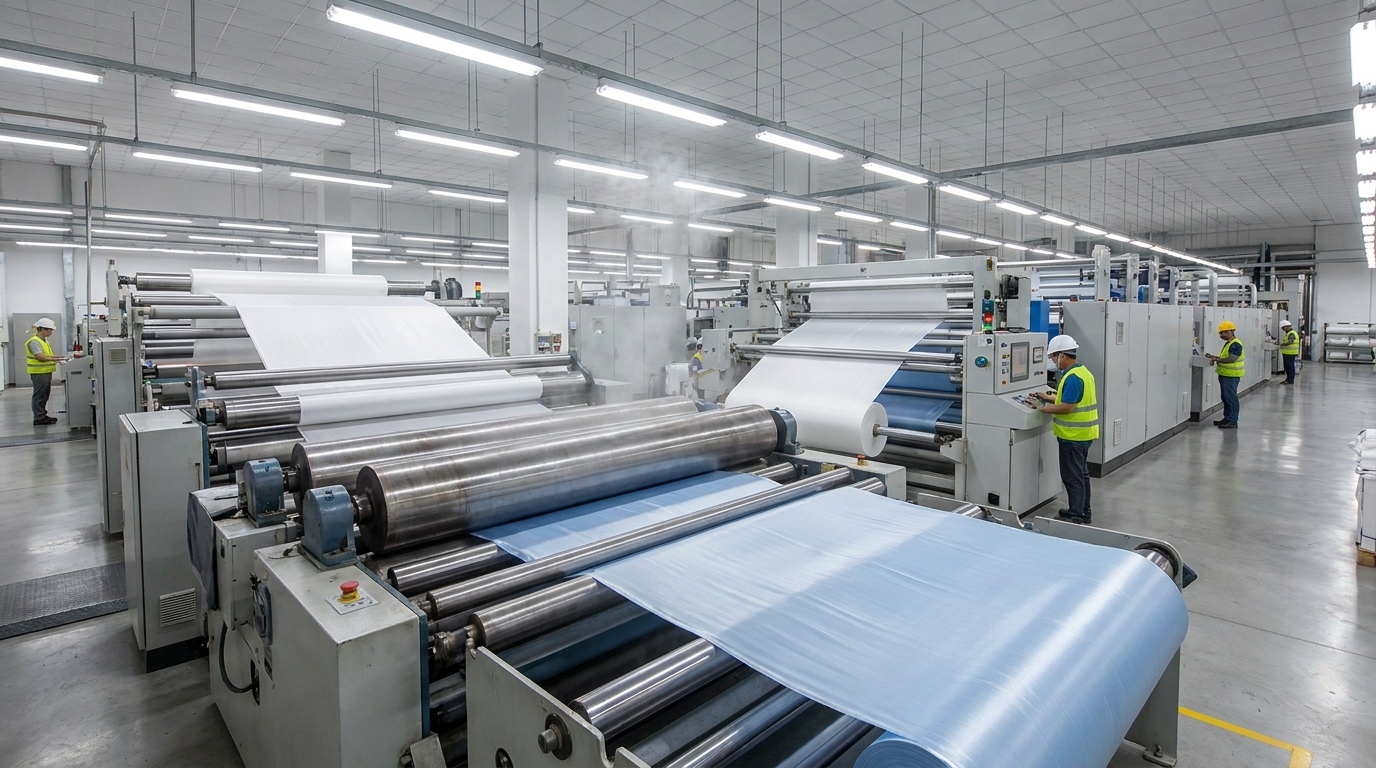
In Phase 3, you successfully applied vibrant colors using advanced dyeing systems. However, this wet, colored fabric is not finished yet. It lacks the correct texture and dimensional stability. You must process it further. This final step enhances the look, feel, and durability of your textile product. When mapping out how to build a textile production line: complete machinery list, you must include surface treatment equipment. This phase turns basic cloth into premium, market-ready goods.
Stenters and Drying Equipment
Dyed fabric holds significant moisture. It also loses its shape during wet processing. You need stenters to fix both problems simultaneously. These machines grip the fabric edges and stretch it to a precise width. They then pass the material through heated drying chambers.
This process ensures dimensional stability. It removes moisture completely and prevents future shrinkage. Stenters consume considerable energy during operation. However, you can reclaim up to 30% of exhausted thermal energy by implementing heat recovery systems. We strongly recommend integrating these systems to boost overall factory efficiency and reduce utility waste.
Sueding Machines for Premium Textures
Some fabrics require a softer, more luxurious feel. Sueding machines achieve this perfectly. They pass the fabric over fast-spinning abrasive rollers. This action gently cuts the surface fibers.
The result is a soft, brushed, and premium texture. Many professionals call this a “peach skin” effect. SutexMach specializes in this exact technology. We design and manufacture highly intelligent sueding machines. Our R&D team holds numerous utility model patents for this specific equipment. Factories globally trust our machines to deliver a consistent, high-quality hand-feel.
Calendering Machines for a Glossy Finish
Other products need a smooth, shiny surface instead of a brushed one. Calendering machines handle this requirement. You can think of them as massive industrial irons. They compress the fabric between heavy, heated rollers.
This intense pressure flattens the yarns. It creates a glossy, high-quality finish instantly. It also reduces air permeability. This makes calendering ideal for specialized apparel and technical textiles. SutexMach provides robust calendering machines as part of our integrated solutions. We guarantee reliable, energy-saving performance across all our finishing equipment.
| Finishing Machine | Primary Function | Final Fabric Effect |
|---|---|---|
| Stenter | Drying and heat-setting | Dimensional stability and exact width control |
| Высевающая машина | Surface abrasion via rollers | Soft, brushed, premium “peach skin” texture |
| Каландрирующая машина | Heated mechanical compression | Smooth, glossy, and flattened surface |
The Ultimate Textile Machinery List for Your Factory
In Phase 4, we finalized your fabric using advanced stenters and calendering machines. You now understand every individual production stage perfectly. It is time to consolidate this knowledge. Investors, factory managers, and engineers need a clear, actionable roadmap. We created a categorized reference guide to simplify your factory planning. Figuring out exactly how to build a textile production line: complete machinery list requirements depend heavily on your specific goals. Let us break down the exact equipment you need to launch successfully.
Core Full-Process Equipment vs. Auxiliary Systems
A highly profitable factory relies on two distinct machine categories. Core equipment handles the actual physical transformation of raw materials. Auxiliary machines support the factory environment and verify product quality. You cannot run high-speed looms without proper environmental controls. You also cannot guarantee yarn strength without a dedicated testing lab. Both categories are absolutely essential for seamless operations.
| Production Phase | Core Production Machinery | Necessary Auxiliary & Testing Units |
|---|---|---|
| Spinning Preparatory & Yarn | Blowroom, Carding, Draw Frames, Ring Frames | HVI (Cotton Testing), Evenness Testers, Waste Collection |
| Fabric Formation | Air-jet Looms, Rapier Looms, Warp Knitting | HVAC (Humidification), Compressed Air Systems |
| Wet Processing | Singeing, Jet Dyeing, Continuous Dyeing Range | Chemical Dosing Systems, Color Matching Cabinets |
| Finishing & Surface Treatment | Stenters, Sueding Machines, Calendering Units | Heat Recovery Systems, Fabric Inspection Machines |
Essential Auxiliary and Quality Control Equipment
You must maintain strict environmental controls across your facility. Spinning operations require 60–70% relative humidity. Weaving demands higher levels around 75–85% to prevent yarn breakage. Industrial HVAC systems handle this critical task constantly. You also need massive compressed air systems if you deploy air-jet looms.
Quality control (QC) labs protect your brand reputation. High Volume Instruments (HVI) test raw cotton bales before blending begins. Universal Testing Machines (UTM) measure fabric tensile strength accurately. Evenness testers ensure your yarn remains consistent. These testing units guarantee your finished goods meet strict international standards.
Scaling and Customizing Your Setup
No two textile factories are identical. You must scale your machinery list based on target capacity, fabric type, and budget. Heavy denim production requires sturdy rapier looms and rotor spinning frames. Lightweight activewear demands high-speed warp knitting machines and delicate jet dyeing setups.
Machine balancing remains highly critical during scaling. Your blowroom production must match your carding section perfectly. Otherwise, you create massive bottlenecks and waste expensive energy. You must also balance your equipment budget. High-end European machinery requires massive initial capital. Intelligent Asian alternatives often provide faster returns on investment.
SutexMach provides one-stop intelligent textile machinery solutions. We help you customize this exact equipment list based on your factory scale. Our team balances your production line for maximum efficiency. We leverage over 30 years of experience to deliver reliable, energy-saving performance. Factories across Turkey, Indonesia, and Pakistan trust our full-process equipment. They rely on our continuous innovation to scale their manufacturing operations profitably.
How to Choose the Right Textile Manufacturing Machine Provider
In the previous section, we finalized your ultimate equipment roadmap. You learned how to balance core machinery alongside essential auxiliary systems. Now, you face another critical decision. You must actually source these machines. Knowing how to build a textile production line: complete machinery list is only half the battle. Choosing the right provider guarantees your factory runs profitably.
The Power of Integrated Solutions
Many factory owners make a common mistake. They buy equipment from multiple disjointed vendors. This approach creates massive integration headaches. Your blowroom might not communicate properly during spinning preparatory stages. A one-stop provider eliminates these risks entirely. They offer fully integrated solutions. Every machine synchronizes perfectly from day one. This unified approach reduces installation time significantly. It prevents costly bottleneck issues later.
| Sourcing Strategy | System Integration Level | Operational Impact |
|---|---|---|
| One-Stop Provider | Seamless synchronization across all phases | Eliminates bottlenecks and ensures unified technical support |
| Multiple Disjointed Vendors | High risk of software and hardware conflicts | Complicates maintenance and delays production launches |
Evaluating R&D and Innovation
Textile technology evolves rapidly today. You need a partner focused on continuous innovation. When evaluating suppliers, look closely at their research capabilities. Do they hold invention and utility model patents? Patents prove a manufacturer actively solves real industry problems. They design intelligent machinery to combat rising energy costs. Strong R&D ensures your factory stays competitive for decades.
Why Global Trust Matters
Equipment reliability determines your daily output directly. You cannot afford unexpected downtime during high-speed weaving. Global trust serves as a strong indicator of quality. Look for manufacturers boasting successful installations in major textile hubs. Markets like Turkey, Indonesia, and Pakistan demand rugged machines. These regions require high-performing, energy-saving equipment constantly. If a provider succeeds in these highly competitive regions, their machinery is proven. They deliver reliable setups built for heavy industrial use.
Partnering Alongside Industry Veterans
Experience remains irreplaceable in textile manufacturing. You should partner alongside established industry veterans. SutexMach brings over 30 years of deep expertise to your project. Founded in 1985, we are affiliated with Jiangsu Soho Honry Import & Export Co., Ltd. We design, research, and manufacture customized textile equipment. Our dedicated R&D team holds numerous patents across our full-process line. We provide the exact integrated solutions your new factory requires. We guarantee reliable performance and continuous innovation.
Заключение
Building a textile production line requires careful planning and smart investments.
Choosing intelligent, patented machinery ensures high efficiency and excellent long-term ROI.
Partner with SutexMach for a customized, energy-saving manufacturing setup today.
- Assess your target fabric capacity and budget limits.
- List the specific machines needed for your factory.
- Contact SutexMach to design your complete processing line.
Frequently Asked Questions About Building a Textile Production Line
What is the minimum space needed for a spinning mill?
A standard 25,000-spindle spinning mill needs around 10,000 to 15,000 square meters. You must plan for raw material storage. Space is also needed for the actual machinery. Proper layout ensures smooth fiber transport between machines.
Should I choose air-jet or rapier looms for my factory?
Air-jet looms operate at very high speeds. They reach up to 1,500 picks per minute. They work best for synthetic fibers and light cottons. Rapier looms run at a much slower pace. They usually run at 400 to 700 picks per minute. However, rapier looms handle heavy fabrics and complex patterns better.
How can I reduce energy costs in my textile plant?
Spinning uses up to 60% of total mill energy. You can install variable frequency drives to save power. High-efficiency motors also help cut daily electricity bills. SutexMach offers energy-saving machinery to lower your running costs. Heat recovery systems can reclaim exhausted thermal energy.
Why is humidity important in a textile production line?
Proper moisture prevents yarn from breaking during production. Spinning requires a relative humidity of 60% to 70%. Weaving needs higher levels of 75% to 85%. Installing a yarn conditioning plant stabilizes moisture content. This simple step improves your downstream weaving efficiency.
Where can I find reliable machines for dyeing and finishing?
Finding a trusted supplier is crucial for wet processing. SutexMach provides one-stop intelligent textile machinery solutions. They have over 30 years of global industry experience. Their product line includes advanced dyeing and calendering machines. They deliver customized and reliable equipment for your exact needs.
Starting a textile plant requires careful planning and smart choices. You need reliable equipment to ensure smooth operations. Here is what you should do next:
- Calculate your required production capacity and floor space.
- Compare energy-saving machines to lower future utility bills.
- Contact SutexMach for customized textile machinery solutions.