


 Polish
  English
  Hungarian
  Indonesian
  Bulgarian
  Turkish
  Russian
  Spanish
  Portuguese
  Korean
  French


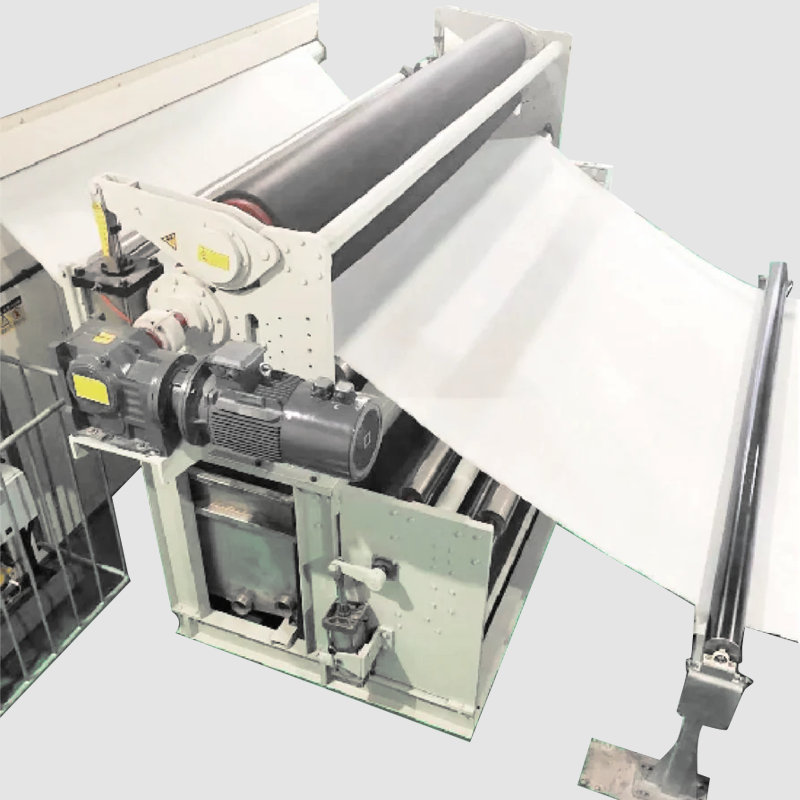
A podkładka skośna is a specialized textile machine used in dyeing and finishing processes to correct fabric distortion while applying liquid treatments. Its primary purpose is to eliminate or reduce fabric skew and bow by mechanically adjusting fabric alignment during padding, ensuring that the fabric remains dimensionally stable and visually straight throughout production.
In modern textile manufacturing, fabric quality is no longer judged only by color or finish. Dimensional accuracy, straight edges, and uniform structure have become equally important. A skew padder addresses these requirements by combining chemical application with real-time fabric straightening, making it a critical component in continuous textile processing lines.
Skew padders are widely used in woven and knitted fabric production, particularly in operations where fabric distortion can lead to downstream quality problems, material waste, or customer complaints.
Understanding Fabric Distortion in Textile Processing
What Is Fabric Skew?
Fabric skew occurs when the weft or course lines are not perpendicular to the fabric edges. This misalignment often becomes visible as diagonal distortion across the fabric width. Skew may originate during weaving or knitting, but it is frequently intensified during wet processing stages such as dyeing, washing, and finishing.
When fabric is skewed, the structural balance of the textile is compromised. Even if the fabric appears acceptable on the production line, skew can become more pronounced after garment construction or washing.
What is a Fabric Bow?
Fabric bow refers to a curved distortion where the weft or course lines form an arc rather than a straight line. Like skew, bow is caused by uneven tension, shrinkage, or mechanical stress during processing.
Both skew and bow negatively affect fabric appearance and performance, making correction essential before final finishing or cutting.
Why Distortion Occurs During Wet Processing
Wet processing introduces moisture, heat, and mechanical forces that affect fiber behavior. Differential shrinkage across the fabric width, uneven roller pressure, and tension imbalance can all contribute to distortion.
As fabric moves through padding, squeezing, and drying stages, even minor inconsistencies can result in visible skew or bow if not corrected in time.
Why Skew Correction Is Essential in Textile Manufacturing
Impact on Garment Fit and Appearance
Skewed fabric often leads to twisted seams, misaligned patterns, and garments that do not hang properly. These issues may only become apparent after garment assembly or consumer use, increasing the risk of returns and quality claims.
Correcting skew during fabric processing helps ensure that finished garments maintain their intended shape and fit.
Dimensional Stability and Cutting Accuracy
Fabric distortion affects cutting accuracy, particularly in automated cutting systems. Skewed fabric can result in size inconsistencies and increased material waste.
A skew padder helps stabilize fabric structure before cutting, improving yield and production efficiency.
Quality Standards and Market Expectations
As textile markets become more competitive, quality standards continue to rise. Buyers increasingly expect consistent fabric alignment and dimensional accuracy, especially in export-oriented manufacturing.
Skew correction is no longer optional in many production environments but is a necessary step to meet quality expectations.
What Is a Skew Padder Used For?
Combining Padding and Alignment Correction
A skew padder integrates two critical functions into one process. It applies liquid treatments such as dyes, resins, softeners, or functional chemicals while simultaneously correcting fabric distortion.
This integration allows manufacturers to address alignment issues without adding separate correction stages, saving time and reducing complexity.
Typical Processing Stages Involving a Skew Padder
Skew padders are commonly used in dyeing, resin finishing, softening, coating preparation, and functional finishing processes. They are typically positioned before drying or curing units to stabilize fabric before heat treatment.
Their placement ensures that fabric enters subsequent stages in a straight and controlled condition.
How a Skew Padder Works
Basic Operating Principle
The operating principle of a skew padder is based on controlled mechanical adjustment. The fabric passes through a padding bath and then through a set of pressure rollers that squeeze excess liquid while applying uniform pickup.
At the same time, adjustable skew mechanisms introduce differential tension across the fabric width. By slightly angling rollers or altering fabric path geometry, the machine gradually realigns distorted fabric.
Continuous and Progressive Correction
Skew correction in a padder is not abrupt. Instead, it is applied progressively to avoid stressing the fabric. This gradual approach ensures effective correction while preserving fabric integrity.
Operators can adjust correction parameters during operation to respond to changes in fabric behavior.
Key Components of a Skew Padder
Padding Bath and Liquor System
The padding bath holds the treatment liquor and ensures consistent fabric impregnation. Proper circulation and level control help maintain uniform chemical concentration throughout the process.
Pressure Rollers
Pressure rollers apply a controlled squeezing force to regulate liquor pickup. Uniform pressure across the fabric width is essential for both chemical application and dimensional stability.
Skew Adjustment Mechanism
The skew adjustment mechanism is the defining feature of a skew padder. It may include angled rollers, adjustable shafts, or movable guide elements that allow precise correction of fabric distortion.
Drive and Speed Control System
Modern skew padders are equipped with variable speed drives to synchronize with other machines in the production line. Stable speed control ensures smooth fabric flow and consistent processing conditions.
Control Interface
Advanced control systems allow operators to fine-tune pressure, speed, and skew angle. Some systems support repeatable settings for different fabric types, improving process consistency.
Types of Skew Padders
Manual Adjustment Skew Padders
Manual skew padders require operators to adjust roller angles and pressure settings based on visual inspection. These machines are suitable for operations with experienced technicians and relatively stable fabric conditions.
Semi-Automatic Skew Padders
Semi-automatic systems provide assisted adjustment through mechanical indicators or simplified control panels. They offer improved precision while maintaining operational flexibility.
Advanced Skew Padding Systems
More advanced skew padding systems may incorporate sensors and automated control elements. These systems help maintain consistent alignment across varying fabric types and processing conditions.
Applications in Woven Fabric Processing
Correction of Weft Skew
Woven fabrics often experience weft skew due to tension imbalance during weaving or finishing. Skew padders help realign weft threads, ensuring straight edges and uniform structure.
Preparation for Cutting and Garment Manufacturing
Correcting skew at the fabric stage improves cutting accuracy and garment assembly efficiency. This reduces downstream adjustments and material waste.
Applications in Knitted Fabric Processing
Managing Loop Structure Distortion
Knitted fabrics are particularly susceptible to distortion due to their loop-based structure. Skew padders help stabilize knitted fabrics during wet processing.
Improving Dimensional Control
By correcting skew before drying or heat setting, skew padders help maintain dimensional consistency in finished knitted fabrics.
Benefits of Using a Skew Padder
Improved Fabric Straightness
The most immediate benefit of a skew padder is improved fabric alignment. Straight fabric enhances both visual quality and functional performance.
Enhanced Process Consistency
Combining skew correction with padding improves overall process stability. Consistent alignment supports uniform chemical application and finishing results.
Reduced Defects and Reprocessing
Correcting distortion early in the process reduces the need for rework and minimizes material waste caused by quality defects.
Zwiększona wydajność produkcji
By integrating multiple functions into a single machine, skew padders help streamline production lines and improve throughput.
Comparison with Standard Padding Machines
Functional Differences
Standard padding machines focus primarily on liquid application and pickup control. They do not actively address fabric alignment.
Skew padders add alignment correction capabilities, making them more suitable for high-quality textile production.
When a Standard Padder Is Not Enough
In applications where fabric distortion leads to visible defects or customer complaints, a standard padder may be insufficient. Skew padders provide an effective solution in such cases.
Process Parameters and Operational Considerations
Pressure and Pickup Control
Maintaining correct pressure ensures consistent chemical application while supporting fabric stability. Excessive pressure may introduce new distortion, while insufficient pressure can lead to uneven treatment.
Line Speed and Tension Balance
Line speed must be carefully balanced with tension control. Sudden speed changes can affect skew correction effectiveness.
Fabric Type and Construction
Different fabrics respond differently to skew correction. Operators must adjust settings based on fabric weight, weave, and elasticity.
Quality Control and Performance Evaluation
Visual Inspection
Visual inspection remains a key method for evaluating skew correction effectiveness. Straight weft or course lines indicate successful alignment.
Dimensional Measurement
Measuring fabric dimensions before and after processing helps quantify improvement and maintain quality records.
Consistency Across Batches
A well-adjusted skew padder delivers consistent results across production batches, supporting reliable quality control.
Maintenance and Operational Reliability
Routine Maintenance Requirements
Regular inspection of rollers, bearings, and adjustment mechanisms ensures stable performance. Clean rollers contribute to uniform pressure and alignment.
Long-Term Machine Stability
Proper maintenance extends equipment lifespan and maintains correction accuracy over time.
Energy Efficiency and Production Economics
Optimizing Resource Use
By reducing reprocessing and waste, skew padders contribute to more efficient resource use.
Cost Savings Through Quality Improvement
Improved alignment reduces quality-related costs and enhances overall production profitability.
Role of Skew Padders in Modern Textile Lines
Integration with Continuous Processing Systems
Skew padders are designed to integrate seamlessly with modern continuous processing lines. Their compatibility with automation supports efficient production.
Supporting High-Quality Textile Manufacturing
As quality requirements continue to rise, skew padders play an increasingly important role in meeting market expectations.
Future Trends in Skew Padder Technology
Improved Control and Automation
Advancements in control systems are expected to enhance correction accuracy and ease of operation.
Adaptation to New Fabric Types
As textile materials evolve, skew padders will continue to adapt to handle a wider range of fabric structures and finishes.
Wnioski
A skew padder is a vital textile machine designed to correct fabric distortion while applying liquid treatments during dyeing and finishing. By combining padding and skew correction in a single process, it improves fabric alignment, enhances process consistency, and supports higher product quality.
Used widely in woven and knitted fabric production, skew padders help manufacturers meet increasingly demanding quality standards while maintaining efficient production workflows. Their ability to reduce defects, improve dimensional stability, and streamline processing makes them an essential component of modern textile finishing lines.