

 Hungarian
 English
 Indonesian
 Bulgarian
 Turkish
 Polish
 Russian
 Spanish
 Portuguese
 Korean
 French


A rossz festőgép csökkenti-e textilgyára nyereségét? A pontos műszaki adatok ismerete időt, vizet és pénzt takarít meg vállalkozásának. Bízzon a SutexMach harminc éves, 1985 óta folyamatosan fejlődő intelligens textilgép-szakértelmében. Ebben a bejegyzésben hét fontos ellenőrzési pontot mutatunk be, amelyeket vásárlás előtt érdemes elvégeznie.
Understanding Jet Dyeing Machine Specifications and Their Impact

Before diving into the seven crucial checks, we must define what jet festőgép műszaki adatok actually mean. They serve as the technical blueprint for your equipment. These numbers dictate how a machine handles fabric, heat, water, and chemicals.
Think of specifications as the strict operating limits of your dyeing equipment. They include exact measurements like temperature, pressure, fabric speed, and power consumption. A standard high-temperature machine typically operates up to 140°C. It usually maintains a working pressure around 3.0 to 3.5 bar. These specific numbers tell you exactly which fabrics you can safely process.
How Technical Parameters Influence Your Floor
These technical parameters directly control your daily production efficiency and fabric quality. They also drive your daily operational costs.
Take the jet festőgép folyadékrációja (MLR) as a prime example. Modern machines typically range from 1:4 to 1:10. Lower ratios mean you heat much less water. This saves massive amounts of steam and electricity every single cycle.
Fabric speed and nozzle pressure also play massive roles in quality control. Adjustable fabric speeds between 150 and 500 meters per minute prevent permanent crease marks on sensitive synthetics. Adjustable nozzle pressure ensures deep dye penetration without causing surface abrasion or pilling.
| Key Specification | Typical Operating Range | Direct Impact on Production |
|---|---|---|
| Liquor Ratio (MLR) | 1:4 to 1:10 | Controls water, chemical, and energy consumption. |
| Fabric Speed | 150 to 500 m/min | Prevents crease marks and ensures even dye distribution. |
| Operating Temperature | Up to 135°C – 140°C | Determines dye exhaustion rates for synthetic fibers. |
| Nozzle Pressure | 0.2 to 3.5 bar | Protects delicate knits from surface abrasion and pilling. |
Standard vs. Intelligent Textile Machinery
Standard machines follow basic mechanical commands. They process fabric reliably but often require constant manual adjustments. You depend heavily on operator experience to avoid tangles or uneven shading.
Intelligent textile machinery changes this dynamic entirely. SutexMach has engineered intelligent solutions for global fabric mills since 1985. Our modern systems integrate seamlessly with your dye kitchen and ERP software. Microprocessor-based controllers monitor flow meters and differential pressure sensors in real time.
This intelligent approach actively prevents rope entanglement inside the J-box. It guarantees consistent batch-to-batch shade repeatability. You rely less on human guesswork and more on precise, automated data.
Check 1: Jet Dyeing Machine Capacity KG – Matching Your Production Needs

We just discussed how intelligent systems prevent rope entanglement and ensure shade repeatability. However, even the smartest controller cannot fix a machine sized incorrectly for your batches. Evaluating your daily output requirements is the absolute first step in your buying process.
Determining Your Ideal Batch Size
You must match your equipment size to your actual production floor reality. Single tube capacities usually range from 50kg for sampling up to 250kg or 300kg. Multi-tube configurations can easily reach over 2000kg.
How do you determine the ideal jet festőgép kapacitása kg for your facility? Look closely at your average order size. If your clients mostly order small custom batches, buying a massive 1000kg machine wastes resources. Conversely, processing large bulk orders in small tubes creates severe bottlenecks.
The Dangers of Underloading and Overloading
Operators sometimes ignore capacity limits. This creates massive problems for fabric quality and operational efficiency.
Running a 500kg machine with only 150kg of fabric wastes energy. You heat excess water. You consume unnecessary chemicals. Your material-to-liquor ratio spikes, destroying your profit margins on that specific batch.
Pushing 350kg into a 300kg tube is equally dangerous. The fabric jams inside the J-box. As we covered earlier, this causes severe rope entanglement. The dye liquor cannot circulate properly, leading to uneven shading and permanent crease marks.
| Capacity Issue | Primary Operational Risks | Impact on Production |
|---|---|---|
| Underloading | Excess water heating, wasted chemicals. | Higher utility cost per kilogram. |
| Overloading | J-box jamming, uneven dye penetration. | High rejection rates and costly redyeing. |
Scalability for Growing Fabric Mills
Your business will naturally grow over time. Your equipment must scale alongside your order volume. SutexMach has helped global fabric mills scale intelligently since 1985. We strongly recommend modular designs for growing operations.
Multi-tube machines allow you to isolate individual tubes for smaller batches. You can also run them together for massive bulk orders. This flexibility protects your initial investment. It ensures you handle today’s 200kg orders and tomorrow’s 2000kg contracts effortlessly.
Check 2: Jet Dyeing Machine Liquor Ratio – Saving Water and Chemicals

You just learned how modular designs protect your investment as batch sizes grow. But scaling up your capacity heavily impacts your daily utility consumption. This brings us directly to evaluating water usage.
As we covered earlier, the material-to-liquor ratio (MLR) dictates how much water you heat per kilogram of fabric. You must evaluate this metric carefully. Modern machines typically offer an MLR between 1:4 and 1:10. You need to match this ratio to your specific fabric types.
The Power of Ultra-Low Liquor Ratios
Ultra-low liquor ratio (ULR) machines push efficiency even further. They target extreme ratios between 1:3 and 1:4.5. This drastic reduction delivers massive financial and environmental benefits.
When operating a magas hőmérsékletű sugárdíszítő gép at 135°C, heating excess water wastes valuable steam. ULR technology solves this problem directly. You heat much less water. You use fewer chemicals because the dye bath remains highly concentrated. You also discharge significantly less wastewater.
- Lower Energy Demand: Heating less water requires less steam and electricity per cycle.
- Chemical Savings: Concentrated baths require smaller doses of salts and leveling agents.
- Environmental Compliance: Reduced wastewater volume lowers your daily effluent treatment expenses.
SutexMach’s Intelligent Optimization
Lowering water volume introduces new risks. A highly concentrated bath can cause uneven shading if circulation fails. SutexMach solves this through intelligent textile machinery design.
We have engineered intelligent dyeing solutions for global fabric mills since 1985. Our systems optimize water usage without ever compromising color fastness. Microprocessor-based controllers constantly monitor liquor flow. They ensure precise dye distribution even at a strict 1:3 ratio.
| Gép típusa | Typical MLR Range | Water Used per 200kg Batch |
|---|---|---|
| Standard Overflow | 1:8 to 1:10 | 1600L to 2000L |
| Modern Jet | 1:4 to 1:6 | 800L to 1200L |
| Ultra-Low Ratio (ULR) | 1:3 to 1:4.5 | 600L to 900L |
This intelligent control protects your profit margins. You achieve perfect batch-to-batch repeatability while easily hitting strict environmental targets.
Check 3: Jet Dyeing Machine Nozzle Pressure – Ensuring Fabric Protection
You just saw how precise water volume control protects your profit margins and hits environmental targets. However, moving that concentrated dye bath and fabric through the machine requires mechanical force. This brings us to your next critical specification check. The nozzle acts as the heart of fabric transport.
The Mechanics of Fabric Transport and Dye Penetration
The main pump pushes dye liquor through a Venturi nozzle. This creates a high-speed liquid stream. This stream physically grabs the fabric rope and pulls it rapidly through the transport tube. The force of this liquid collision pushes dye molecules deep into the yarn.
Your jet festőgép fúvókanyomás controls this exact force. It dictates both the speed of your fabric and the depth of dye penetration. A higher velocity jetting action is absolutely essential for rapid dye exhaustion on 100% polyester. Conversely, a 100% cotton knit requires a much softer landing inside the J-box to prevent stitch distortion.
Why Adjustable Settings Are Essential
Fabric mills process a huge variety of materials daily. You cannot use the same mechanical force for a 50 GSM delicate knit and a 500 GSM heavy woven fabric. Standard machines often lack this necessary flexibility.
Lightweight microfibers require a narrow nozzle and gentle pressure. Heavy terry towels demand a wider nozzle diameter and much higher force to move the heavy wet bulk. You need equipment that adapts instantly to these changing variables.
SutexMach has engineered intelligent textile machinery since 1985. We design our systems to offer precise, adjustable pressure ranges, typically operating between 0.2 and 3.5 bar. This intelligent design allows your operators to easily swap nozzle sizes and adjust pump speeds based on specific fabric weights.
Preventing Costly Dyeing Defects
Incorrect nozzle settings will ruin your fabric batches quickly. Applying too much force causes severe surface abrasion. It creates unwanted “hairiness” or pilling on delicate knits. The high friction literally tears the surface fibers apart.
Applying too little force causes the fabric rope to stall. As we covered earlier, slow fabric speeds cause permanent longitudinal crease marks on sensitive synthetics. The fabric simply sits in the J-box for too long without moving.
| Common Dyeing Defect | Pressure-Related Cause | Intelligent Operational Solution |
|---|---|---|
| Surface Pilling and Abrasion | Pressure is set too high for delicate knitted fabrics. | Reduce pump speed via inverter and install a wider nozzle. |
| Longitudinal Crease Marks | Pressure is too low, causing slow fabric turnover rates. | Increase pressure to achieve fabric speeds over 400 m/min. |
| Poor Dye Exhaustion | Insufficient jet force to penetrate heavy synthetic fibers. | Optimize nozzle pressure and temperature for deeper penetration. |
Using variable frequency drives (VFD) on your main pumps gives you ultimate control. You can dial in the exact pressure needed for every specific batch. This eliminates guesswork, prevents fabric damage, and keeps your production moving smoothly.
Check 4: Temperature Capabilities – Do You Need a High Temperature Jet Dyeing Machine?
We just covered how mechanical force and variable frequency drives protect your fabric from surface abrasion. But pushing dye into synthetic fibers requires more than just physical pressure. You also need extreme heat. This brings us directly to evaluating your exact temperature requirements.
Normal Temperature vs. High-Temperature Models
You must choose your equipment based on the specific fibers you process. Normal temperature machines handle natural fibers like cotton or wool perfectly. They usually peak around 98°C at standard atmospheric pressure. They cost less upfront and consume less energy.
A high temperature jet dyeing machine operates under intense pressure. It routinely reaches up to 135°C to 140°C. If your mill only processes 100% cotton, a normal temperature machine works fine. However, buying one severely limits your future manufacturing capabilities.
| Gép típusa | Max Operating Temperature | Operating Pressure | Ideal Fabric Types |
|---|---|---|---|
| Normal Temperature | 98°C | Atmospheric | 100% Cotton, Wool, Viscose |
| High Temperature (HTHP) | 135°C – 140°C | 3.0 to 3.5 bar | Polyester, Nylon, Synthetic Blends |
Why Synthetics Demand Extreme Heat
Processing 100% polyester or synthetic blends strictly requires high temperatures. Polyester fibers are highly crystalline. At room temperature, their internal structure remains tightly closed. Dye molecules simply cannot enter the yarn.
When you heat the dye bath past 130°C, the polymer chains relax. The fiber structure opens up completely. This thermal reaction allows the dye to penetrate deeply and permanently. SutexMach has engineered intelligent textile machinery precisely for this thermal process since 1985. Our high-temperature systems guarantee rapid dye exhaustion for synthetic blends, ensuring absolute color fastness.
Evaluating Heating and Cooling Gradients
Reaching 140°C is only half the battle. How fast you get there determines your daily cycle times. You must evaluate the heating and cooling gradients carefully. They directly impact your energy efficiency and fabric quality.
Standard machines offer a heating gradient of 1.5°C to 4°C per minute. Cooling gradients usually sit between 2°C and 3°C per minute. Faster gradients shorten your overall cycle time. They increase your daily output significantly.
However, heating too fast wastes valuable steam. Cooling too rapidly causes severe thermal shock. This shock creates permanent longitudinal creases in synthetic fabrics. Intelligent microprocessor-based controllers manage these gradients automatically. They ensure optimal energy efficiency while protecting your delicate fabrics.
Safety Standards for Pressurized Equipment
Operating at 140°C turns your machine into a high-pressure vessel. Maximum working pressure typically hits 3.0 to 3.5 bar. This equals roughly 50 psi. Safety is absolutely non-negotiable here.
- Material Grade: SS 316L stainless steel is the strict industry standard. It provides critical corrosion resistance against harsh dyes and chemicals under extreme heat.
- Pressure Relief: Your equipment must include reliable, automatic pressure relief valves.
- Emergency Controls: Immediate emergency stop functions are mandatory for operator safety.
Intelligent systems add another layer of protection. They constantly monitor differential pressure sensors. They automatically adjust pump speeds or halt the cycle to prevent catastrophic failures before they happen.
Check 5: Fabric Speed and Circulation Systems
You just learned how intelligent controllers safely manage extreme heat and high pressure. But intense heat means nothing if your fabric stalls inside that pressurized vessel. This brings us to another critical part of your jet dyeing machine specifications check: fabric speed and circulation.
The Role of Winch Speed in Level Dyeing
The lifter reel, commonly called the winch, acts as the primary mechanical driver. Its speed directly controls your fabric turnover rate. This metric measures how often the entire fabric rope completes one full cycle through the dye bath.
Fast and consistent turnover is absolutely essential for level dyeing. If the winch runs too slowly, parts of the fabric soak in the concentrated dye bath longer than others. This causes uneven shading and ruins the batch.
Modern machines feature adjustable fabric speeds ranging from 150 to 500 meters per minute. You need high speeds to achieve perfect batch-to-batch shade consistency. Speeds exceeding 400 m/min are often required to prevent dye migration issues on synthetic blends.
Preventing Tangles and Operational Downtime
High speeds require incredibly smooth internal circulation. If the fabric snags, it creates a massive problem inside the J-box. As we covered earlier, rope entanglement leads to severe machine stoppages and damaged textiles.
You must evaluate the internal construction of the fabric transport tube. The industry standard requires highly polished SS 316L stainless steel. Many premium machines also use Teflon-coated linings inside the J-box. These smooth surfaces reduce friction dramatically. They prevent the fabric from bruising or pilling as it folds.
Intelligent control systems provide a massive advantage here. They utilize advanced anti-tangle devices. If a knot begins to form, the microprocessor detects the tension change instantly. It stops the winch automatically before a severe jam occurs. This saves your operators hours of manual untangling and prevents costly downtime.
| Szövet típus | Ideal Winch Speed | Primary Risk of Poor Circulation |
|---|---|---|
| Heavy Wovens (e.g., 500 GSM) | 150 to 250 m/min | Severe J-box jamming and knots. |
| Delicate Knits | 250 to 350 m/min | Surface pilling and stitch distortion. |
| Lightweight Synthetics | 400 to 500 m/min | Permanent longitudinal crease marks. |
Aligning with Subsequent Processing Equipment
Dyeing is just one step in your daily production line. Your machine’s output must align seamlessly with your subsequent processing equipment. If your dyeing cycles outpace your finishing department, wet fabric piles up on the floor.
Wet fabric sitting in carts creates severe quality issues. Gravity pulls the water and unfixed dye downward, causing uneven color migration. You must match your daily dyed capacity with your downstream machinery.
SutexMach has manufactured comprehensive intelligent textile machinery since 1985. We specialize in dewatering, drying, and stenter machines for global fabric mills. We know firsthand that a high-speed dyeing machine needs equally efficient finishing equipment.
- Dewatering Machines: Must process the heavy wet bulk immediately after the dyeing cycle ends.
- Drying Machines: Need adequate evaporation capacity to match the hourly output of your dye house.
- Stenter Machines: Must match the specific width and speed requirements of your freshly dyed fabrics.
A perfectly synchronized floor prevents bottlenecks. It ensures your fabric moves smoothly from the high-temperature jet directly through the final finishing stages.
Check 6: Automation and Intelligent Control Systems
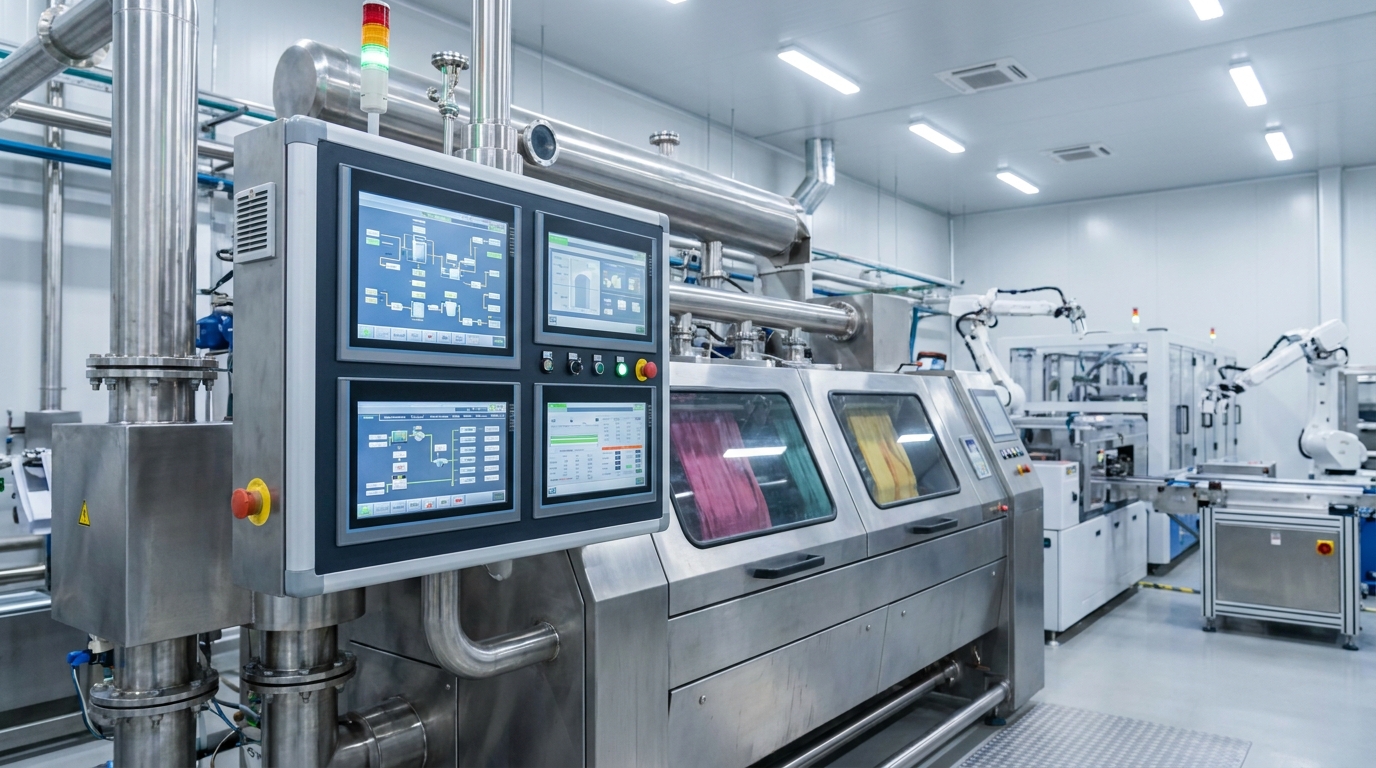
We just discussed how syncing your dyeing cycles with downstream finishing equipment prevents bottlenecks. We also covered how intelligent controllers safely manage extreme heat and high-speed fabric circulation. Now, we must look closer at the brain behind these operations.
Standard machines rely heavily on manual operator intervention. This traditional approach creates daily inconsistencies on the production floor. Modern fabric production demands absolute precision instead. You need intelligent textile machinery to stay competitive in today’s demanding market.
SutexMach, affiliated to Jiangsu SoHo Honry Import & Export Co., Ltd., has manufactured intelligent textile machinery since 1985. We integrate advanced automation into our equipment to eliminate human guesswork entirely.
Essential Automated Features to Demand
What specific automated features should you look for? Start by evaluating the Programmable Logic Controllers (PLCs). A robust PLC acts as the central command hub. It manages every mechanical and thermal process automatically.
Next, evaluate the automated chemical dosing systems. Manual dosing often leads to dangerous spills and incorrect measurements. Automated dosing tanks solve this problem completely. They inject exact chemical amounts at precise intervals. This controlled injection prevents uneven dye uptake across your fabric batches.
Finally, demand real-time cycle monitoring. Your operators need instant access to live production data. They must see flow meter readings and differential pressure changes on a single digital screen. They should never have to guess what is happening inside the pressurized vessel.
Reducing Errors and Ensuring Consistency
These automated features directly impact your daily floor operations. Smart controls drastically reduce human error. As we covered earlier, incorrect temperature gradients ruin delicate synthetic fabrics. Automated systems lock these critical parameters down.
This strict digital control guarantees batch-to-batch color consistency. You achieve perfect center-to-selvage uniformity every single time. Your rejection rates plummet because the machine follows the exact same recipe flawlessly.
| Process Area | Manual Operation Risk | Intelligent Automation Benefit |
|---|---|---|
| Chemical Dosing | Inconsistent measurements and high spill risks. | Precise injection timing and zero chemical waste. |
| Hőmérséklet-szabályozás | Thermal shock from sudden manual valve changes. | Smooth heating and cooling gradients managed by PLC. |
| Cycle Monitoring | Late detection of fabric tangles or pressure drops. | Real-time alerts and automatic machine stops. |
Lowering Daily Labor Costs
Automation also transforms how you deploy your workforce. Standard manual machines require constant supervision. An operator must stand nearby to turn valves and monitor analog gauges manually.
Intelligent control systems change this dynamic completely. They lower your daily labor costs significantly.
- Centralized Monitoring: One skilled operator can manage multiple intelligent machines simultaneously from a central control room.
- ERP Integration: Smart machines pull daily dye recipes directly from your enterprise software automatically.
- Reduced Training Time: Intuitive digital interfaces make training new operators much faster and easier.
Your staff spends less time wrestling with manual controls. They spend more time optimizing overall dye house efficiency.
Check 7: Manufacturer Reliability and After-Sales Support
We just saw how intelligent automation lowers your daily labor costs. It eliminates human guesswork completely. However, even the smartest controllers mean nothing if the machine breaks down without backup. This brings us to your final check.
Why Paper Specifications Need Real-World Backing
Perfect jet dyeing machine specifications on paper look great. You might see the exact heating gradients you need. But those numbers only matter if the manufacturer builds the equipment properly. Poor welding on stainless steel will ruin your production schedule quickly. You need a reliable partner standing behind those technical parameters.
You cannot risk your operations on unproven suppliers. You need a manufacturer boasting a deep history in textile production. SutexMach has engineered intelligent textile machinery since 1985. We are proudly affiliated to Jiangsu SoHo Honry Import & Export Co., Ltd. Over thirty years of hands-on experience means we understand what global fabric mills face daily. We build our equipment to handle real-world stress.
Securing Global Service and Spare Parts
Machine wear and tear is inevitable. High-speed fabric circulation degrades pump seals over time. When a breakdown happens, you need immediate support. Waiting weeks for a simple replacement part halts your entire dye house.
You must verify your manufacturer’s global service network. They must offer rapid spare parts delivery. They also need to provide comprehensive maintenance support. A fast technician response time gets your equipment back online safely.
| Support Area | What to Look For | Direct Production Benefit |
|---|---|---|
| Pótalkatrészek elérhetősége | Robust global supply chain and local stocking. | Minimizes costly machine downtime during critical orders. |
| Technikai támogatás | Remote diagnostics via intelligent PLC systems. | Fixes software and controller issues instantly. |
| Maintenance Training | Comprehensive on-site operator training programs. | Prevents manual handling errors and extends machine lifespan. |
Aligning Your Entire Production Line
As we covered earlier, your dyeing cycles must align perfectly with your downstream finishing equipment. A manufacturer who understands the entire textile process offers a massive advantage. SutexMach does not just build dyeing equipment. We specialize in a comprehensive range of intelligent machinery.
We manufacture sueding, calendering, warp knitting, drying, stenter, dewatering, and air-softening machines. This broad expertise ensures every piece of equipment works together seamlessly. Your wet fabric moves from the dyeing tube directly into our finishing machines without bottlenecks. Partnering with a comprehensive manufacturer streamlines your entire operation.
Következtetés
Reviewing these seven key specifications ensures a smart purchase. High-quality, intelligent dyeing equipment delivers excellent long-term returns. It saves water, energy, and valuable time. Are you ready to upgrade your fabric mill? Contact SutexMach today to find your perfect machine.
- Assess your daily fabric output goals.
- Calculate your target water consumption limits.
- List the specific fabric types you process.
- Request a custom quote from our team.
Frequently Asked Questions About Jet Dyeing Machine Specifications
What is the difference between a jet and a soft flow dyeing machine?
Jet machines use high pressure and fast water speeds. This setup works great for synthetic fabrics. Soft flow machines rely more on gravity. They gently move delicate natural fibers to reduce surface friction. Choose the right machine based on your main fabric type.
Can one jet dyeing machine handle different fabric weights?
Yes, one machine can process various fabric weights. You must use interchangeable nozzles for different materials. A wide nozzle fits heavy terry towels perfectly. A narrow nozzle works better for lightweight microfibers. Always adjust the nozzle to match your specific fabric.
How do I prevent crease marks during the dyeing process?
Crease marks often happen with synthetic fabrics in rope form. You need a machine with a high fabric speed. Speeds over 400 meters per minute help prevent permanent marks. Also, ensure the machine has a good cooling rate. Dropping temperatures too fast can easily shock the fabric.
What material is best for jet dyeing machine construction?
The industry standard for wetted parts is SS 316L stainless steel. This high-quality metal provides excellent corrosion resistance. It easily withstands harsh dyes and strong chemicals. SutexMach builds reliable machines using these top-grade materials. Good construction ensures your machine lasts for many years.
How can I reduce energy costs with a jet dyer?
Look for machines with ultra-low liquor ratios. A ratio of 1:4 saves massive amounts of water and steam. You should also check for variable frequency drives on main pumps. These smart drives can cut energy use by up to thirty percent. Efficient designs will effectively protect your profit margins.
Review your production needs before making a final purchase. Compare the specs of different models carefully. Follow these next steps to secure the right equipment:
- Measure your daily fabric output requirements.
- Request a detailed equipment quote from SutexMach today.
- Verify your local facility water quality standards.
