


 Hungarian
  English
  Indonesian
  Bulgarian
  Turkish
  Polish
  Russian
  Spanish
  Portuguese
  Korean
  French


Article Abstract:
In industrial Kalanderező gép processes, pressure and temperature control are the two most critical parameters affecting product thickness uniformity, surface quality, mechanical properties, and long-term process stability.
According to classic works such as Middleman’s *Fundamentals of Polymer Processing* and White and Kim’s *Twin-Screw Extrusion*, as well as technical publications from organizations like TAPPI and ACS Rubber Division, even small variations in the heat distribution of the rolls or calender can lead to defects such as uneven thickness, uneven surface gloss, internal stress, and premature material wear.
Based on these established academic and industrial documents, this article provides a comprehensive, engineering-practice-oriented guide to calender pressure and temperature control.
This guide does not treat pressure and temperature as isolated variables, but rather elucidates their coupling relationship, control strategies, instrumentation, and optimization methods for applications in the plastics, rubber, film, and textile industries.
Introduction: Why Pressure and Temperature Define Calendering Quality
Among all polymer and elastomer processing technologies, calenders hold a unique position. Unlike extrusion or injection molding, calendering relies on a combination of mechanical compression and controlled thermal softening to shape materials into films, sheets, or coated substrates. This dual dependence makes calendering particularly sensitive to pressure and temperature fluctuations.
In fact, many production problems attributed to “material inconsistency” or “machine wear” can ultimately be traced back to insufficient pressure-temperature coordination.
Excessive pressure at too low a temperature leads to internal stress and surface cracking, while excessive temperature at too low a pressure results in dimensional deviations and surface waviness.
Therefore, understanding the interaction between these two parameters is crucial—it is the foundation for achieving stable, high-quality processing results. As calenders evolve towards higher speeds, wider rolls, and greater precision, accurate pressure and temperature control becomes even more critical.
Overview of Calendering Machines and Their Industrial Role
What is a Calendar?
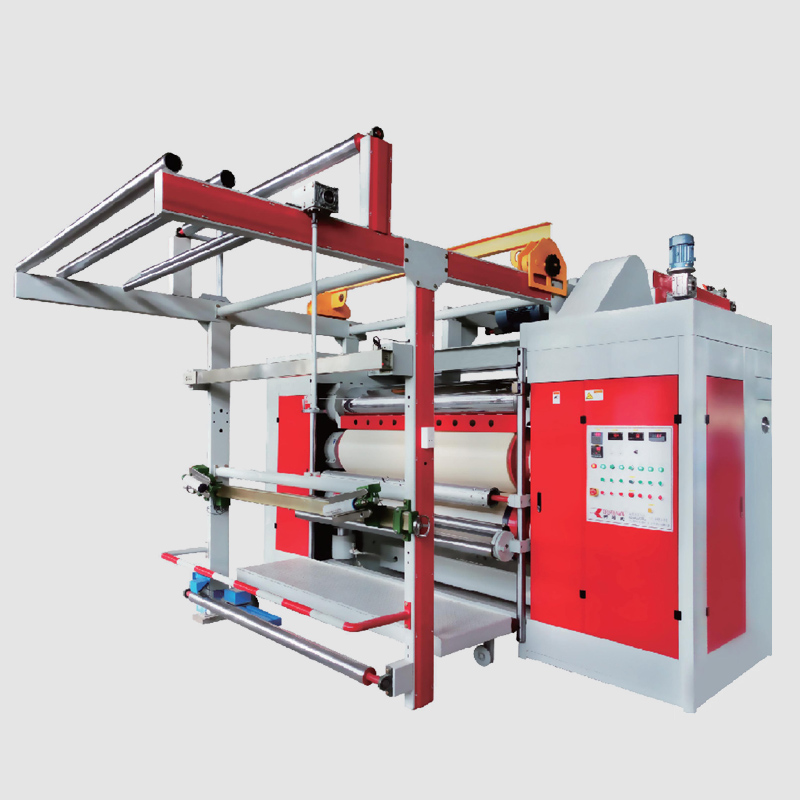
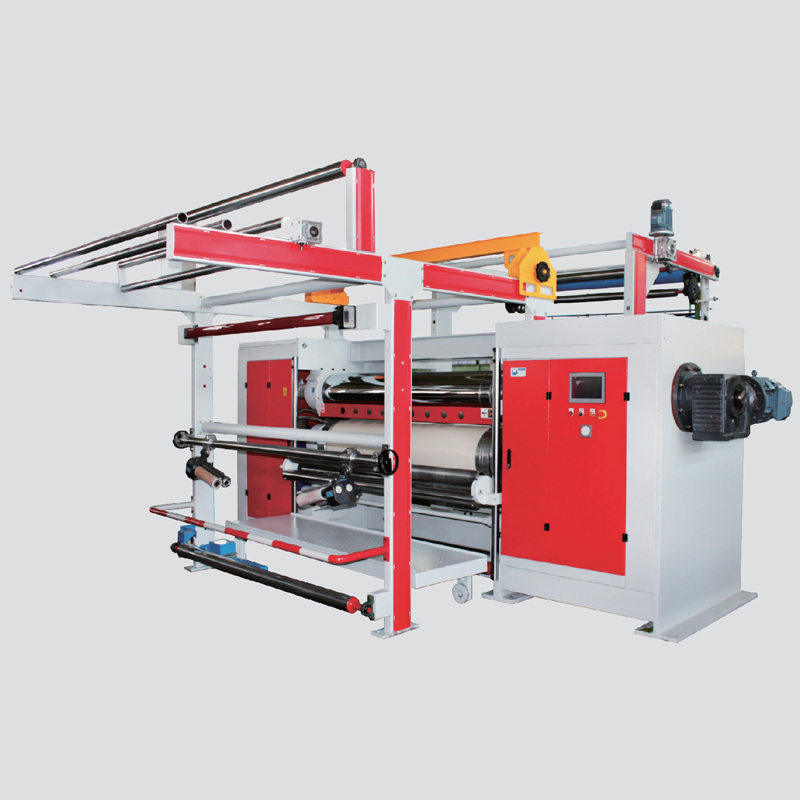
A calender is an industrial processing system that plastically deforms materials under controlled pressure using a series of heated, counter-rotating rollers to form uniform sheets or films. Materials (typically PVC, PU, rubber, or composites) are plastically deformed into uniform sheets or films.
Typical calender configurations include two-roll, three-roll, four-roll, and five-roll units. Roll arrangements can be L-shaped, Z-shaped, F-shaped, or inverted L-shaped, depending on material properties and product requirements.
Major Industrial Applications
Calendars are widely used in:
- Production of PVC and PU films and sheets
- Production of rubber sheets and coated textiles
- Production of artificial leather and carpets
- Production of engineered laminates and specialty coatings
In all these applications, pressure and temperature control directly determine the product’s consistency, surface finish, and mechanical strength.
The Fundamental Role of Pressure in Calendering Machines
How is pressure generated and applied?
In a calender, pressure is generated by a hydraulic or electromechanical system that compresses the rolls. This pressure determines the roll clamping force, thus compacting the material as it passes through the roll gap.
From a mechanical perspective, pressure primarily serves three functions:
- Controlling the final thickness
- Improving material flowability and compaction effect
- Eliminating air bubbles and surface defects
However, without careful design and control, maintaining a uniform pressure distribution across the entire roll width is difficult.
Pressure Distribution and Roll Deflection
One of the biggest challenges facing calenders is achieving uniform pressure across the entire roll surface. Depending on the roll geometry and support structure, roll deflection under load results in higher pressure at the edges and lower pressure at the center, and vice versa.
To address this issue, modern calendars employ roll deflection systems, curved rolls, or hydrostatic compensation mechanisms. These systems allow operators to fine-tune the calendering curve in real time.
The Role of Temperature in Calendering Machines
Thermal Softening and Materials Rheology
The temperature of a calender primarily affects the viscosity and viscoelasticity of materials. As temperature increases, polymers and elastomers soften, thus reducing their resistance to deformation under pressure.
This thermal softening is crucial for smooth material flow within the roll gaps. However, the temperature range is typically narrow: too low a temperature hinders material flow; too high a temperature leads to material degradation, discoloration, or excessive adhesion.
Heating Systems and Temperature Zoning
Calendars typically use oil circulation, steam, or electric heaters for internal roll heating. Each roll can be set to a different operating temperature based on its function within the calender roll group.
Precise temperature zoning is essential for ensuring stable process conditions, especially in multi-roll configurations where each roll gap performs a specific forming function.
Interaction Between Pressure and Temperature: A Coupled System
One of the most common mistakes in calendaring processes is treating pressure and temperature as independent variables. In reality, they form a strongly coupled system.
Increasing temperature decreases the material’s viscosity, thus reducing the pressure required to achieve a given thickness. Conversely, increasing pressure under isothermal conditions leads to increased shear heat, which can unintentionally raise the material’s temperature.
Understanding this interaction is crucial to avoiding the following defects:
- Thickness deviation
- Surface gloss deviation
- Stress accumulation
Common Pressure- and Temperature-Related Defects
- Thickness Deviation and Material Stability
Uneven pressure or temperature distribution along the width of the rolls typically leads to thickness deviations. This problem is particularly pronounced for wide-width calenders used in flooring or film production.
- Surface Defects and Gloss Variations
Surface finish is highly sensitive to the uniformity of roll temperature. Cold spots result in matte streaks, while overheated areas can lead to excessive gloss or overly strong surface adhesion.
Instrumentation and Control Systems in Modern Calendering Machines
- Pressure Measurement and Control
Modern calenders employ load cells, hydraulic sensors, and control loops to monitor and adjust contact pressure in real time. Advanced systems combine pressure data with thickness measurement data.
- Temperature Monitoring and Control
Infrared sensors, integrated thermocouples, and a distributed temperature control system ensure stable roll temperature. Integration with a PLC or process control system enables precise temperature management.
Typical Operating Ranges in Calendering Machines
| Paraméter | Tipikus tartomány | Impact on Product |
| Roll Temperature | 120–220 °C | Surface finish, flow behavior |
| Csípőnyomás | 50–400 kN/m | Thickness, density |
| Temperature Deviation | ±1–2 °C | Dimensional stability |
Pressure and Temperature Optimization Strategies
Effective optimization involves balancing throughput, quality, and energy efficiency. Advanced strategies include:
Gradient temperature profiles across roll stacks
Adaptive pressure control based on material feedback
Integration of AI-assisted process optimization (in advanced systems)
Industry-Specific Considerations
- Calendering of Plastics and Polyvinyl Chloride (PVC)
Precise temperature control is crucial when calendering polyvinyl chloride (PVC) to prevent material degradation and discoloration. Therefore, temperature stability is particularly important.
- Calendering of Rubber
Rubber compounds exhibit high viscoelasticity. Therefore, pressure control and residence time are key factors in obtaining uniform sheet properties.
Comparison of Manual vs Automated Control Approaches
| Control Approach | Stability | Operator Dependency | Quality Consistency |
| Manual Adjustment | Low | Magas | Variable |
| Closed-Loop Control | Magas | Low | Consistent |
| Predictive Control | Very High | Minimal | Kiváló |
Frequently Asked Questions (FAQ)
Q1: Why is pressure control so important in calendering?
Because pressure directly determines the thickness uniformity, material compaction, and mechanical properties of the final product.
Q2: How does temperature affect the quality of calendering?
Temperature controls the viscosity and surface finish of the material; inappropriate temperatures can lead to defects or quality degradation.
Q3: Can pressure compensate for low temperatures?
It can only compensate to a certain extent. Excessive pressure at low temperatures often leads to internal stress and surface defects.
Q4: What sensors are used in modern calendering machines?
Commonly used sensors include load cells, hydraulic sensors, thermocouples, and infrared temperature sensors.
Q5: How is the stability of modern calendering machines improved?
Through closed-loop pressure and temperature control, combined with real-time thickness measurement.
Conclusion: Mastering Pressure and Temperature Is the Key to Calendering Excellence
In calendering equipment, pressure and temperature are not merely adjustable parameters, but key variables that significantly impact product quality, process stability, and operational efficiency.
Understanding the interaction between pressure and temperature helps manufacturers shift from reactive troubleshooting to proactive production optimization.
For modern, high-performance calendering equipment, investing in advanced pressure and temperature control systems is no longer a luxury, but a strategic necessity.
Future trends in pressure and temperature control include digital twin models of calendering equipment, predictive maintenance based on pressure and temperature data, and closer integration with upstream mixing systems.