


 Spanish
 English
 Hungarian
 Indonesian
 Bulgarian
 Turkish
 Polish
 Russian
 Portuguese
 Korean
 French


A practical guide to fabric sueding, sanding controls, suede finish fabric, and equipment selection.
Una máquina de suavizado es una máquina mecánica para el acabado textil que crea un pelo superficial muy corto y fino mediante una abrasión controlada. Se utiliza cuando una fábrica desea que un tejido o punto liso se sienta más suave, más cálido, menos brillante y más lujoso. El resultado familiar a menudo se denomina tejido con acabado de piel de melocotón o de ante.
The process is simple to describe but demanding to control. Abrasive rollers must contact fabric evenly across the full width. Fabric tension, roller speed, abrasive condition, dust extraction, and operator settings must work together. This article explains the machine, the sueding process, applications, quality risks, and how it differs from a textile brushing machine.
Quick Answer: What Is a Sueding Machine?
A sueding machine, sometimes called a sanding machine textile system, passes fabric over or against abrasive rollers. The rollers carry emery, abrasive paper, ceramic, or another abrasive surface. Their controlled action opens and abrades the outermost fibers to create a uniform micro-nap. It does not make a long pile like conventional napping. Instead, it develops a fine, low, mostly non-directional surface that feels soft to the hand.
The machine is commonly used on polyester microfiber, nylon, blends, fine woven fabrics, stretch wovens, and selected knits. End uses include fashion fabrics, sportswear, linings, upholstery, bedding, artificial suede, and other products where surface feel drives perceived value.
| Term | Meaning | Result |
| Fabric sueding | Controlled abrasion of the fabric face. | Fine micro-nap and softer hand. |
| Sanding machine textile | Another descriptive name for abrasive textile finishing equipment. | Surface modification through controlled contact. |
| Textile brushing machine | Brush rollers lift or align existing fibers. | Cleaned or directional pile, not a new micro-nap. |
| Suede finish fabric | Fabric after successful fine surface sueding. | Matte, peach-skin, velvety appearance. |
The Sueding Process: How It Changes Fabric
The sueding process begins with a prepared fabric that is clean, dry, stable in width, and suitable for surface finishing. The fabric is guided into the machine at controlled tension. It travels through an abrasion zone where several rollers work sequentially. Each contact makes a small change; the combined action produces the target finish.
Abrasive contact cuts or roughens fine surface filaments and fiber ends. This creates a layer of microfibers that scatters light and changes friction. Smooth polyester can therefore lose its cold, slick, plastic-like appearance and gain a warmer, more matte feel. The aim is not maximum abrasion. The aim is a repeatable change that improves touch without damaging the body of the fabric.
Main Components of a Sueding Machine
- Entry rollers, spreaders, and edge guides to feed fabric flat and wrinkle-free.
- A series of abrasive sueding rollers, often individually adjustable.
- A pressure system that controls contact between roller and fabric.
- Drives that set roller rotation, speed differential, and fabric speed.
- Dust extraction and cleaning equipment to remove abraded fiber particles.
- Exit rollers and winding controls that maintain stable delivery.
The abrasive roller is the core component, but it cannot perform alone. A good roller with poor tension control will produce streaks, uneven handfeel, or width variation. Dust extraction is equally important. Sueding produces fine lint that can redeposit on the face, reduce visibility for inspection, contaminate components, and create a housekeeping and fire-risk issue if allowed to accumulate.
Co-Rotation and Counter-Rotation
Roller direction relative to fabric travel changes the effect. When roller and fabric move in the same direction, the action is usually gentler and can help develop a fine uniform finish on delicate material. When the roller moves against fabric travel, the relative action is more aggressive. It can create a stronger surface change, but it also increases the need for careful pressure, speed, and fabric-strength control.
Modern machines may allow individual roller settings so engineers can combine gentle and stronger contacts in one route. This gives more flexibility than a single aggressive pass. It also helps a mill develop the desired face while protecting a lightweight knit or stretch fabric from excessive damage.
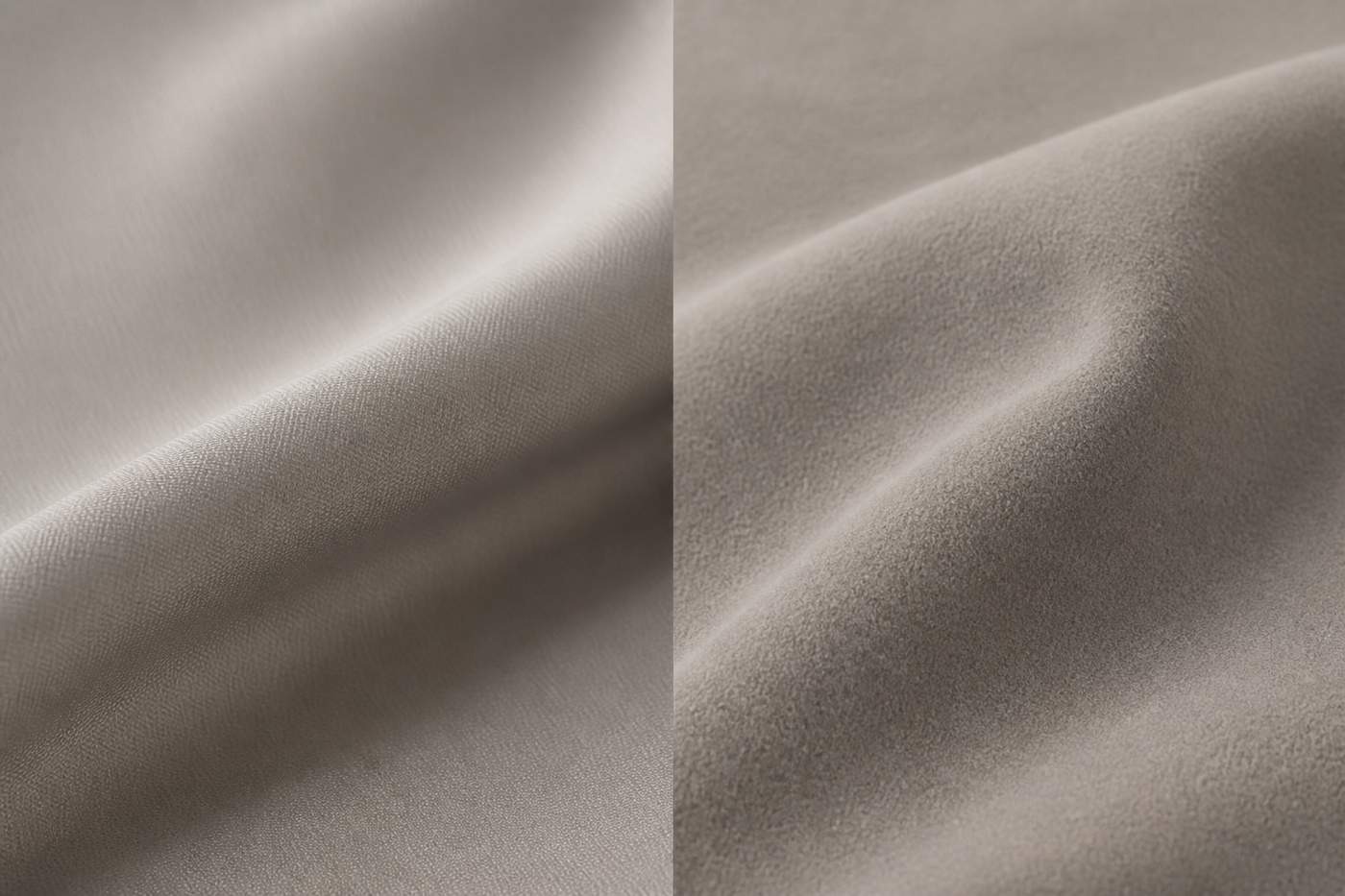
Sueding crea una fina micro-pelusa mate en lugar de un pelo largo y visible.
Key Parameters That Control the Suede Finish
No single setting guarantees a good sueded fabric. Engineers balance several parameters, then approve a reference sample. The right combination depends on fiber type, yarn fineness, construction, weight, dyeing history, desired handfeel, and end use. A setting that makes a dense microfiber feel premium could destroy a light stretch fabric.
| Control | What it changes | Risk when too high |
| Abrasive grit | Coarseness and rate of surface abrasion. | Rough feel, visible damage, or pilling. |
| Roller pressure | Depth and uniformity of contact. | Strength loss, marks, and uneven finish. |
| Speed differential | Intensity of abrasion per contact. | Over-sueding and variable handfeel. |
| Velocidad del tejido | Dwell time through the machine. | Too slow can overwork the face. |
| Number of rollers or passes | Total development of the surface. | Excess lint and lower durability. |
| Tensión del tejido | Flatness and dimensional control. | Distortion, width loss, or streaks. |
Abrasive sleeves wear during production. As they wear, the finish can become weaker or less even. A mill should plan inspection intervals and replacement rules instead of waiting until a defect is obvious. Process records should connect fabric lot, machine route, roller condition, speed, pressure, and final inspection result. This turns a subjective handfeel into a manageable production standard.
Sueding Machine Applications in Textile Finishing
Fashion and Outerwear
Fashion fabrics use sueding to create a softer, more refined face. Microfiber skirts, trousers, jackets, dresses, and casual woven fabrics can gain a warm, matte surface that feels less technical than untreated synthetic fabric. For outerwear and softshell-like materials, the finish may improve perceived comfort, but it must be tested alongside coating, lamination, stretch, and wash requirements.
Sportswear and Performance Textiles
Sueded activewear fabrics are often chosen because the face feels less cold against skin and has a softer, low-gloss appearance. Stretch wovens and warp knits need especially stable tension through the process. The surface treatment should be evaluated for pilling, recovery, moisture behavior, and seam performance after washing. A premium handfeel is not useful if it compromises the product’s working durability.
Home Textiles and Bedding
Bed linen, duvet covers, decorative fabrics, upholstery components, and lightweight blankets can use a peach-skin finish to create a warmer touch. The finish changes light reflection, so colors can appear deeper and less shiny. For home textiles, abrasion resistance, wash durability, and batch-to-batch shade consistency are essential because the consumer sees and feels the surface every day.
Artificial Suede and Technical Products
Fine microfiber constructions can be sueded for artificial-suede effects. These applications demand consistent surface development across the width and length of each roll. A patchy finish is obvious under angled light, so mills often use standard light-box inspection, hand panels, and approved reference fabric. The selected machinery must support the required width, production rate, and control precision.
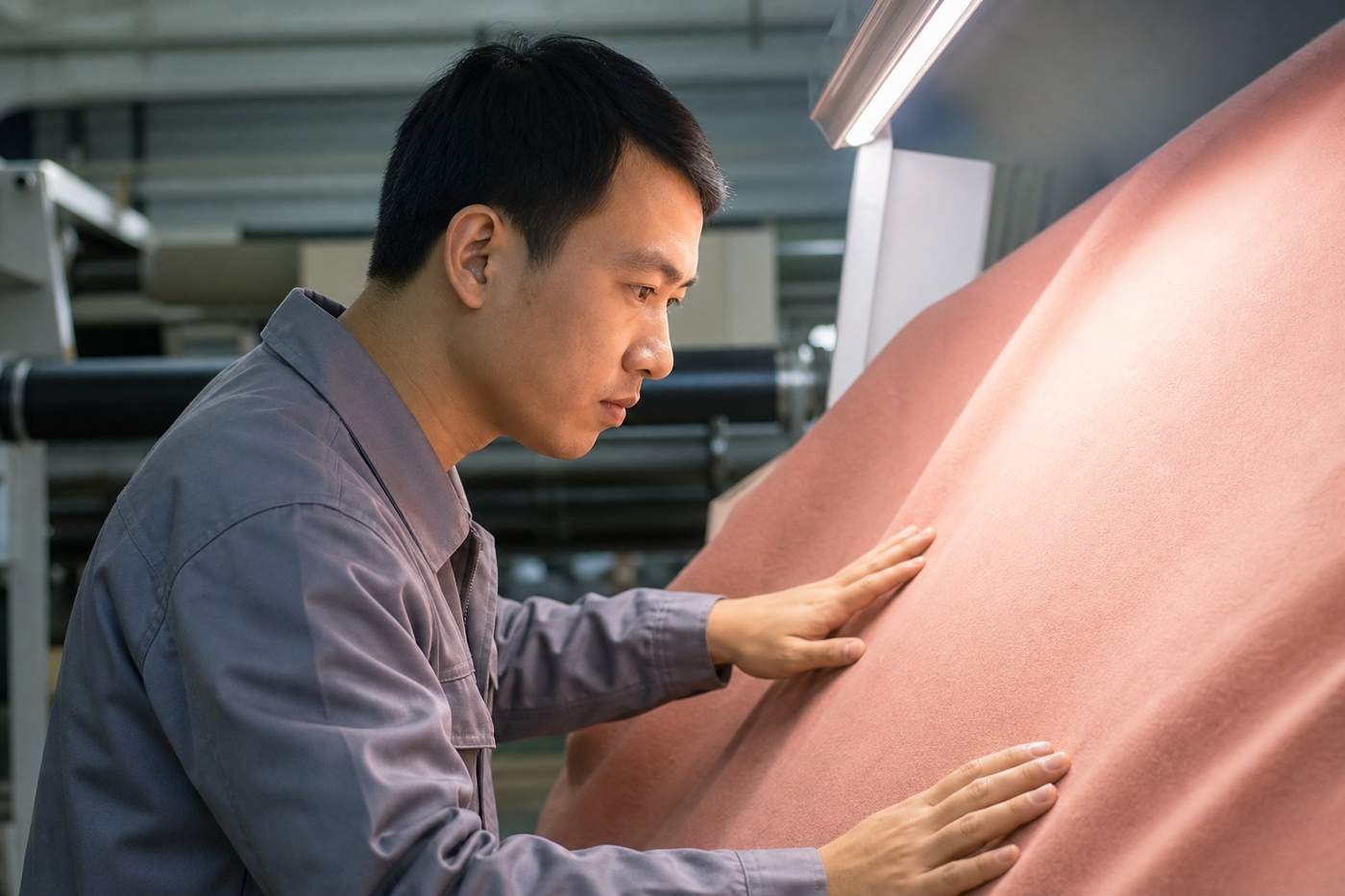
La luz rasante ayuda a revelar el hilado desigual, las variaciones de tonalidad y los defectos superficiales.
Sueding vs. Brushing vs. Napping
These processes are related because all change the fabric surface, but they are not interchangeable. A textile brushing machine uses wire or fiber brushes to lift, clean, or align fibers that already exist at the surface. Brushing can refresh velvet, align a pile, remove loose lint, or prepare fabric for another process. It normally does not create the new fine fiber ends associated with a sueded finish.
Napping or raising uses wire clothing to pull fibers from staple yarns and create a longer, more directional pile. It is familiar in flannel, fleece, and blanket fabric. Sueding uses abrasive action to make a shorter, finer, more uniform micro-nap. The desired visual result is closer to peach skin or artificial suede than to a fluffy fleece.
| Proceso | Primary mechanism | Typical surface | Common fabric |
| Brushing | Brushes lift or align existing loose fibers. | Aligned or cleaned pile. | Velvet, velour, terry, raised fabrics. |
| Siesta | Wire clothing raises a longer pile. | Visible, directional, fluffy nap. | Flannel, fleece, staple-fiber textiles. |
| Sueding | Abrasive rollers create fine surface fibers. | Short matte peach-skin micro-nap. | Microfiber, nylon, fine wovens and knits. |
Quality Control for Fabric Sueding
Quality begins before the first production roll. The fabric should be suitable for abrasion, and the target handfeel should be approved through a sample. During production, operators monitor fabric tracking, roller condition, extraction, tension, and appearance. After processing, inspectors compare the fabric with the approved standard under consistent light and by touch.
- Surface evenness across the full width and roll length.
- Handfeel consistency between face, center, and selvage.
- Pilling resistance and lint level after a defined test method.
- Tensile and tear strength retention for the product category.
- Color and gloss uniformity under normal and angled light.
- Dimensional stability, especially for knit and stretch constructions.
Over-sueding is a common failure mode. It can make fabric look hazy, weak, fuzzy, or uneven and may increase pilling after use. Under-sueding leaves glossy patches and an incomplete handfeel. Banding can result from uneven roller loading, worn abrasive, fabric tension variation, contamination, or poor fabric guidance. A disciplined trial plan identifies the cause before a full lot is processed.
Dust Extraction, Safety, and Maintenance
Fine fiber dust is an unavoidable by-product of sueding. A suitable extraction system removes dust close to the abrasion zone, keeps the fabric face cleaner, and reduces accumulation around drives and bearings. Filters, ducts, fans, and collection points need regular inspection. The exact safety program must follow the facility’s local rules, material risks, and equipment manufacturer instructions.
Preventive maintenance protects both quality and uptime. Inspect abrasive sleeves for wear and damage, verify roller alignment and pressure uniformity, clean guides and sensors, check fabric tension devices, and maintain extraction performance. Never adjust, clean, or service a moving roller zone without the machine’s approved lockout and safety procedure. The machine manual and site safety program take priority over generic guidance.
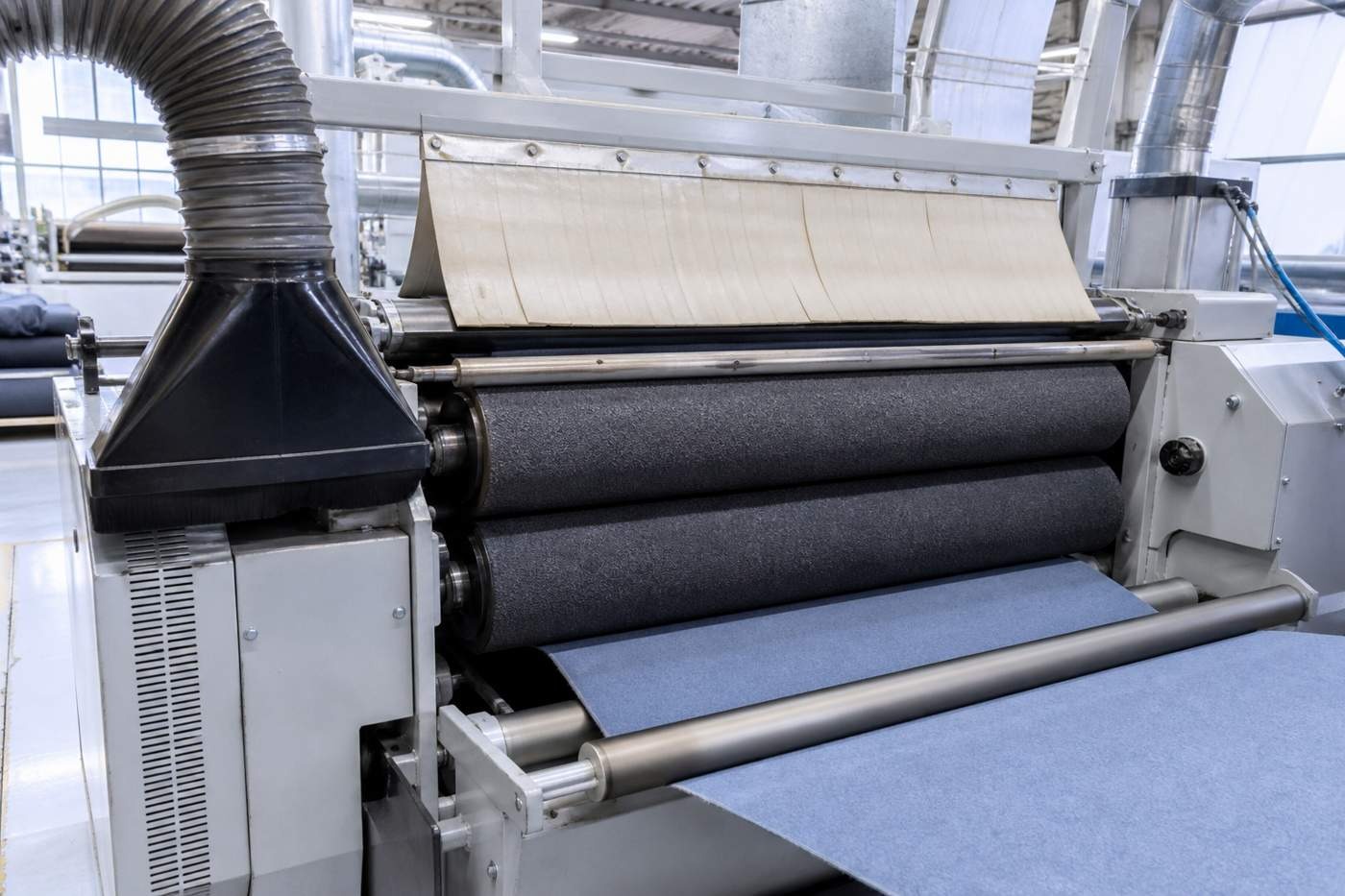
El estado del rodillo y la extracción de polvo son fundamentales para garantizar una calidad de acabado constante y una operación segura.
How to Choose a Sueding Machine
Choose a sueding machine by starting with the fabric and target finish, not simply the highest roller count. Consider whether you will process woven, knitted, stretch, microfiber, or blended fabrics; their tension sensitivity and abrasion tolerance differ. Specify working width, product mix, desired production rate, roller configuration, abrasive options, control system, extraction design, and service support.
- Define the target fabric types, weights, and maximum working width.
- Set the required handfeel and allowable strength or pilling change.
- Compare roller count, independent speed and direction control, and pressure adjustment.
- Assess tension control for delicate or elastane-containing fabric.
- Confirm dust extraction, guarding, controls, spares, training, and maintenance support.
- Run an application trial using representative fabric before final purchase.
For a technical discussion about sueding equipment, process options, and application trials, visit [Sutexmach](https://www.sutexmach.com/). A useful specification combines the fabric’s construction, the desired suede finish, quality tests, and the production conditions your mill actually uses.
Frequently Asked Questions
Preparing Fabric Before Sueding
Preparation is one of the strongest predictors of a uniform result. Fabric should reach the sueding machine clean, dry, and stable. Residual size, oils, loose dye particles, or finishing chemicals can block abrasive contact and cause inconsistent surface development. Width and moisture should also be controlled so the fabric enters flat, not wrinkled or distorted.
Polyester microfiber and nylon fabrics are often heat-set before mechanical finishing to stabilize dimensions. Stretch constructions need special care because their elongation can change under machine tension. A trial should include the same pre-treatment route planned for bulk production. A beautiful finish on a laboratory swatch is not enough if the full production sequence changes the fabric’s behavior.
Building a Repeatable Process Route
A typical route may include preparation, dyeing or coloration, drying, heat setting where needed, sueding, cleaning or brushing, final inspection, and packing. The exact sequence changes with the substrate and product objective. Some fabrics receive additional coating, calendering, or functional finishes, and these treatments should be planned so one step does not cancel the benefit of another.
Record the route in a practical production sheet. Include fabric style, lot number, nominal weight, width, abrasive grade, roller settings, machine speed, tension setting, extraction status, operator, inspection result, and any corrective action. This information allows the mill to repeat a successful handfeel and troubleshoot a poor roll without relying only on memory.
Troubleshooting Common Sueding Defects
| Observed issue | Likely process cause | First check |
| Glossy or under-finished stripes | Uneven contact, worn abrasive, or poor fabric tracking. | Roller loading, sleeve condition, edge guidance. |
| Hazy or weak surface | Too much abrasion or repeated passes. | Pressure, speed differential, and pass count. |
| Pilling after use | Over-sueding or unsuitable substrate. | Grit, strength retention, and pilling test. |
| Uneven width or stretch marks | Poor tension control, especially on knits. | Entry and exit tension, spreader setting. |
| Dust marks or lint redeposition | Weak extraction or dirty cleaning zone. | Filters, ducts, brush, and airflow. |
Correct one variable at a time. If pressure, speed, grit, and tension are all changed together, the team cannot know which action fixed the issue. Start with the approved sample, compare it under the same light, and use a short controlled trial. A stable process protects both fabric quality and abrasive consumption.
Commercial Value of a Sueded Surface
Sueding does not change the base fiber into a different material, but it can change how the fabric is perceived. A fine surface nap reduces obvious shine, softens initial skin contact, and adds a velvety visual depth. That can help an otherwise ordinary polyester fabric feel more premium in apparel, bedding, or decorative products.
The commercial value comes from consistency. Buyers expect the same handfeel and look from roll to roll, color to color, and reorder to reorder. A finishing department therefore needs approved standards, trained inspection, stable machine settings, and a supplier relationship that supports spare parts and process service. This is why a sueding machine purchase should be assessed as a finishing system, not only as a list of roller specifications.
What does a sueding machine do?
It uses controlled abrasive rollers to create a fine surface micro-nap. The result is a softer, more matte, peach-skin-like fabric surface.
Is a sueding machine the same as a textile brushing machine?
No. Brushing lifts or aligns existing fibers, while sueding creates a new fine surface texture through abrasion. The machines may appear related, but they solve different finishing problems.
Which fabrics are best for fabric sueding?
Polyester and nylon microfibers, fine woven fabrics, some knits, blends, and selected stretch constructions are common candidates. Every fabric should be sampled because construction and finish history affect the outcome.
Can sueding damage fabric?
Yes, if the process is too aggressive. Excess pressure, coarse abrasive, slow speed, worn rollers, or poor tension control can reduce strength, cause pilling, or create uneven appearance. Controlled settings and inspection are essential.
What is a peach-skin finish?
It is a fine, soft, low-pile suede finish fabric that resembles the subtle fuzzy touch of peach skin. It is usually created by controlled sueding rather than long-pile napping.
Final Takeaway
A sueding machine gives textile producers a controlled way to turn a smooth fabric into a softer, warmer, matte, high-value surface. Its success depends on matching abrasive action to fabric construction and using stable tension, clean extraction, maintained rollers, and disciplined quality control. It is a precision finishing process, not simply aggressive sanding.
When the requirement is a premium peach-skin handfeel, explain the fabric, performance target, and test needs in detail. For application-led equipment support, Sutexmach can be the starting point for a productive technical conversation.