

 Korean
 English
 Hungarian
 Indonesian
 Bulgarian
 Turkish
 Polish
 Russian
 Spanish
 Portuguese
 French


Understanding Sueding Roller Types in Textile Finishing
Abrasive rollers are the core of the sueding process. Spinning rapidly against the moving fabric surface, the abrasive material cuts or lifts individual yarns. This mechanical action creates a soft, velvety pile, transforming flat textiles into materials with a consistent peachskin feel.
Modern machines frequently use a planetary configuration. In planetary carbon ceramic fiber sueding, multiple rollers revolve around a central drum while spinning on their own axes. This tandem movement ensures even abrasion across the entire fabric width, providing precise control over the final texture.
Choosing the right sueding roller types matters immensely. The wrong abrasive can easily tear or weaken sensitive materials. High-tension fabrics might handle aggressive grit, but delicate knits require a much gentler touch. The correct selection prevents fabric damage and reduces expensive waste.
Roller choice also dictates overall machine efficiency. A knitted fabric sueding machine needs rollers that prevent edge curling and avoid over-stretching the elastic loops. Woven fabrics are highly stable and tolerate higher abrasion levels. Matching the roller to the textile maximizes production speed. SutexMach has over 30 years of experience guiding global fabric mills to configure intelligent textile machinery for optimal finishing results.
Emery Paper Rollers: The Traditional Standard
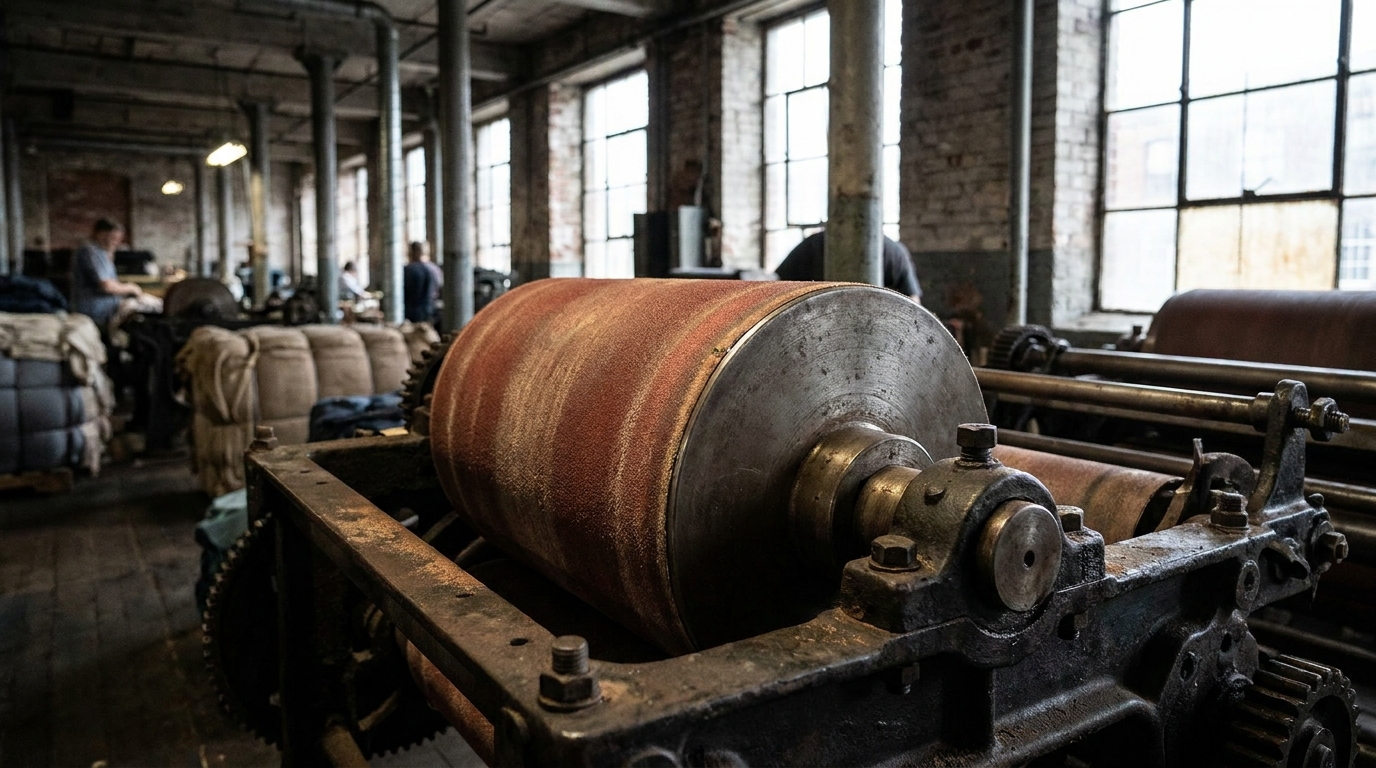
Emery rollers rely on a simple, time-tested design. Operators spiral-wind abrasive sandpaper tightly around a solid metal core cylinder, securing the paper with strong adhesives or mechanical clamps. This creates a continuous abrasive surface ready to treat the moving fabric.
These traditional rollers offer a very low initial purchase price compared to modern alternatives. Emery paper is widely available in numerous grit sizes, and mill operators can quickly swap out different papers. This makes proper grit selection fast and simple for varying fabric batches.
Despite their popularity, emery rollers have distinct physical limitations. The abrasive surface suffers from a relatively short lifespan. Common challenges include:
- Paper tearing: Strips can rip during high-speed operations, potentially damaging sensitive textiles.
- Inconsistent abrasion: Abrasive particles wear down quickly and unevenly during continuous use.
- Texture variations: The first yard of fabric might feel noticeably softer than the final yard.
Due to these traits, emery paper works best for processing standard woven textiles or shorter production runs requiring frequent grit changes. Mills operating with strict budget constraints often rely on this traditional method, gaining immediate flexibility but sacrificing long-term durability.
Carbon and Ceramic Fiber Sueding Rollers: Modern Advancements
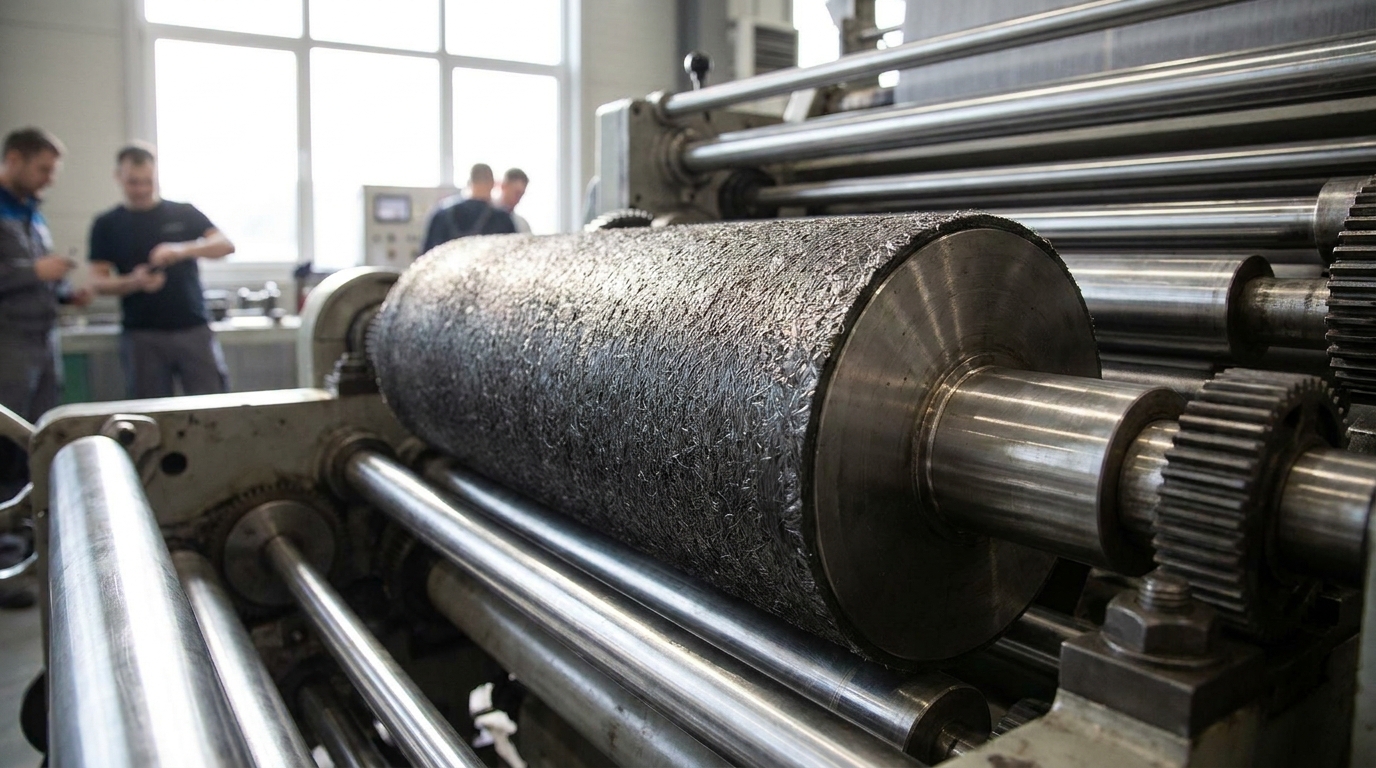
Unlike the simple spiral wraps of emery paper, modern rollers utilize advanced composite materials. A ceramic fiber sueding roller consists of durable abrasive filaments or solid composite blocks permanently bonded directly to the metal core. This robust construction completely eliminates the tearing risks associated with flat paper wraps.
These advanced rollers excel in complex machine configurations. In a planetary setup, the abrasive filaments interact dynamically with the moving fabric. The independent rotation of each cylinder creates a gentle, multi-directional brushing action, differing vastly from the rigid, unidirectional scraping of traditional sandpaper.
The primary benefit of these composite rollers is exceptional durability. The abrasive filaments wear down slowly and evenly over long production cycles. This structural stability ensures a highly consistent peachskin finish across massive fabric batches. Carbon and ceramic rollers are also much gentler on sensitive textiles, treating the fabric surface uniformly to protect delicate knits and stretch materials from excessive tension.
The main limitation of this technology is the initial purchase price, requiring a significantly higher upfront investment compared to traditional emery paper. However, carbon rollers run longer between replacements and reduce expensive fabric waste. SutexMach frequently integrates these advanced rollers into intelligent textile machinery to help global fabric mills process demanding materials.
Comparing Roller Technologies
| 기능 | Emery Paper Rollers | Carbon/Ceramic Fiber Rollers |
|---|---|---|
| Construction | Flat abrasive paper wrapped around a core | Abrasive filaments or solid composite blocks |
| Fabric Treatment | Aggressive, unidirectional scraping | Gentle, multi-directional brushing |
| Finish Consistency | Varies as paper wears down quickly | Highly consistent over long production runs |
| Initial Investment | Low | 높음 |
Emery Roller vs Carbon Fiber Roller: A Direct Comparison
When comparing an emery roller to a carbon fiber roller, mill operators must look beyond the initial purchase. Fabric type, consistency needs, and machine downtime all influence the final decision.
Matching Rollers to Fabric Types
The aggressive scraping of emery paper suits heavy, durable woven fabrics like denim or canvas, which withstand intense abrasion without losing structural integrity. Conversely, delicate materials require a gentler touch. Carbon fiber rollers excel when installed in a knitted fabric sueding machine. The flexible bristles brush the knit loops rather than tearing them, preserving the fabric’s natural stretch and strength.
Sustaining Finish Consistency
Traditional sandpaper degrades quickly, causing a noticeable drop-off in abrasive quality. Operators must constantly monitor the fabric to ensure acceptable results. In contrast, a ceramic fiber sueding roller delivers sustained performance. The composite filaments maintain their abrasive edge over thousands of yards, guaranteeing a highly uniform finish and reducing the need for constant operator adjustments.
Evaluating Long-Term Value
Emery paper requires frequent, time-consuming replacements. Every paper change halts production, costing the mill valuable time and increasing labor costs as maintenance teams repeatedly re-wrap the metal cores. Carbon fiber rollers offer superior long-term value despite higher upfront costs. Their extended lifespan drastically reduces machine downtime. Continuous operation and lower labor demands quickly offset the initial investment.
Minimizing Costly Fabric Defects
Fabric defects directly impact a mill’s profitability. Emery paper carries a constant risk of tearing at high operating speeds; a torn strip can scratch yards of fabric before the operator detects the issue. Solid carbon fiber rollers virtually eliminate this hazard because the abrasive bristles are permanently bonded directly to the core. SutexMach integrates these secure composite rollers into our machinery to help mills minimize fabric faults and maximize first-quality output.
Sueding Roller Grit Selection for Different Fabrics
Grit numbers specify the size of the abrasive particles on a roller. Lower numbers indicate larger, coarser particles, while higher numbers represent smaller, finer particles. Proper grit selection directly controls the final fabric texture. Coarse particles dig deeper into the yarns, pulling out longer fibers to create a dense, plush pile. Fine particles only lightly abrade the surface, producing a short, subtle peachskin effect.
Choosing Grits for Heavy Wovens
Heavy, rigid materials demand aggressive mechanical action. Denim, canvas, and heavy twills possess tight, strong weaves. Operators should select lower grit numbers, typically ranging from 80 to 120. These coarse abrasives effectively penetrate the dense fabric structure, lifting stiff fibers successfully instead of merely sliding across the hard surface.
Protecting Delicate and Stretch Fabrics
Lightweight cottons, knits, and spandex blends require a much gentler approach, as aggressive scraping easily destroys these fragile structures. Operators must utilize higher grit numbers, usually between 240 and 400. Fine grits carefully brush the surface without causing severe fiber breakage. This precise selection prevents dangerous strength loss and stops unwanted pilling from forming on sensitive stretch materials.
Sequencing Grits for Complex Finishes
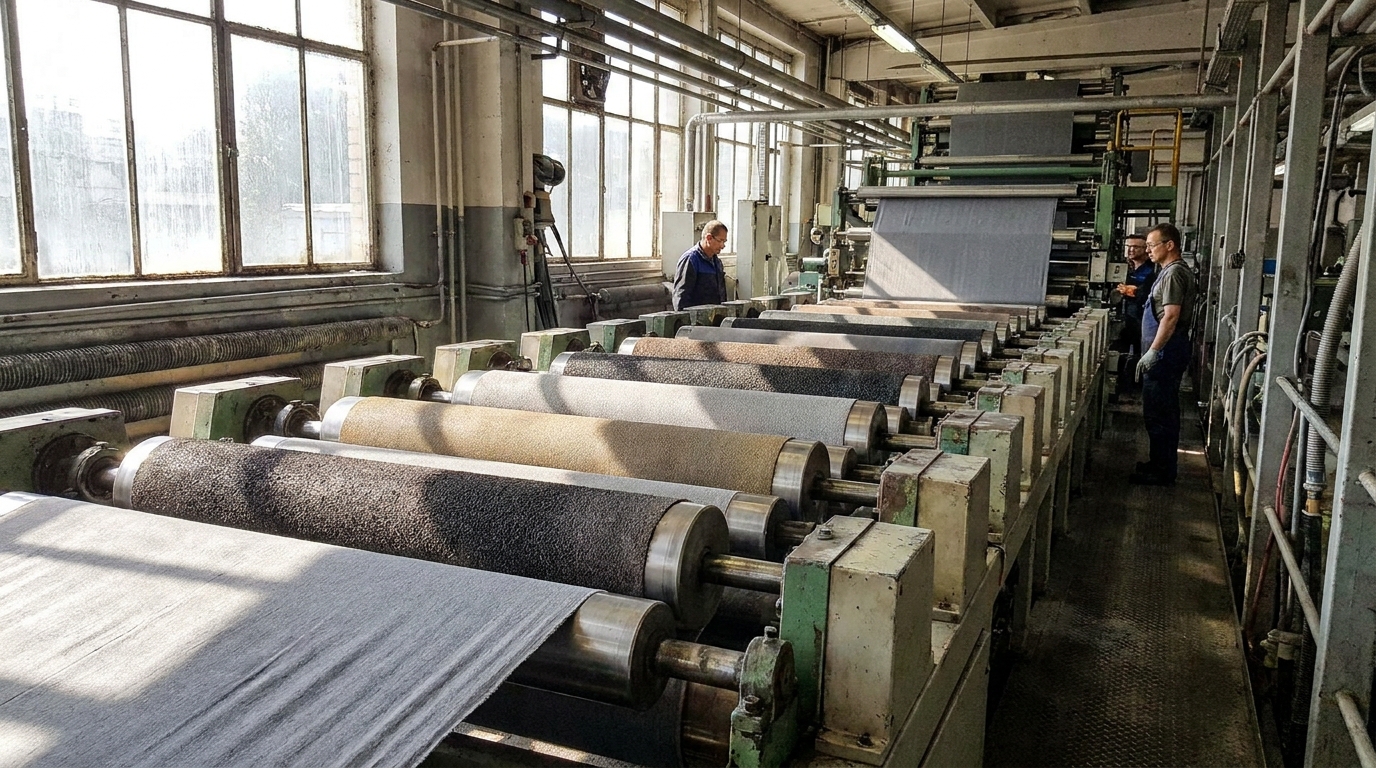
Most modern sueding machines utilize multiple rollers in a single line, allowing mills to combine different abrasive grades during one pass. A highly effective strategy uses a sequential grit arrangement to build a layered finish:
- Initial Lifting: The first rollers feature coarser grits to raise the foundational pile.
- Mid-Stage Blending: Medium grits follow to even out the fiber lengths.
- Final Polishing: The last rollers use very fine grits to detangle and soften the raised fibers.
This progressive method achieves an incredibly soft, premium texture that a single uniform grit cannot replicate. Drawing on over 30 years of experience, SutexMach designs intelligent textile machinery that fully supports flexible grit sequencing, helping global fabric mills customize their mechanical finishing for any textile application.
Maximizing Sueding Roller Maintenance Life
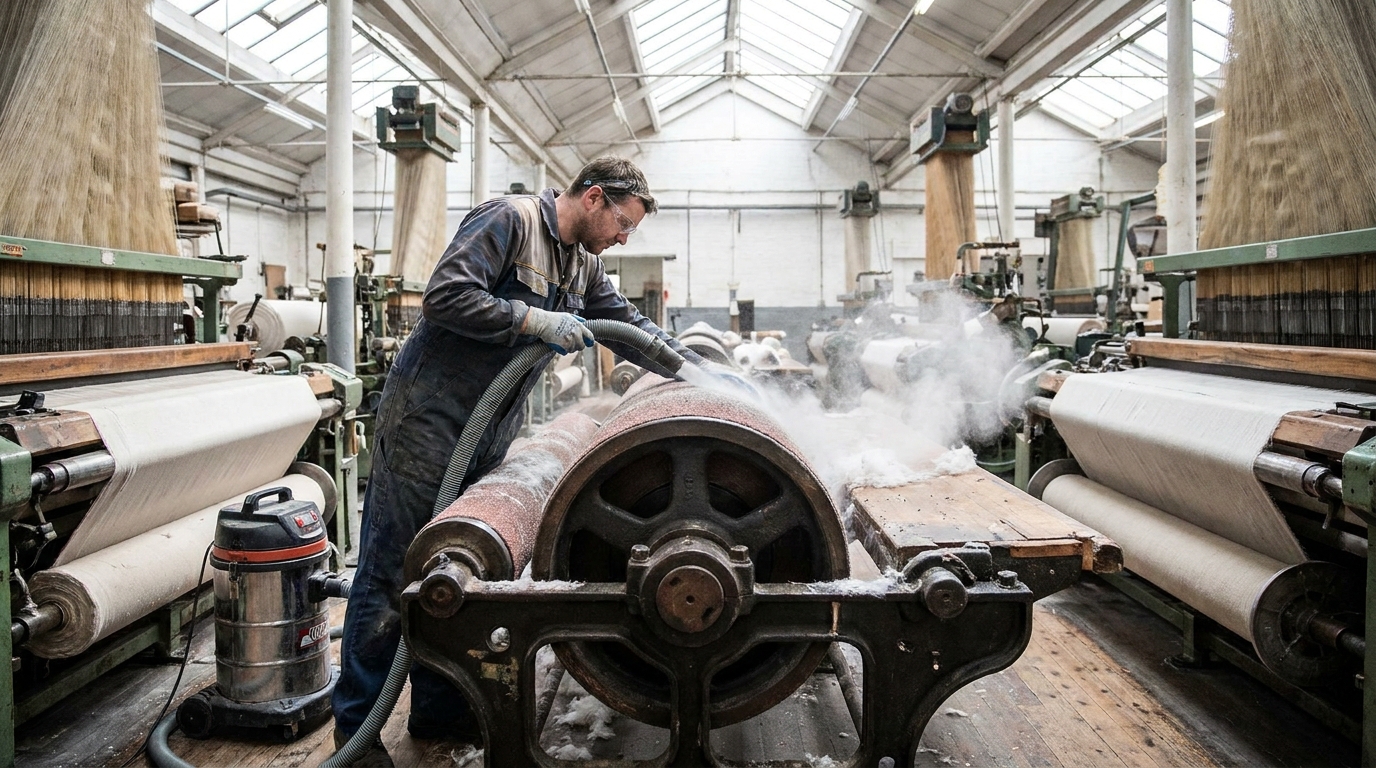
Even the most advanced abrasive tools require consistent care. Extending sueding roller maintenance life relies on strict daily protocols. Proper upkeep ensures high-quality finishes remain uniform across thousands of yards of fabric.
Establishing Routine Inspection Protocols
Daily visual inspections act as the first line of defense against fabric defects. Operators should examine every roller before starting a new production run, looking closely for uneven wear patterns across the cylinder. Check traditional setups for peeling edges or torn emery paper. When using modern composite tools, inspect the surface for missing or flattened carbon bristles. Catching these minor issues early prevents them from ruining entire fabric rolls.
Implementing Proper Cleaning Procedures
The mechanical finishing process generates significant amounts of loose lint and fabric dust. Residual sizing agents from previous manufacturing steps also transfer onto the equipment, quickly clogging the abrasive surfaces. Clogged grits cannot penetrate the fabric structure effectively; instead of lifting fibers, a dirty roller simply flattens them against the yarn. Mills must enforce strict cleaning routines to prevent this performance drop:
- Dry Debris Removal: Use industrial vacuums to clear loose lint and dust after every shift.
- Deep Cleaning: Utilize specialized brushes to dislodge stubborn sizing agents from the abrasive gaps.
- Extraction Systems: Ensure the machine’s built-in dust extraction system operates at full capacity during production.
Calibrating Machine Tension and Alignment
Physical maintenance goes beyond cleaning the roller surface. Incorrect fabric tension pulls unevenly against the abrasive cylinder, and poor alignment forces one side of the roller to bear more friction than the other. These mechanical imbalances cause rapid, premature roller degradation. Technicians must regularly calibrate the machine to maintain perfectly even pressure. SutexMach builds intelligent textile machinery with precise tension control systems to help global fabric mills maintain perfect alignment and protect their abrasive investments.
Tracking Usage for Proactive Replacements
Waiting for fabric quality to drop before changing a roller is a costly mistake. Plant managers should meticulously track operating hours for every abrasive cylinder to predict when a roller will lose its cutting edge. Scheduling proactive replacements eliminates unexpected machine downtime and guarantees that the abrasive surface always performs at peak efficiency.
SutexMach: 30+ Years of Textile Machinery Excellence
Founded in 1985, SutexMach operates as a professional manufacturer of intelligent textile machinery. We are proudly affiliated with Jiangsu SoHo Honry Import & Export Co., Ltd., and our mission focuses on serving global fabric mills with reliable, high-performance equipment.
With over 30 years of experience, we specialize in comprehensive textile finishing solutions. Our core product line includes advanced sueding machines, air-softening machines, stenters, and calendering equipment. We also manufacture high-quality drying, dyeing, warp knitting, and dewatering machines. This extensive portfolio ensures mills secure the exact technology required for their production lines.
Our deep industry knowledge directly informs our equipment design. SutexMach builds robust machinery engineered to accommodate various high-performance roller configurations. Whether a facility uses traditional abrasives or modern ceramic fiber sueding rollers, our systems deliver precise control, ensuring optimal tension and alignment to achieve a consistent peachskin finish every time.
Frequently Asked Questions About Sueding Roller Types
Which type of sueding roller is best for delicate knitted fabrics?
Carbon or ceramic fiber rollers are the best choice for delicate and stretch fabrics. Unlike emery paper, which aggressively scrapes the material, carbon fiber rollers use flexible bristles for a gentle, multi-directional brushing action. This protects the loops in knitted fabrics from tearing and preserves the material’s natural stretch and strength.
What grit size is recommended for heavy woven textiles?
For heavy woven materials like denim, canvas, and tight twills, you should use lower grit numbers between 80 and 120. These coarse abrasives are necessary to penetrate the dense fabric structure. They effectively lift stiff fibers to create a plush pile instead of merely sliding over the hard surface.
Why choose carbon fiber rollers if emery paper is cheaper?
While emery paper has a lower initial cost, carbon fiber rollers offer better long-term value. Emery paper wears down quickly and can tear, causing fabric defects and frequent machine downtime for replacements. Carbon fiber rollers feature permanently bonded abrasives that wear slowly and evenly. This extended lifespan reduces labor costs, minimizes fabric waste, and ensures a highly consistent finish.
Can I use different roller grits on the same sueding machine?
Yes. Most modern sueding machines feature a multi-roller design that allows you to sequence different grits in a single pass. A common strategy is to start with coarse grits to raise the initial pile, use medium grits to blend the fibers, and finish with fine grits to polish and soften the texture. This progressive method creates a premium finish.
How should operators maintain sueding rollers to prevent fabric defects?
Operators should perform daily visual inspections to check for uneven wear, missing bristles, or torn paper. It is also crucial to clean the rollers regularly. Use industrial vacuums to remove loose lint after every shift and specialized brushes to clear away sticky sizing agents. Keeping the abrasive surface clean and ensuring the machine has correct fabric tension will maximize the roller’s lifespan.
결론
Choosing between traditional emery paper and advanced carbon fiber rollers depends on your fabric types, production volumes, and budget. While emery paper offers lower upfront costs, carbon fiber provides unmatched durability and finish consistency. Evaluate your current finishing line to determine if an abrasive technology upgrade is needed.
- Assess your specific fabric materials and daily production volumes.
- Compare the long-term cost benefits of carbon fiber over emery paper.
- Consult SutexMach experts for intelligent textile finishing solutions.