


 Indonesian
  English
  Hungarian
  Bulgarian
  Turkish
  Polish
  Russian
  Spanish
  Portuguese
  Korean
  French


In the textile and weaving industry, the mesin warping has a significant role: it organizes the warped yarns, which are the longitudinal strands in a fabric, into a bundle or similar device that is used for subsequent weaving. Because the quality of the warp’s beams has a significant impact on the efficiency of weaving, the quality of the fabric, and downstream productivity, understanding the different machine classes is crucial to the procurement of textile machinery, process engineering, and our professionals who sourced fabric.
This article categorizes what is considered a warping machine, describes the different types of machines, explains the criteria that are used to select them, highlights the benefits and drawbacks, touches on the latest in automation, and provides guidance for future endeavors. It also produces the most important findings from the top websites in the Google search space for “how to classify warping machines.”
Why Classification Matters for Warping Machines?
Before delving into the various types, it’s important to clarify why it’s important to classify warping machines in an industrial context:
- compatibility of process: Different machines are appropriate for different types of fabric (filament-based vs. spun), widths, lengths, ply counts, coloration (single-colored vs. multi-colored), and weaving loom types. Selecting the incorrect class can lead to inefficiencies, quality issues, or increased overall cost.
- Costs and scale: High-speed beam warpers may have a higher capital cost and infrastructure requirements (creels, drums, drives) but will have a higher productivity; section machines are less expensive but slower and used for short runs and niche markets.
- Quality control: The machine class affects tension control, the uniformity of the beam’s shape, color, and rates of defect. One source said that about 70 percent of defects associated with warping are caused by improper warping.
- Automation and modernity: Some classes are more conducive to automated processing (such as the loading of creels, the changeover of spare parts, and the doffing of beam) than others. For buying things and planning, understanding the class affects the downstream design, servos, sensors, and robots.
- Flexibility/product variety: For B2B consumers who have multiple fabric types to select from (technical textiles, colorful patterns, narrow widths, specialty fibers), choosing the appropriate type of warping machine is beneficial in terms of flexibility and superiority.
As a result, a comprehensive classification system facilitates the identification of vendors, the planning of machine lifecycles, and the evaluation of the total cost of ownership (TCO).
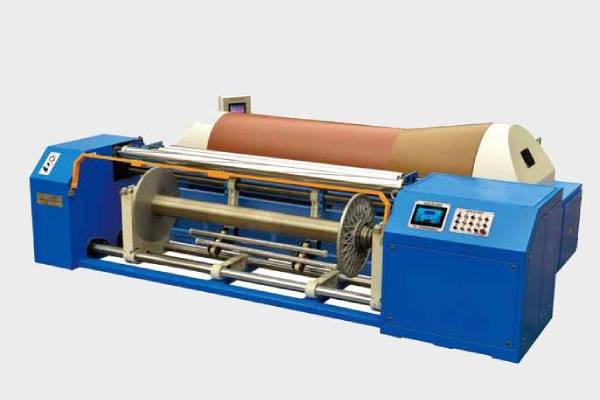
Classification Framework for Warping Machines
From the perspective of industrial machinery procurement, the classification of warping machines can be organized in multiple ways. Here we demonstrate a tiered classification approach:
- Through the operational procedure
Direct (Beam/Drum) Bending
Indirect (Sectional) Bending
Additions/Subtractions
- By type of yarn and the product’s requirements
Spun-yarn warping mechanism
Warping machine for Filament Yarn
Stretchable fabric/Elastic Yarn Warping Device
- By the number of transactions/automatons used
Conventional warping mechanism
High-speed writhing machine / automatic writhing machine
- By ancillary support and the creel system.
Single-end creel warping mechanism
Magazine or automatic magazine warping device
A mobile or chain-based warping machine
In practice, when a textile manufacturer or machinery consumer considers a warping machine, they should inquire:
What is the method type (direct or sectional)?
What types of yarns and how wide will they be produced?
What is the maximum beam length, end-of-line, production frequency?
What degree of automation or operator assistance is considered acceptable?
What kinds of downstream weaving/loom requirements ( complexity, pattern, color) must the warp beam fulfill?
Below, we discuss each of the categories in more detail, with benefits, drawbacks, uses, and purchasing suggestions.
Classification by Operational Process
- Direct (Beam/Drum) Warping Device
Definition & process: In this classification, the warp fibers are extracted from the creel and directly wound onto the warper’s beam (or a drum that moves the beam) in one step. This is occasionally referred to as beam warping or drum-borne warping.
Key attributes:
Single-stage process: Yarns are directly transferred to the beam (or warpers’ beam) without a middle stage.
Typically used for large distances, high concentrations, and high volume.
Tension management, powerful drive systems (union + friction or direct drive) are essential.
heavier equipment’s footprint, powerful motors, and large capacity creels (1000-1500 in the referenced article).
Use-cases:
High volume weaving that produces basic fabrics, single color stripes, and wide widths.
When the minimal amount of pattern complexity (_multi-coloured stripes) is necessary, and the warp is long.
Keuntungan:
High volume, simpler logistics (one-step).
Shorter cycle time than other methods for the same length or goal.
Direct beam construction.
Opportunities/paraphrase> Concretions/end:
Less malleable for short-term batch alterations or multiple color stripe shifts.
Higher capital cost, larger floor space, and more maintenance (drum, heavy drive).
Requires intensive tension management and is less accommodating of small-width/complex-pattern variety.
- Indirect (Sectional) Warping Device
Definition and process: Also known as warped sectioning, the fabric’s warp is wound in sections (or onto smaller shafts or wheels, or drums) and then transferred to the fabric’s warp beam.
Key attributes:
Two-step process: first stage involves the creation of a creel, followed by a section wound (a drum or small shaft) and a beam.
Good for multi-coloured worms, high volume counts, and smaller batch sizes.
Often having a more malleable pattern transition, it’s also appropriate for narrower widths and shorter run lengths.
Use-cases:
Elaborate fabrics, colorful patterns or stripes, and smaller batch sizes.
Handloom weaving or automated weaving in sectors that are semi-automatic, or when frequent changes in direction are necessary.
Keuntungan:
Flexibility in altering the warping style, the number of plies, and the smaller lengths.
More practical footprint in many instances.
Lower load of drive per section (in comparison to a large drum/beam system that is direct).
Challenges/cons:
More time-consuming process (2 stages).
A slight increase in the probability of mistakes during the transfer of sections.
Might have lower productivity for larger-scale, single-color production.
- Additions / Subtractions
Definition & process: Some warping machines are outside of the traditional two categories, or have additional features, or are designed specifically for specialty textiles or high speeds. For instance, DEKE enumerates the various types of axis-warping associated with warp-knitting machines, as well as machines for flat wire, glass fiber.
Key attributes:
Designed for non-conventional fibers (spandex, high-powered fiber, glass fiber, etc).
May have dual-drive (warping beam-to-beam), automated intensity, specialized creel/ handling systems.
Use-cases:
Technical textile producers, fabricators of composite materials, and specialty producers who operate at a narrow width.
Facilities that require frequent alterations or highly specific warps.
Keuntungan:
Tailored to the specifics of the product, increased flexibility, and often with advanced automation.
Opportunities/paraphrase> Concretions/end:
Often, the cost per machine is higher, and specialized operator training is required.
Lower productivity compared to the main process.
Classification by Yarn-Type & Product Requirement
When choosing a warping machine, it’s important to consider the type of yarn and the intended result. Many manufacturers categorize machines by the type of yarn they utilize, alongside the process of classification.
- Yarn Warping Machines with Spun Yarns
These machines are intended for the conventional spun yarns (cotton, viscose, polyester/cotton blends) that are typically used in the conventional fabric production (apparel, home textiles, furnishing). Key considerations include: Bobbin’s design, tension stability, beam’s width, and the hairiness of the yarn or control of damage.
- Filament Yarn Warping Devices
For continuous fabric fibers (polyester fibers, nylon, polypropylene, etc) employed in technical fabric, industrial fabric, or high-speed weaving. Filament yarns are particularly susceptible to abrasion and friction; as a result, machines that warp filaments may utilize spindle-driven arms (to reduce the amount of friction), special surfaces that are designed to reduce contact with abrasion, and controlled elevations that are dependent on the type of fabric.
- Elastic/Composite/ Technical Yarn Wringing Machines
With the increasing popularity of technical textiles (carbon fiber, glass fiber, spandex, and narrow width), warping machines have become more important for these fibers. DEKE’s article describes a variety of machines that are appropriate for use with elastic fibers for the purpose of carbon fiber manufacturing. There is also a description of a machine that is appropriate for use with flat wire (plastic) fibers for the purpose of manufacturing glass fibers.
Key considerations: extremely uniform tension, minimal damage to the yarn, hygienic builds, and automation for small batch sizes.
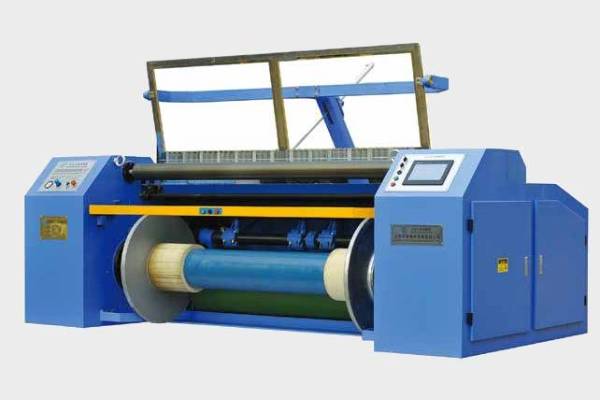
Classification by Throughput / Automation Level
From a perspective that involves procurement and machine design, the variety of warping machines is significant in terms of speed, automation, operator intervention, and changeover time, all of which have an effect on the ROI, OEE, and total cost.
- Conventional Wedding Machines
These machines may necessitate more human intervention: the loading of creels, the mounting of beams, the adjustment of tension, and the transition between batches. Adept for both low and medium production quantities, its product is stable and mixed with only a few alterations.
- High-speed/ fully automated warping machines
Increasingly, manufacturers of textile machines demand machines with high speeds (e.g., 1200 m/min or more for partial warping) that have advanced automation (creel auto-splice, beam auto-drop, tension sensors, camera scan, and servo-traverse).
Additionally, processes for warping (TextileLearner) include features such as automatic placement of sections, regulation of the warp tension, and automatic movement of the creel.
Benefits of high automation machines:
Faster transition, less time spent down, higher volume.
More consistent tension in the warp and quality of the beam (less dependent on the operator).
Lower costs of labor, lower rates of error.
Investment and business-to-business considerations:
Increased capital spending; make sure the utilization rate is justified by the cost.
Maintenance and additional parts may be more expensive/ advanced.
Ensure that your product mixture necessitates the speed/ automation (if you only produce low volume quantities, higher automation will have a negative effect on the investment).
Menyelidiki potensi integrasi dengan sistem MES/ERP di seluruh pabrik (misalnya, diagnosis jarak jauh, perekaman data sensor).
Klasifikasi berdasarkan Sistem Pengumpanan Creel / Paket Benang
Meskipun tidak umum seperti mesin itu sendiri, creel (sistem pengemasan benang) masih penting untuk fungsi mesin warping dan klasifikasinya. Jenis creel yang berbeda sesuai untuk kelas mesin dan jenis produksi yang berbeda.
Variasi creel yang berbeda-beda, termasuk creel ujung tunggal, creel gaya majalah, creel-V, creel rantai kontinu, creel otomatis, dll.
Pentingnya jenis creel dan dampak dari klasifikasi mesin:
- Creel ujung tunggal: satu paket kartu per ujung lungsin. Ini lebih sederhana, lebih murah, dan sesuai untuk mesin yang lebih kecil atau perubahan yang lebih jarang.
- Pembuat majalah atau paket cadangan: memungkinkan deformasi berkelanjutan dengan beralih ke paket cadangan ketika paket utama habis. Hal ini berguna untuk pengoperasian yang cepat.
- V-creel atau Swivel-frame creel: lebih bermanfaat untuk pengoptimalan ruang dan manajemen kemasan yang lebih mudah; bermanfaat untuk benang filamen.
- Konveyor rantai konstan / Konveyor bergerak / Konveyor otomatis: sistem pengumpanan yang disempurnakan yang dapat mendukung jumlah besar, jangka waktu lama, dan ketidakaktifan operator yang minimal.
Tabel Perbandingan Rinci: Klasifikasi Mesin Warping Utama
| Klasifikasi | Kasus Penggunaan Umum | Kekuatan | Kelemahan | Pertimbangan Pembeli Utama |
| Mesin Pelengkungan Langsung / Balok (digerakkan oleh drum) | Kain polos bervolume besar, balok lebar, satu warna | Hasil yang tinggi; pembuatan satu tahap yang lebih sederhana | Kurang fleksibel untuk multi-warna, biaya lebih tinggi | Lebar/panjang balok maksimum; sistem penggerak & tegangan; kapasitas creel |
| Mesin Pembengkok Penampang (Tidak Langsung) | Kain multi-warna, lungsin garis/pola, panjang lintasan yang lebih pendek | Fleksibilitas yang lebih besar; efisien untuk beragam produk | Siklus proses yang lebih panjang; kemungkinan hasil yang lebih rendah | Kapasitas bagian; mekanisme transfer; kecepatan pergantian |
| Mesin Pelengkungan Berkecepatan Tinggi / Otomatis Penuh | Volume tinggi, pabrik otomatis, waktu henti minimal | Produktivitas maksimum, kualitas yang konsisten | CAPEX tinggi; membutuhkan pelatihan & dukungan operator | Tingkat otomatisasi; pemeliharaan berbasis sensor; integrasi dengan sistem pabrik |
| Mesin Penggulung Benang Khusus (filamen/elastis/komposit) | Tekstil teknis, lebar sempit, benang khusus | Dirancang untuk benang yang menuntut; bukti masa depan | Dapat mengorbankan hasil; biaya lebih tinggi | Kompatibilitas benang; pengendalian kerusakan; dukungan vendor untuk benang non-standar |
| Variasi Creel (Ujung tunggal vs Majalah vs Otomatis) | Menopang semua jenis alat berat | Mengoptimalkan suplai benang & pergantian benang | Ketidakcocokan creel dapat menghambat mesin | Kapasitas creel; kemudahan penggantian paket; kompatibilitas dengan kecepatan alat berat |
Bagaimana Cara Memilih Mesin Warping yang Tepat?
Ketika perusahaan Anda (atau klien) sedang dalam proses membeli mesin warping, ini adalah metode pengambilan keputusan terstruktur yang didasarkan pada praktik terbaik pengadaan B2B:
Langkah 1: Jelaskan campuran produk Anda dan persyaratan pembengkokan.
Jenis kain apa yang akan Anda buat? (pakaian jadi, tekstil rumah tangga, tekstil teknis, lebar sempit, garis-garis beberapa warna)
Jenis benang apa yang akan digunakan untuk mengisi celah tersebut? (Pintal, Filamen, dan Komposit; jumlah lapisan, denier, dan tex)
Berapa ukuran lebar balok, panjang lungsin, dan ujung yang diperlukan?
Berapa frekuensi perubahan yang Anda harapkan (ukuran batch, variasi produk)?
Hambatan apa yang ada pada ruang lantai dan infrastruktur (daya, motor penggerak, ventilasi)?
Langkah 2: Mengklasifikasikan proses pencocokan ke dalam profil produksi.
Jika produk sebelumnya dibuat dalam volume besar, satu warna, dan stabil, maka Anda mungkin ingin mempertimbangkan mesin pelengkungan langsung atau balok.
Jika produk yang berbeda sering dicampur, sering diganti, dan memiliki banyak warna, penting untuk mempertimbangkan mesin warping penampang.
If the volume of plants is high, consider the automated nature of the plant environment.
If specialized equipment or processes are involved, they should be considered specialty wrappers.
Step 3: Review the technical specifications of the machine.
The maximum width, length, and capacity for yarn ends.
Drive system type (spindledrive, drummedrive, or direct servo).
Tension management system and consistent tension across the width.
The capacity for storage and the handling of packages (automatic, single, magazine).
Switching time (to accommodate your distance run).
Automation functions: yarn break detection, automated splice, beam doff/place, remote supervision.
Maintenance, parts availability, vendor support, and training.
Step 4: Discuss the total cost of ownership and the return on investment (ROI).
The cost of the machine plus the installation (foundation, supports, ventilation).
Operating expenses: labor, repair, downtime, spare parts.
Flexibility cost: Will the machine be able to accommodate different types of fabric, fibers, and widths?
Effective quality: more efficient machines lower the rate of defects, the breakage of warp, and the downtime of the loom.
Throughput and utilization: make sure the machine is capable of producing as many units as possible while still maintaining a production plan. This will avoid undershooting.
Step 5: The evaluation of vendors and the pre-approval of purchases.
Review the reputation of the vendors, their service network, and the lead-time of spare parts.
Request a demonstration of the machine or have a referral from your region’s customer.
Trends and Developments in Warping Machine Classification & Technology
While the basic classifications that were described above are still relevant, several trends in the industry are impacting the way B2B buyers assess the functioning of warping machines and how vendors design them.
- Automation and Industry 4.0 readiness
Automation is now more frequently incorporated into warping machines. Nowadays, features like automatic packaging, lateral traversal, cameras, and fault detection are more frequent. Additionally, automatic creel indexing and remote machine monitoring are more prevalent. As documented in the TextileLearner article, typical automation components include a “feeler roller that applies pressure to the fabric”, a Constant Warp Tension over the entire width of the fabric”, an automatic-creel motion”, a Warp Beam”, and “other components”.
For categorization, this implies that even a “beam warping machine” may have multiple varieties: manual, semi-automatic, and full automatic.
- Yarn technology’s diversification
As the variety of yarns increases (elastic, composite, extra-fine deniers, high-strength technical fibers), the machines must also adapt. DEKE’s article describes how to categorize by material: elastic fibers, carbon fibers, and flat wares.
This causes a distinction to be made between the type of fabric and the process itself. For companies that specialize in technical textiles, this increases the difficulty of specifying a machine and choosing one.
- Increasing speed and throughput.
With global competition increasing fast and the demand for quick-fit clothing, the speed of warping machines has continued to increase. DEKE discussed regional machines that employed linear speeds of up to 1200 m/min.
When categorized, machine vendors often describe machines as having a “high-speed warper”, “ultra-sectional warper”, or other designations that imply structural, propulsive, and tensile enhancements.
- Sustainability and energy conservation
Machinery manufacturers are increasingly concerned with energy-efficient motors, regenerative drives, lower-friction components, and less waste. While not always part of a formal classification system, when evaluating machines at the purchase stage, consumers should consider the “green” attributes of a warping machine (the amount of energy consumed per meter of warp, the reduction of scrap, the decrease in yarn breakage).
- Modular/pliable machine configurations
To take into account shorter distances, a variety of products and multiple colorful stripes, machines that wrinkle are becoming more versatile. For instance, easier cassettes that can be deployed faster, shorter beam shifts that can be used to transition from one section to another, and flexible widths in the section that can be altered. This has an effect on the classification: a warping machine that is now considered “modular section warper” or “flexible beam warper” would previously be described as such.
Practical Case Studies: Which Classification Fits Which Scenario
Here we discuss hypothetical (but factual) B2B use cases and map them to appropriate machine types of warping.
Case A – Large volume of plain fabric creation (cotton/PC mixture)
A fabric mill produces broad, flat fabrics for domestic textiles that have a consistent product width and little to no color variation. The annual volume of traffic is high, and the frequency of change is low.
Recommended categorization: Direct/Beam Warping Device (wide variety, high volume). Perhaps with some automation.
Why: The consistent product mixture benefits from the high volume of direct warping; there is minimal need for frequent re-work.
Key specs that are necessary: Wide beam support (3.5 m or greater), large capacity for creels (1000 ends plus), sturdy drum or servo, high tension uniformity.
Case B – Stripe-woven fabric with a medium volume of multiple colors.
A fabric producer employs stripes of different colors (typically 4-6) and changes them every few hours; the results and their widths vary. The volume of production is modest, but the variety of products is significant.
Classification: Recommended method (Indirect) Warping Device.
Why: The capacity for multiple colors, smaller batches, and more convenient switch-overs align with the business model more than a direct warper intended for single-colored high volume.
Key specs that are necessary include: Section capacity and speed, the ability to change color with minimal downtime, the capacity to support multiple types of fabric and color changes, and a creel system that supports multiple types of yarn and color changes.
Case C – Technical fibers for composite materials (carbon-fiber/glass-fiber strands)
A B2B supplier of technical fabric employs carbon fiber, glass fiber, and occasionally elastane/spandex in the fabric’s warp. The widths are smaller, production runs are fewer, but the tension and quality of the yarn are of paramount importance.
Recommended types: Specialty Yarn Warping Machine (fiber/elastic/ composite) with high automation.
Why: The machine must have the capacity to handle delicate fibers, maintain a consistent tension, and allow for flexible batch sizes.
Key attributes that must be present: Low-slippery yarn guides, spindle-driven beam (if present), advanced tension sensors, remote monitoring, and modular design for multiple types of yarn.
Common Mistakes & What to Avoid When Selecting a Warping Machine
From the B2B procurement experience, several common errors occur when using warping machines:
- Selecting the machine for today’s product alone: If you choose a warper that is strictly sized for the current volume/product mixture, you may lack the necessary preparation for future diversification (new widths, different types of yarn). always prepare for 3-5 years ahead.
- Estimating the amount of material and the time needed to change over: A quick-moving warper is only as effective as its upstream and downstream logistics. If the frequency of changeover or package loading is low, the throughput will be adversely affected.
- Ignoring the trade-off between automation and labor cost: High-automation warpers have a higher upfront cost; if your labor cost is low and your throughput is moderate, you may not reap the full benefits of the investment.
- Overshadowing service and spare part support: This is especially important for machines that are advanced machines; if local service is lacking, downtime will adversely affect the business.
- Ignoring the diversity of products: A machine designed for one type of fabric or one end of measurement may have problems when you switch to a different fabric type.
- Incorrectly matching the machine to the type of yarn: For example, using a conventional warper to pick up filament yarn can lead to damage, injuries, and poor quality.
Kesimpulan
To sum up, the different ways of categorizing a warping machine — when viewed from an industry perspective — aren’t just academic categories, but practical distinctions that affect the selection of machines, the efficiency of processes, the quality of products, and the total cost. The primary classification categories are: process (direct/beam-based vs. sectional/indirect-based vs. specialty), yarn type (spun-based or filament-based vs. composite), automation level, and creel system.
Selecting the appropriate warping machine for your operation is crucial to taking into account your production profile, product variety, and desired flexibility in the machine class that is most appropriate. Based on the above information, the comparison table, checklist, and vendor guidelines, you can make an informed decision.
By utilizing this structured approach, you will reduce the risk of (erroneous) machines that are not appropriate for the job, and you will also have a greater capacity to negotiate and specify machines that produce ROI, flexibility, and quality, all of which are important in the textile-machinery supply chain.