


 Indonesian
 English
 Hungarian
 Bulgarian
 Turkish
 Polish
 Russian
 Spanish
 Portuguese
 Korean
 French


Pembakaran (singeing) menghasilkan kain yang halus dengan membakar serat‑serat yang menonjol. Namun, cacat tak terduga dapat merusak proses produksi tekstil Anda. Dalam artikel ini, kami membahas masalah pada mesin singeing: 7 penyebab dan cara mengatasinya. Didukung oleh pengalaman SutexMach selama 30 tahun, Anda akan belajar menyelesaikan berbagai masalah umum tersebut dengan cepat.
Understanding the Impact of Singeing Machine Problems
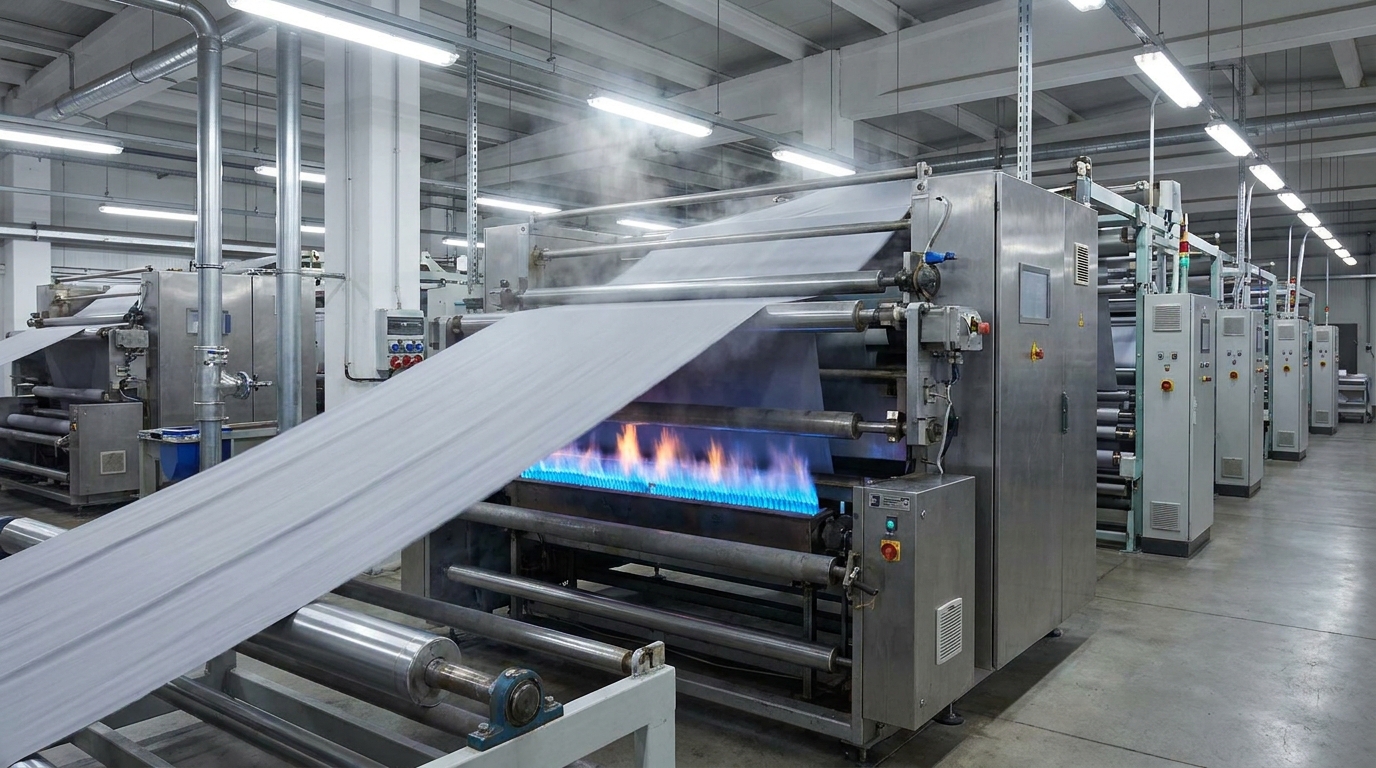
Before exploring specific singeing machine problems: 7 causes and how to fix them, we must look at the bigger picture. A singeing fault rarely stays isolated. It quickly disrupts your entire textile production line.
How a Singeing Machine Operates
To spot issues early, you need to understand the basic mechanics. Most modern textile mills rely on gas singeing. The machine passes greige fabric rapidly over open flames at speeds of 60 to 120 meters per minute.
- Flame Burners: The system mixes natural gas and air at a 1:10 ratio. This creates a bright blue flame reaching 1,200°C to 1,300°C. The burner tip typically sits just 1.5 mm to 4.0 mm from the fabric surface.
- Cooling and Quenching: Immediately after the flame, the fabric touches water-cooled rollers. It then drops into a quenching or desizing bath. We keep this bath at 60°C to 70°C to extinguish sparks and prevent fires.
- Exhaust Systems: High-powered exhaust blowers pull smoke away. Meanwhile, spark arrestors catch glowing lint to keep the factory safe.
Why Defects Ruin Downstream Processes
When the singeing process fails, subsequent treatments suffer heavily. Protruding fibers act like tiny sponges. They alter how the fabric absorbs chemicals and colors.
If you fail to address mesin singeing, singeing yang tidak merata menyebabkan, the fabric surface remains hairy in patches. When this fabric enters the dyeing machine, it absorbs dye inconsistently. This creates visible defects like “tiger stripes” or stripiness.
Thermal damage is another major risk. If the flame sits too close to synthetic blends, polyester fibers melt into hard beads. These beads resist dye completely. Severe heat exposure can even cause membakar lubang pada kain, which forces you to scrap the entire roll.
At SutexMach, we manufacture advanced calendering and dyeing machines. We see firsthand how poor preparation impacts finishing. You simply cannot achieve a premium, glossy finish in a calender if the fabric retains fuzz and lint.
The Importance of Regular Maintenance
Prompt troubleshooting saves money and materials. You must maintain strict control over gas pressures, fabric tension, and moisture levels.
| Machine Component | Maintenance Action | Risk if Ignored |
|---|---|---|
| Burner Nozzles | Clean daily with a steel gauge or wire brush. | Carbon buildup causes stripiness and uneven singeing. |
| Gas-Air Blender | Check mixing ratios to maintain a blue flame. | Yellow flames leave soot and stain the fabric. |
| Automatic Burner Swivel | Test the “stop-motion” safety cutoff regularly. | Fabric catches fire if the machine stops unexpectedly. |
By keeping these components clean and calibrated, you prevent the vast majority of production failures. Next, we will break down the specific causes of these defects and show you exactly how to resolve them.
Problem 1: Singeing Machine Uneven Singeing Causes
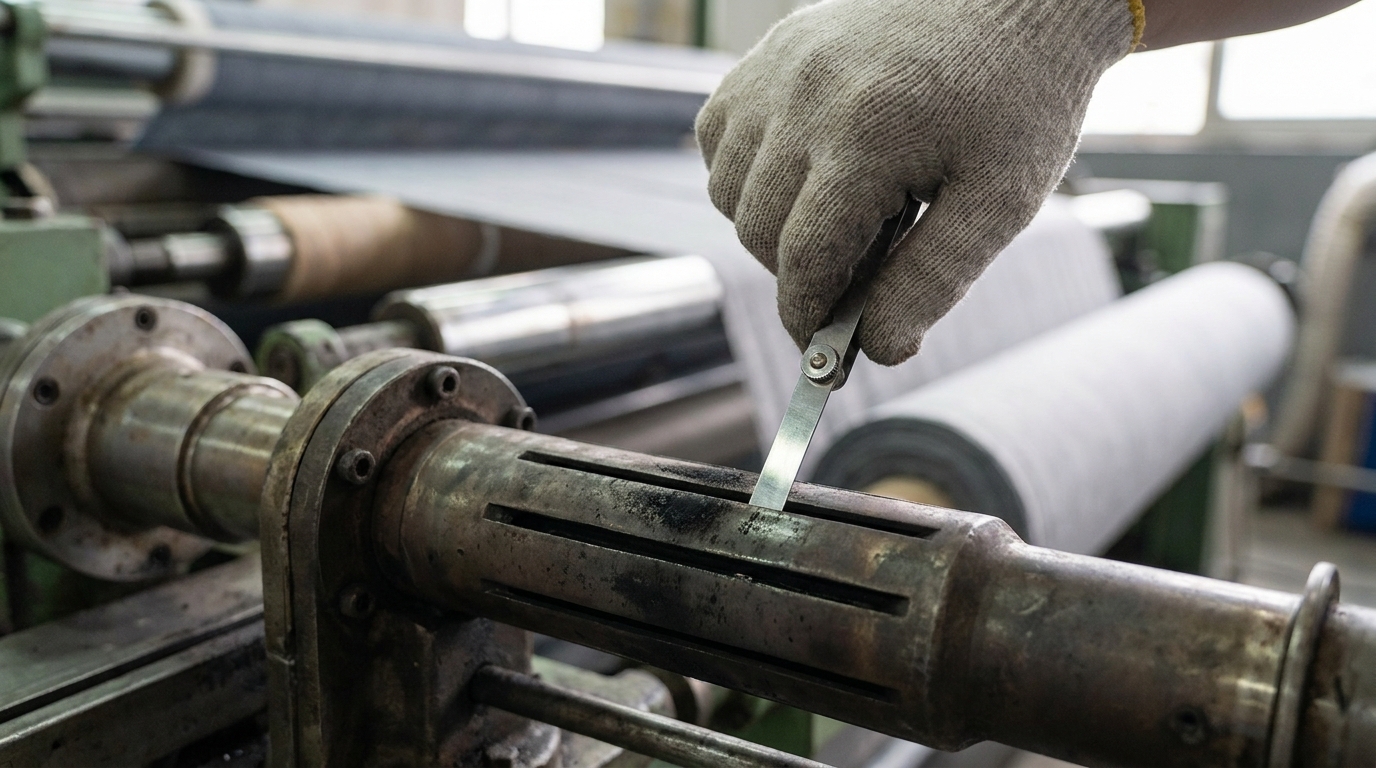
As we established earlier, skipping routine maintenance directly leads to production failures. The most common defect you will encounter is uneven singeing. This issue leaves patches of fuzz on the material. It ruins the smooth finish needed for downstream processes. Let’s look at the first of our singeing machine problems: 7 causes and how to fix them.
The Root Causes of Uneven Singeing
Why is the center of your fabric smooth while the edges remain hairy? This inconsistency usually stems from three specific mechanical failures.
- Blocked Burner Slits: Dirt and lint constantly fall into the burner. When carbon builds up, it physically obstructs the gas flow. This creates cold spots across the burner width.
- Inconsistent Gas-Air Mixture: You might face masalah intensitas nyala api pada mesin singeing. If the mixture fluctuates along the burner length, the flame temperature drops in certain areas.
- Uneven Fabric Tension: Mechanical tension plays a massive role. If guide rollers fall out of alignment, the fabric sags. Sections of material move away from the optimal flame gap.
How to Fix and Prevent Uneven Singeing
You must address these faults immediately to protect fabric quality. At SutexMach, our 30 years of experience in intelligent textile machinery shows routine protocols prevent most issues. We recommend the following corrective actions.
| Defect Trigger | Corrective Action | Expected Result |
|---|---|---|
| Clogged Nozzles | Implement a mandatory cleaning schedule. Use a thin steel gauge to clear slits before every shift. | Restores uniform gas flow and eliminates cold spots. |
| Poor Flame Intensity | Check and adjust the mixing valves daily. Ensure a uniform ratio across the entire burner. | Maintains a consistent blue flame and stable temperature. |
| Fabric Sagging | Calibrate tensioners and guide rollers before running a new batch. | Keeps fabric flat and maintains the correct burner distance. |
By standardizing these checks, you keep the fabric perfectly flat and taut. This ensures every inch of the material receives the exact same heat treatment.
Problem 2: Incomplete Singeing on Fabric Fix
In the previous section, we fixed uneven singeing caused by mechanical faults like clogged nozzles. Sometimes, however, the fabric stays uniformly hairy across its entire width. This brings us to the second of our singeing machine problems: 7 causes and how to fix them.
Why Does Incomplete Singeing Happen?
If your fabric exits the machine with fuzz still attached, the process failed to deliver enough heat. Three main operational errors cause this specific defect.
- Excessive Machine Speed: Typical operating speeds range from 60 to 120 meters per minute. If you run the fabric too fast, it spends too little time over the open flame. The fibers simply do not burn off.
- Low Flame Temperature: As we covered earlier, standard flames must reach between 1,200°C and 1,300°C. If you set the intensity too low for a heavy fabric, the heat cannot penetrate the surface fuzz.
- High Moisture Content: Fabric needs a uniform moisture regain of 6% to 8%. If previous wet processes leave excess water behind, the flame wastes valuable energy. It evaporates moisture instead of burning fibers.
How to Resolve Incomplete Singeing
To implement a reliable pembakaran sebagian pada kain belum diperbaiki, you must adjust your operational parameters. You need to match your machine settings directly to the fabric type.
| Root Cause | Corrective Action | Expected Outcome |
|---|---|---|
| High Speed | Reduce the drive motor speed. Allow more contact time between the flame and the fabric. | Burns off stubborn fuzz completely without requiring a second pass. |
| Low Heat | Increase gas pressure to boost flame intensity. Verify the burner gap remains at 1.5 mm to 4.0 mm. | Delivers enough thermal energy to shear heavier fabrics efficiently. |
| Excess Moisture | Ensure thorough pre-drying before the fabric enters the singeing zone. | Maintains optimal 6% to 8% moisture regain for clean, efficient burning. |
Pre-drying is especially critical for consistent quality. At SutexMach, we manufacture advanced intelligent drying machines. Integrating our specialized drying equipment ensures your fabric reaches the burner at the perfect moisture level. This eliminates wasted thermal energy and guarantees a perfectly smooth fabric surface.
Problem 3: Singeing Burn Holes in Fabric
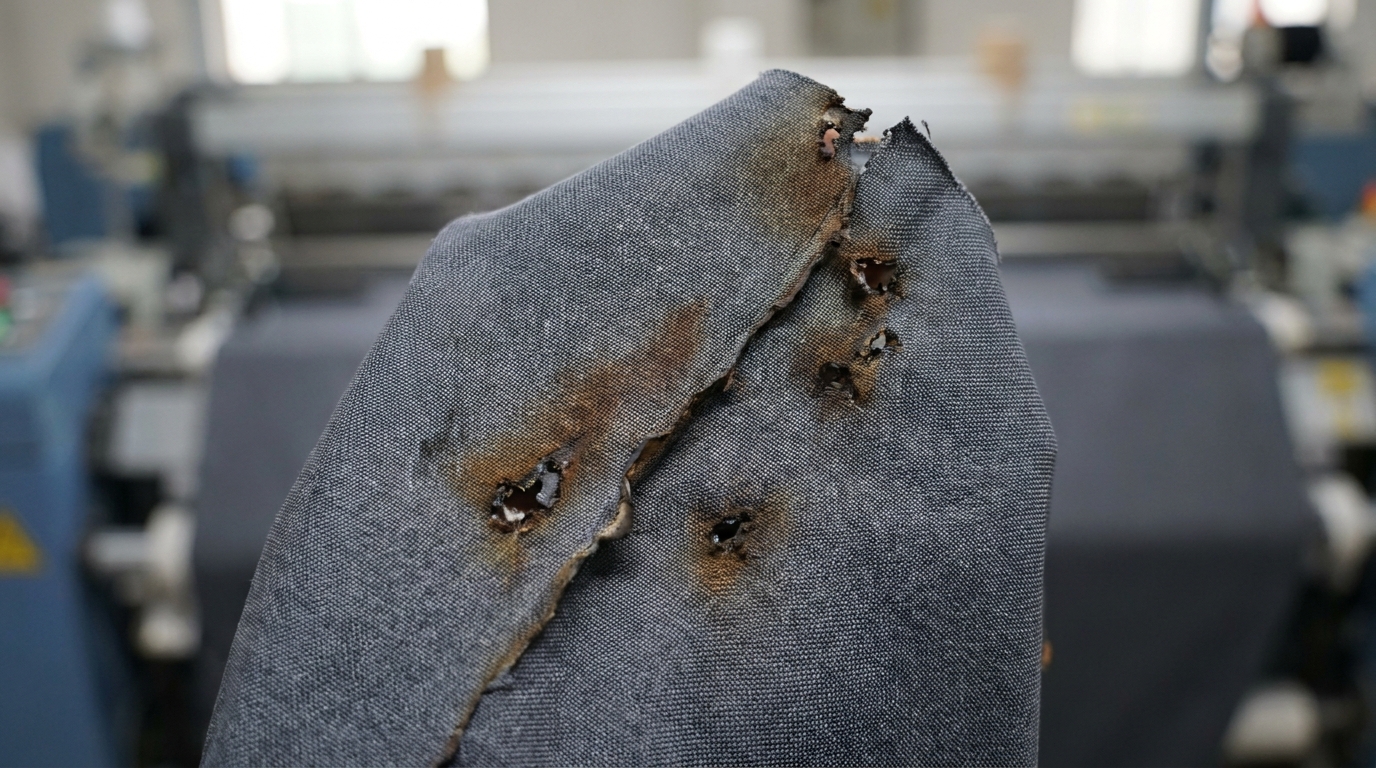
In the previous section, we solved incomplete singeing by fine-tuning machine speed and moisture levels. But what happens when you lose control of that intense heat? You face a much more destructive defect. This brings us to the third of our singeing machine problems: 7 causes and how to fix them.
Burn holes instantly ruin entire fabric rolls. They also create severe safety hazards on your production floor. You must identify the root causes immediately to protect your team and your materials.
Why Burn Holes Appear During Singeing
Fabric travels over a 1,200°C flame at high speeds. Any disruption in this delicate balance causes catastrophic thermal damage. Three main factors trigger these dangerous burn holes.
- Sudden Machine Stops: Fabric must keep moving. If the drive motor slows down or stops unexpectedly, the material rests directly over the open flame. It catches fire in seconds.
- Cooling Roller Failures: Water-cooled guide rollers normally prevent localized overheating. If mineral deposits block the internal water circulation, these rollers heat up quickly. They will scorch or burn the passing fabric.
- Melting Synthetic Blends: Polyester and other synthetics react poorly to direct heat. Stray sparks or dripping molten fibers easily burn straight through delicate blended fabrics.
How to Fix and Prevent Burn Holes
Safety and precision must always go hand in hand. At SutexMach, we build intelligent textile machinery like stenters, sueding, and dyeing machines. We know firsthand how critical tension control and temperature regulation are for fabric integrity. You must apply these exact same strict principles to your singeing process.
Implement the following operational fixes to protect your fabric from severe thermal damage.
| The Hazard | Required Fix | Safety Benefit |
|---|---|---|
| Unexpected Stops | Test the automatic flame shut-off daily. The burner must swivel away the instant line speed drops. | Prevents the intense flame from touching stationary fabric. |
| Overheated Rollers | Inspect the cooling water circulation system. Flush out pipe blockages to maintain steady flow. | Keeps guide rollers cold and prevents localized scorching. |
| Synthetic Melting | Adjust the burner angle. Use a 45° tangential angle or increase the burner distance for sensitive blends. | Cleans the surface without melting synthetic fibers into hard beads. |
Always verify your spark arrestors and quenching bath temperatures before running synthetic materials. We covered the importance of maintaining the bath at 60°C to 70°C earlier. This crucial step extinguishes stray sparks before they can cause permanent holes.
Problem 4: Singeing Machine Flame Intensity Problems

In the previous section, we discussed how uncontrolled heat causes catastrophic burn holes. But what happens when that heat fluctuates wildly? You lose all process consistency. This brings us to the fourth of our singeing machine problems: 7 causes and how to fix them.
If your flame flickers or changes color, you cannot maintain that crucial 1,200°C to 1,300°C temperature. You will end up with a mix of incomplete singeing and scorched patches on the exact same fabric roll. Let’s explore why masalah intensitas nyala api pada mesin singeing occur and how to stabilize your burners quickly.
What Causes Flame Instability?
A bright blue flame indicates perfect combustion. When the flame turns yellow or flickers unevenly, the 1:10 gas-to-air ratio has failed. Three main mechanical issues disrupt this delicate balance.
- Fluctuating Gas Pressure: The main gas supply must remain constant. If the pressure drops, the flame weakens. If it spikes suddenly, the flame flares up dangerously.
- Inadequate Air Supply: The system relies on blowers to mix ambient air with natural gas. Malfunctioning blowers or heavily clogged filters starve the burner of oxygen.
- Poor Exhaust Drafts: High-powered exhaust blowers pull smoke away from the process zone. If ducting gets blocked by lint, smoke builds up rapidly. This smothers the open flame and causes severe instability.
How to Fix and Stabilize Flame Intensity
You must maintain precise control over both gas and air inputs. At SutexMach, our 30 years of experience building intelligent textile machinery teaches us one critical rule. Precision requires clean, well-monitored systems. Whether you operate a stenter, a dyeing machine, or a gas singer, airflow and pressure dictate your success.
Implement these corrective actions to resolve intensity issues immediately.
| Trigger Factor | Corrective Action | Expected Result |
|---|---|---|
| Unstable Gas Pressure | Install high-quality pressure regulators on the main gas lines. Monitor gauges daily. | Keeps gas pressure strictly between 5 and 20 mbar for a steady, predictable flame. |
| Oxygen Starvation | Clean or replace the air blower filters before starting every new shift. | Restores proper airflow to maintain the exact 1:10 mixing ratio. |
| Flame Smothering | Inspect exhaust ducting weekly. Clear out any trapped lint or carbonized buildup. | Ensures clear ventilation and stops trapped smoke from suffocating the burner. |
Never ignore a yellow flame. It always indicates an oxygen deficiency. A yellow flame leaves soot on your fabric and ruins downstream wet processing. By keeping your filters clean and your regulators calibrated, you guarantee a powerful blue flame. This protects your material from both thermal damage and incomplete shearing.
Problem 5: Fabric Creases and Folds During Singeing
We just stabilized your gas and air mixtures to prevent soot and unpredictable temperatures. However, a perfectly calibrated blue flame means nothing if the fabric does not lie flat. This brings us to the fifth major issue in our breakdown of singeing machine problems: 7 causes and how to fix them.
When fabric creases or folds over itself, it creates a physical barrier. The 1,200°C flame hits the top of the fold but completely misses the valley underneath. This leaves hidden areas full of fuzz. Furthermore, the peak of the crease sits too close to the burner tip. As we covered earlier, reducing that critical 1.5 mm to 4.0 mm gap causes severe scorching.
The Causes of Creasing and Folding
Fabric must remain perfectly taut as it travels at speeds up to 120 meters per minute. When folds appear, the root cause is almost always mechanical. Three primary factors disrupt smooth fabric flow.
- Misaligned Guide Rollers: Centering devices and guide rollers keep the material tracking straight. If they shift out of alignment, the fabric drifts and bunches up.
- Improper Threading: Operators must thread the greige fabric through the tension bars perfectly. A slight threading error creates an uneven pull across the width.
- Uneven Selvedge Tension: If the edges of the fabric experience different tension levels than the center, they curl inward. This instantly creates long, continuous creases.
How to Fix Fabric Folds and Tension Issues
You must eliminate creases before the fabric reaches the flame zone. At SutexMach, we have spent over 30 years perfecting intelligent textile machinery. Precise fabric handling is the core of our stenter and calendering machines. We apply these exact same tension control principles to resolve singeing defects.
Implement the following mechanical upgrades and checks to keep your fabric flat.
| Mechanical Fault | Corrective Action | Expected Result |
|---|---|---|
| Curling Selvedges | Install scroll rollers or mechanical expanders just before the burner zone. | Pulls the edges outward and flattens the fabric completely. |
| Misaligned Rollers | Realign the machine’s guide rollers using laser precision tools during routine maintenance. | Stops the fabric from drifting off-center at high speeds. |
| Inconsistent Pull | Upgrade to automated tension control systems. | Continuously monitors and adjusts tension to prevent sagging and bunching. |
Train your operators to double-check the threading path before starting a new batch. A mechanical expander works wonders, but it cannot fix a fundamentally twisted fabric roll. By combining automated tension control with proper threading protocols, you ensure an even, smooth singe every time.
Problem 6: Thermal Damage and Fabric Hardening
We just fixed tension issues to keep your fabric flat and avoid localized scorching. But what if your material lies perfectly flat, yet still comes out stiff or damaged? This brings us to the sixth issue in singeing machine problems: 7 causes and how to fix them. Even a stable blue flame ruins delicate fibers if applied incorrectly.
The Causes of Thermal Damage
Thermal damage happens when the flame penetrates too deeply. You usually see this defect in two specific scenarios.
- Burner Position: The flame sits too close to the fabric surface. As we covered earlier, the optimal burner gap is 1.5 mm to 4.0 mm. Closing this gap crystallizes the fibers and makes the fabric feel harsh.
- Mishandling Synthetics: Processing synthetic fibers requires a gentle approach. Heavy cotton needs direct, intense heat. Polyester and synthetic blends react poorly to this intensity. They melt into hard plastic beads instead of cleanly burning off.
How to Fix Fabric Hardening and Melting
You must adapt your machine settings to the exact fiber composition. At SutexMach, we design intelligent textile machinery for global fabric mills. Our 30 years of experience teaches us how to handle delicate synthetics properly. Implement these specific adjustments to protect your materials.
| Fiber Issue | Processing Adjustment | Expected Outcome |
|---|---|---|
| Melting Synthetics | Shift to a 45° tangential flame angle or use water-cooled roller singeing. | Cleans the surface without melting synthetic fibers into hard beads. |
| Harsh Hand Feel | Increase the burner gap beyond the standard 1.5 mm range for sensitive materials. | Prevents deep heat penetration and stops fiber crystallization. |
| Slight Stiffening | Run the material through advanced air-softening machines after quenching. | Restores a premium, soft hand feel to the finished textile. |
Sometimes fabric still feels slightly harsh after a perfect singe. You can easily fix this during post-processing. SutexMach manufactures specialized air-softening machines for this exact purpose. These machines mechanically break down crystallized fibers. They restore the luxurious drape and soft touch your customers demand.
Problem 7: Cooling Water System Failures
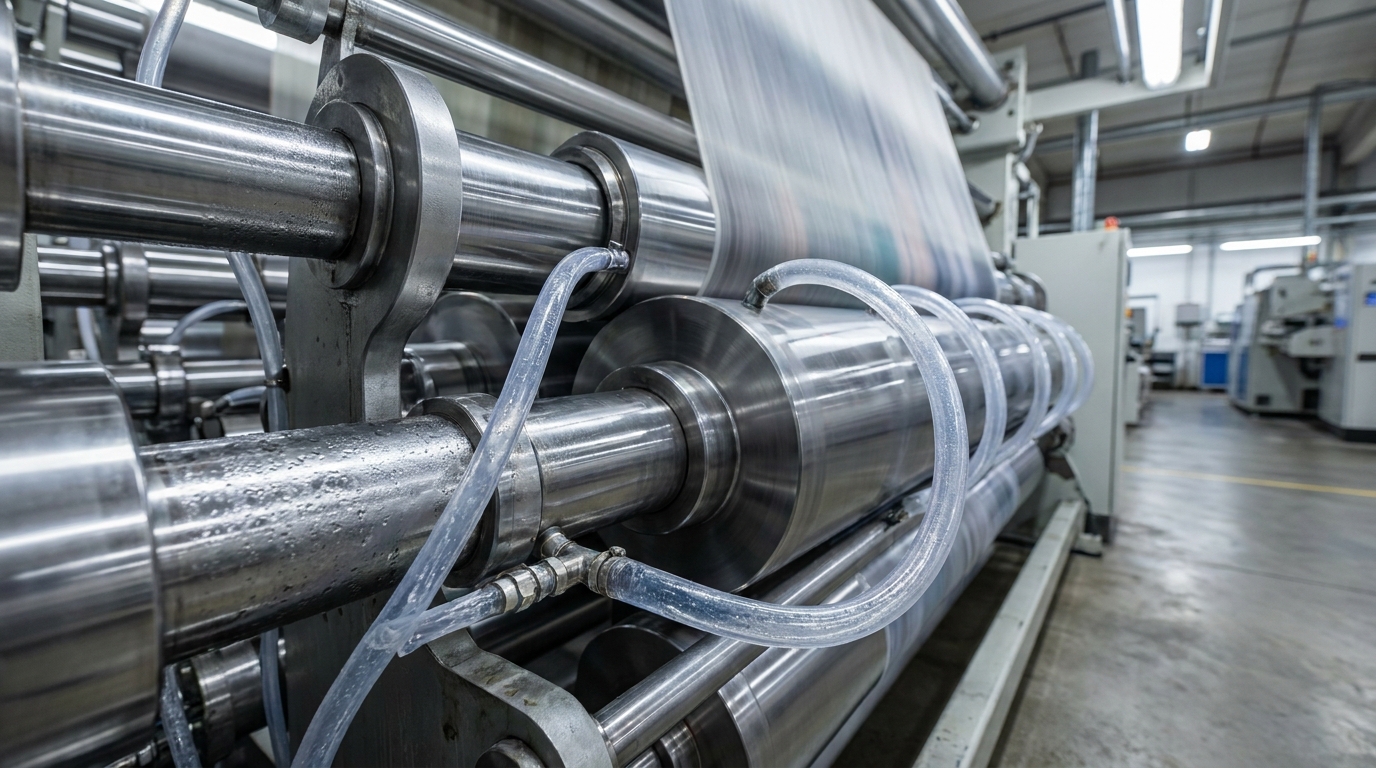
We just fixed thermal damage by adjusting burner angles. We also discussed using air-softening machines to fix harsh fabrics. But a perfect flame setup still fails if your cooling system breaks down. This brings us to the final issue in our breakdown of singeing machine problems: 7 causes and how to fix them.
After passing the 1,200°C flame, fabric must cool instantly. It touches water-cooled rollers to stop the burning process. If these rollers overheat, they scorch the material. They can even start fires.
The Causes of Cooling System Failures
The cooling system relies on constant, unrestricted water flow. When this flow stops, the metal rollers heat up rapidly. Three main issues cause this dangerous failure.
- Mineral Scale Buildup: Hard water leaves calcium deposits behind. This scale builds up inside the water-cooled rollers. It acts as an insulator and blocks heat transfer.
- Blocked Pipes and Pumps: Debris easily clogs the internal plumbing. Malfunctioning water circulation pumps also stop the flow completely.
- Inadequate Water Pressure: The facility might experience a sudden drop in water supply pressure. Without enough pressure, water cannot reach the highest rollers in the machine.
How to Fix and Prevent Water System Issues
You must keep these cooling rollers cold. This requires strict maintenance of the internal plumbing. At SutexMach, our 30 years of experience building intelligent textile machinery emphasizes reliable fluid dynamics. Whether we manufacture a dyeing machine, a stenter, or a singeing unit, proper water circulation protects your fabric.
Implement these maintenance steps to secure your cooling system.
| System Fault | Corrective Action | Expected Outcome |
|---|---|---|
| Mineral Scale | Perform regular chemical descaling of the cooling rollers and pipework. | Removes calcium deposits and restores efficient heat transfer. |
| Pump Malfunctions | Replace worn-out circulation pumps. Ensure a continuous, clean water supply. | Keeps cold water moving steadily through the entire machine. |
| Low Water Pressure | Monitor water temperature gauges closely during operation. Install pressure alarms. | Alerts operators immediately before the rollers overheat and damage fabric. |
Train your operators to check these temperature gauges at the start of every shift. You should also install inline water filters. These filters catch debris before it enters the circulation pumps. Clean water guarantees a cold roller surface. This final step ensures your fabric exits the machine smooth, safe, and ready for dyeing.
Upgrading to Intelligent Textile Machinery
We just resolved cooling water system failures to keep your rollers cold. We also fixed thermal damage to protect delicate synthetic blends. However, relying solely on manual maintenance leaves room for human error. To truly eliminate these singeing machine problems: 7 causes and how to fix them, you need a smarter approach. Upgrading to intelligent textile machinery drastically reduces these daily production defects.
The Power of Automated Precision
You need equipment capable of monitoring itself. SutexMach is a professional manufacturer of intelligent textile machinery founded in 1985. We are proudly affiliated to Jiangsu SoHo Honry Import & Export Co., Ltd. With over 30 years of experience, we supply advanced equipment to global fabric mills.
Intelligent machinery takes control out of human hands. It automatically adjusts gas pressures to prevent flame intensity problems. It monitors tension continuously to stop fabric creases before they happen. Upgrading your facility removes the guesswork from your daily operations.
Creating a Flawless Finishing Line
A perfectly singed fabric roll is only the beginning. The material must move seamlessly through your entire production line. We specialize in high-quality stenters, dyeing machines, and dewatering machines. Integrating your singeing process with our advanced equipment creates a flawless, highly efficient fabric finishing line.
SutexMach provides comprehensive solutions for every step of fabric preparation. Let’s look at how our machinery integrates to eliminate processing defects.
| SutexMach Equipment | Process Function | Impact on Singeing Quality |
|---|---|---|
| Dewatering Machines | Removes excess water rapidly before the drying phase. | Ensures the fabric reaches the burner at the optimal 6% to 8% moisture regain. |
| Intelligent Stenters | Controls fabric width and applies uniform mechanical tension. | Keeps the material perfectly flat to prevent creases and uneven singeing. |
| Mesin Pencelupan | Applies uniform color across the entire fabric batch. | Capitalizes on the fuzz-free, smoothly singed surface to eliminate dye spots. |
| Air-Softening Machines | Mechanically breaks down stiffened or crystallized fibers. | Restores a luxurious hand feel if slight thermal stiffening occurs during singeing. |
Modern textile production demands absolute precision. You cannot afford unexpected burn holes or uneven stripiness. Seamless integration between your singeing unit and our intelligent finishing machines protects your materials. It guarantees a premium end product while boosting your overall factory efficiency.
Kesimpulan
Mastering “Singeing Machine Problems: 7 Causes and How to Fix” boosts your production efficiency. Knowing causes like uneven tension and flame intensity protects fabric quality. Choose SutexMach for reliable, intelligent textile machinery upgrades.
- Create a daily machine maintenance checklist for your floor operators.
- Test the cooling water system pressure before starting each shift.
- Contact SutexMach today to explore advanced textile finishing equipment.
Frequently Asked Questions About Singeing Machine Problems
Why does the fabric feel harsh after singeing?
Over-singeing or too much heat causes this harsh feel. High temperatures can crystallize synthetic fibers. You must adjust your flame intensity and fabric speed. Typical speeds run from 60 to 120 meters per minute. Proper settings keep the fabric smooth and soft.
How can I prevent melting synthetic blends like polyester?
Synthetic blends easily melt into hard beads if overheated. These tiny beads will cause ugly dye spots later. To stop this, increase the machine fabric speed. You should also lower the overall flame intensity. This burns off cotton fuzz without damaging the polyester.
Why is the singeing effect uneven across the fabric?
Uneven singeing happens when the center is too smooth. This frustrating problem usually points to a warped burner. It can also mean you have uneven gas pressure. You should check the burner nozzles for lint buildup. Regular cleaning prevents these annoying tiger stripes from appearing.
Can knitted fabrics be processed in a singeing machine?
Yes, you can singe knitted fabrics quite successfully. However, they need special care during the heating process. You must use specialized fabric tension control systems. Water-cooled rollers are also required to prevent heat damage. SutexMach provides intelligent textile machinery to handle delicate fabrics.
What flame color indicates the best singeing performance?
A bright blue flame always shows perfect gas combustion. This requires a standard gas-air mixing ratio of 1:10. If you see a yellow flame, oxygen is low. Yellow flames will leave soot and stains on fabrics. Always monitor your gas-air blender for the best results.
Actionable Next Steps
- Clean your burner slits daily using a thin wire brush.
- Inspect the automatic burner swivel to ensure proper safety shut-offs.
- Install a brushing unit to raise flattened fibers before heating.
- Calibrate the gas-air blender to maintain a bright blue flame.
Fixing singeing machine problems improves fabric quality and safety. You must monitor flame intensity, moisture levels, and speeds. Regular maintenance stops lint buildup and prevents fire hazards. Partnering with experienced manufacturers like SutexMach ensures reliable processing. Apply these troubleshooting tips to keep your production running.