


 Korean
  English
  Hungarian
  Indonesian
  Bulgarian
  Turkish
  Polish
  Russian
  Spanish
  Portuguese
  French

Ever wonder how fabric gets its smooth, glossy shine?
A 캘린더 작성기 presses fabric between heavy rollers to create that finish. It boosts luster, smoothness, and reduces thickness.
This guide covers how it works, its parts, types, and benefits—plus how SutexMach builds custom finishing solutions.
What Is a Calendering Machine?
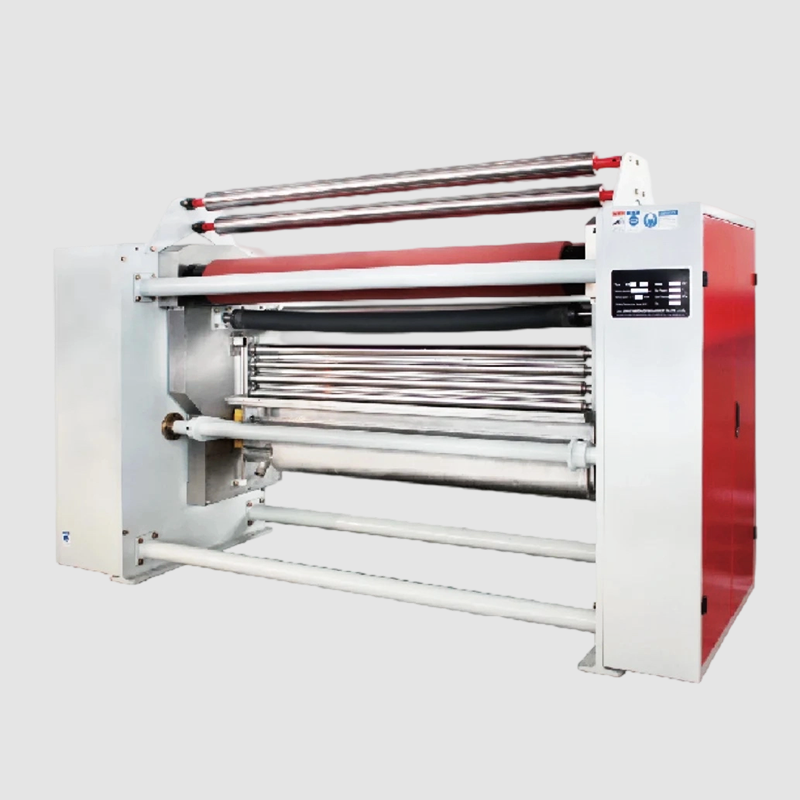
A calendering machine, or calender, uses hard pressure rollers. It smooths, compacts, coats, or thins fabric.
Where does the word “calender” come from? It traces back to the Greek word kylindros, meaning cylinder. That makes sense—the machine’s rollers are cylinders too.
Calendering is a finishing process. It’s not weaving or dyeing. Weaving builds the fabric’s structure. Dyeing adds color. Calendering happens later. It refines how the fabric looks and feels.
This technology isn’t just for textiles, though. Manufacturers use calenders for paper, plastics, and rubber too. But we’re focusing on textile calendering machines here.
Here’s a simple way to picture it:
- Think of a giant, industrial iron
- Instead of pressing by hand, rollers do the work
- The fabric moves through at high speed
- Heat and pressure combine for a lasting finish
So calendered fabric feels a bit like steam-ironed cloth. Except it’s done on a massive, factory-sized scale.
캘린더링 머신은 어떻게 작동하나요?
Before fabric even touches the rollers, it needs prep work.
Workers fold it lengthwise, face side in. Then they stitch the edges together. This keeps everything aligned as it moves through.
Now for the main event. The fabric passes between two rollers, called bowls. They’re pressed together tightly.
One roller is usually steel. It can be heated to high temperatures. The other roller? It’s covered in cotton, paper, or synthetic material.
So what actually happens in between?
- Heat softens the fibers
- Pressure flattens and compacts them
- Speed controls how long the fabric stays in contact
Together, these three forces work as a team. They smooth out the surface. They close up gaps between threads.
The result feels tighter, flatter, and shinier than before. It’s simple physics, really—just applied at industrial scale.
The Fabric Calendering Process Explained Step-by-Step
Want to know exactly how raw fabric becomes glossy, finished cloth? Let’s break it down.
Step 1 – Fabric Preparation
First, workers get the fabric ready. They fold it lengthwise, face inside. Then they stitch the edges shut.
Moisture matters too. The fabric often gets conditioned beforehand. Why? A little moisture helps rollers do their job better.
Step 2 – Passing Through the Rollers
Next, the fabric enters the nip. That’s the gap between two rollers.
This is where the magic happens. Temperature, pressure, and speed all play a role here.
- Higher heat softens fibers faster
- More pressure flattens the surface
- Speed determines contact time
Each setting gets adjusted based on the fabric type.
Step 3 – Surface Treatment / Effect Creation
Now the rollers get to work on the surface itself.
Depending on the machine, they can polish it, flatten it, or press in patterns. Some create embossed textures. Others add fine ribbed lines for a silky look.
It all depends on which calender type is being used.
Step 4 – Cooling and Batching
After treatment, the fabric needs to cool down. A cooling drum handles this job. Water circulates inside it, pulling heat away quickly.
Once cooled, the fabric gets wound up. This is called batching. It’s the final step before packing or shipping.
Key Factors That Affect the Calendering Process
Several variables shape the final result:
| Factor | Why It Matters |
| Fiber content | Natural vs. synthetic fibers react differently |
| Fabric construction | Weave tightness affects pressure needs |
| 수분 함량 | Impacts how fibers respond to heat |
| Prior chemical finishes | Can change surface behavior |
| Roller temperature | Controls softening and gloss level |
| Fabric-to-roller speed | Affects friction and finish type |
| Roller composition | Steel, cotton, or synthetic surfaces differ |
| Pressure applied | Determines compaction level |
| Number of passes | More passes can deepen the effect |
Change even one factor, and the finished fabric looks completely different.
Main Effects and Benefits of Calendering Fabric
So what does calendering actually do for fabric? Quite a lot, really.
- Reduces thickness.The heavy rollers compress fibers together. This makes fabric thinner and more compact.
- Compacts the weave.It closes up tiny gaps between threads. The structure feels tighter overall.
- Changes the handle.Fabric feels different after treatment. Some become smoother, others crisper.
- Boosts luster and gloss.Rollers create shine on the surface. It can look almost polished.
- Removes creases and wrinkles.Heat and pressure flatten everything out. No more stubborn folds.
- Improves smoothness.Fabric can end up with a papery texture. Or it might feel silky, depending on the process.
Which Fabrics Can Be Calendered?
Not every fabric reacts the same way, though.
Natural fibers respond well to this process. Cotton, linen, rayon, and silk all take a calendered finish nicely.
Synthetic fibers work a bit differently. Polyester and similar fibers need heat to change shape. Why? They hold onto their original form, almost like a memory. Heat helps break that pattern.
Blended fabrics fall somewhere in between. Their durability depends on one thing: how much synthetic fiber they contain.
Here’s an interesting detail about wash durability:
| Fiber Type | Finish Durability |
| Polyester (thermoplastic) | Holds calendered finish longer |
| Cotton (cellulose) | Finish fades faster after washing |
So if you want a longer-lasting shine, synthetic-heavy fabrics tend to win out.
Key Parts and Components of a Calendering Machine
Ever wonder how these machines create so many different finishes? It all comes down to the parts working together.
1. Rollers / Bowls (Steel, Cotton, Reclon)
Rollers are the heart of any calender. Each type brings something different to the table.
- Steel roller:Heats up to 32–200°C. It delivers smoothness and shine.
- Cotton roller:This one’s softer. It creates a gentle, soft finish.
- Reclon roller:It pairs up with other rollers. Mix it with steel, and you get gloss. Combine it with cotton instead, and the result turns dull.
2. Winder
Small winders handle short-width fabric. They can also run alongside longer fabric rolls at the same time.
3. Metal Detector
Metal particles can damage rollers fast. This sensor catches them before they cause harm.
4. Seam Detector
Fabric seams are tricky. This detector spots them early. Then it helps the machine bypass them safely.
5. Anti-Static Rod
Static electricity builds up during processing. This rod strips it away, keeping the fabric manageable.
6. Oscillating Roll
Selvedges can overlap during winding. This roll shifts back and forth, preventing that overlap on the batcher.
7. Batcher Sensor
Fabric take-up needs monitoring. This sensor tracks it, keeping winding smooth and even.
8. Cooling Drum
Fabric comes out hot from the rollers. Water circulates inside this drum, cooling everything down quickly.
Calendering Machine Motor, Drive System, and Service Life
Ever wonder what powers all that roller pressure? It comes down to motors and drive systems.
Most textile calenders use variable-frequency or servo motors. They give precise control over speed and tension.
High-end machines go further. They add multi-point synchronized drives. A PLC controller links each roller’s speed together. This prevents slipping or fabric tearing.
주요 드라이브 구성 요소:
- Main drive motor— sets the overall running speed
- Tension control motor— adjusts fabric tension
- Winding motor— controls take-up tension
So how long does a calendering machine actually last?
With proper care, these machines run 15 to 25 years. That’s a long lifespan, but it depends on a few things.
- Roller material (alloy steel, chrome-plated, or mirror-finish rollers)
- Lubrication and cooling system quality
- How often and how hard the machine runs
- Electrical control system and inverter quality
- Regular maintenance habits
Want to stretch that lifespan even further? A few habits help:
- Check roller gap and alignment every month
- Clean and lubricate bearings and guide rails regularly
- Keep electrical parts away from moisture and dust
- Swap out worn parts before they fail
- Run a full accuracy calibration once a year
Types of Textile Calendering Machines (9 Main Types)
Not all calenders work the same way. Manufacturers pick different types based on fabric, finish, and effect they want.
1. Friction Calendering Machine
This one uses a three-bowl setup. There’s a heated bowl, a polishing bowl, and a chilled bowl.
The friction roller moves faster than the fabric itself. That speed ratio can reach 1.2:1. Temperatures typically run between 100–160°C.
What does this get you?
- High gloss and shine
- Wrinkles pressed away
- Thinner, more compact fabric
- Threads pulled tighter together
2. Schreiner Calender
This machine engraves fine diagonal lines onto its roller. We’re talking 125–500 lines per inch, under roughly 10 tons of pressure.
The result? A silk-like shine, especially on mercerized cotton. It’s technically a type of embossing, just a very fine one.
3. Nipco-Flex Calender (High-Pressure Calendering)
Here’s where things get high-tech. This 유압 캘린더링 기계 uses an elastic shell called “Racolan.”
Pressure gets applied hydrostatically. That means it can be adjusted across the fabric’s width.
Why does this matter?
- Delivers very high, even pressure
- Prevents overload at fabric edges
- Makes roller maintenance easier
It’s a strong example of modern high-pressure calendering technology.

4. Felt Calender
Silk, rayon, and cotton knitwear all benefit from this gentler machine. It runs at lower pressure and temperature than most.
An endless felt blanket works alongside a hot steel cylinder. Speed sits around 20–40 meters per minute.
5. Embossing Calender
This one pairs an engraved metal bowl with a softer composition bowl. Together, they press raised or sunken patterns into fabric.
On synthetics, this pattern sticks around permanently. On cotton, it’s more temporary.
Its bowls run bigger too—38–45 cm in diameter, compared to Schreiner rollers.

6. Swizzing (Swissing) Finish Calender
Every bowl moves at the same surface speed here. Simple, right? That consistency produces a smooth, even appearance.
7. Chasing Finish Calender
This process resembles swizzing. But fabric passes through the nip multiple times.
Linen fabric often gets this treatment. It creates a thready look with a soft, relaxed handle.
8. Moiré Calender
Ribbed rollers create wave-like patterns here. Think watermark or wood-grain effects.
Viscose, silk, and acetate fabrics show this off best. That’s why it’s so popular for curtains and wall coverings.
9. Ciré Calender
Want a glossy, wet-look finish? This is the machine for it.
Temperatures climb to around 220°C. Pressure can reach up to 1500 PLI.
It’s mostly reserved for 100% synthetic fabrics, or blends with high synthetic content.
Classifying Calendering Machines by Roller Count and Arrangement
Beyond finish type, calenders also get classified by their rollers. How many, and how they’re arranged.
By roller count:
- Two-roll calender— simple structure. Good for basic finishing or lower-precision jobs.
- Three-roll calender— the most common setup. Handles a wider range of fabrics and finishes.

- Multi-roll calender— stacks four or more bowls. Built for high-volume, multi-effect production.
By roller arrangement:
- I-type— rollers stack in a straight vertical line
- L-type— one roller sits beside the others, forming an L shape
- Z-type— rollers zigzag, giving fabric a longer contact path
- S-type— uses stepless pressure regulation for even line pressure across the whole roll
Each layout affects how fabric moves and how much floor space the machine needs.
Manufacturers pick a configuration based on production volume, fabric type, and available factory space.
Types of Finishes Produced by Calendering
We’ve covered the machines. Now let’s connect them to the actual finishes they create.
| Finish Name | How It’s Made | Result |
| Beetling | Wooden rollers beat the fabric with hammers | Satin-like sheen on cotton and linen |
| Watered (Moiré) | Ribbed rollers press unevenly across the surface | Wavy, watermark-style pattern |
| Embossing | Engraved rollers stamp a design into the cloth | Raised, textured pattern |
| Schreiner | Fine ribbed rollers apply intense pressure | High-shine, silk-like luster |
Let’s look at each one a bit closer.
Beetling gives cotton and linen a satin-like glow. Wooden rollers do the work here. They beat the fabric repeatedly, using wooden hammers.
Watered finishes come from ribbed rollers instead. They compress fabric unevenly. Some threads flatten, others stay round. That contrast creates the signature wavy look, known as moiré.
Embossing takes a different approach. Rollers get engraved with a specific pattern. That pattern then presses directly onto the fabric, leaving a raised design behind.
Schreiner finishing relies on very fine ribbed lines. They’re pressed in under high pressure. This creates tons of tiny reflective surfaces, which is what gives the fabric its silk-like shine.
Multi-Roll Calendering Machines vs. Single-Nip Calenders
So far, we’ve talked about single-nip setups. But there’s another option worth knowing about.
A multi-roll calendering machine stacks multiple bowls together. Instead of one gap between rollers, fabric passes through several nips in a row.
Why go this route?
Manufacturers want versatility. A multi-roll setup can:
- Combine different pressure levels in one pass
- Apply heat and friction together
- Produce two or three finishes simultaneously
- Save time compared to running fabric through separate machines
Think of it as an assembly line, just for finishing effects. Each roller handles a specific job, then passes the fabric along.
These configurations show up often in large industrial finishing lines. High-volume mills, especially ones producing cotton or blended fabrics, rely on them.
They’re also common where multiple effects are needed at once. Picture a fabric that needs both smoothing and gloss. A multi-roll machine handles both, without extra steps.
Single-nip calenders, on the other hand, work best for simpler, single-effect finishes. They’re smaller, often cheaper, and easier to maintain.
Fabric Finishing Machine: How Calendering Fits into the Bigger Picture
Calendering doesn’t work alone. It’s just one piece of a much bigger finishing puzzle.
Several other machines play a role too. Here’s how they compare:
| Machine | Main Job |
| Stenter | Stretches and stabilizes fabric width |
| Compactor | Controls shrinkage before or after finishing |
| Sueding | Creates a soft, brushed surface texture |
| Dewatering | Removes excess water from wet fabric |
| 건조 | Dries fabric completely before further processing |
| Calender | Smooths, compacts, and adds shine or texture |
So where does calendering fit in the sequence? It usually comes later in the process.
Fabric typically gets dyed and washed first. Then it moves through drying and stabilizing steps, like the stenter machine or compactor machine.
Calendering happens near the end. It’s often one of the final steps, right before inspection and packing.
Why does the order matter? Each machine builds on the last one’s work. You can’t calender wet, unstable fabric and expect good results. It needs to be dry, stable, and properly sized first.
That’s why calendering acts almost like the finishing touch. It’s the machine that gives fabric its final look and feel, right before it heads out the door.
Textile Calendering Machine vs. Industrial Calendering Machine
Not all calenders are built the same. Textile machines and industrial ones serve very different purposes.
| 기능 | Textile Calendering Machine | Industrial Calendering Machine (Plastic/Rubber) |
| Primary material | Cotton, linen, silk, synthetic fabrics | PVC, EVA, rubber compounds, battery films |
| Main goal | Surface finish: gloss, smoothness, texture | Precise thickness and dimensional control |
| Roller covering | Steel, cotton, reclon | Steel, chrome-plated, mirror-polished |
| Typical output | Finished, ready-to-wear fabric | Sheets, films, coated webs |
| Common finishes | Moiré, embossing, Schreiner luster | Uniform thickness, surface leveling |
| Industry use | Apparel, home textiles, technical fabrics | Tires, flooring, packaging, batteries |
So why does this matter? If you search “calendering machine,” you’ll find results for both.
But a textile mill doesn’t need a rubber-sheet calender. It needs a machine built for fabric.
That’s where a dedicated textile calendering machine setup makes the real difference. It’s engineered around fiber behavior, not polymer viscosity.
Energy-Efficient Textile Calenders and Modern Innovations
The textile industry is changing fast. Energy-efficient textile calender systems are now in high demand.
Why the shift? Manufacturers want to cut costs. They also want to reduce their environmental footprint.
Hydraulic calendering machines, like the Nipco-Flex, lead this change. How do they save energy?
- They use hydrostatic pressure instead of pure mechanical force
- Pressure adjusts precisely across the fabric’s width
- Less energy gets wasted on uneven pressure zones
- Older mechanical systems often push harder than necessary
That precision makes a real difference over time.
Automation plays a big role too. Modern calenders come packed with smart sensors.
- Seam detectors avoid unnecessary stops
- Metal detectors prevent costly roller damage
- Batcher sensors keep winding smooth and efficient
Fewer stops mean less downtime. Less downtime means less wasted energy and material.
There’s a sustainability angle here as well. Newer systems use less water and heat overall.
Precision pressure control helps too. It reduces the number of passes fabric needs. Fewer passes mean lower energy use, plant-wide.
Together, these innovations point toward a smarter, greener future for textile finishing.
Applications of Calendering Machines in the Textile Industry
Where do calendering machines actually get used? Almost everywhere in textiles, really.
Let’s break it down by application:
| 애플리케이션 | Fabric / Product | Common Finish |
| 의류 | Cotton, linen, silk | Smooth, lustrous finish |
| 홈 텍스타일 | Curtains, upholstery, wall coverings | Moiré (watermark) effect |
| Technical textiles | Industrial fabrics | Durability and compaction |
| Synthetic processing | Polyester, blends | Ciré (wet-look) finish |
| Knitwear | Silk, rayon, cotton knits | Felt calender finish |
Apparel manufacturers rely on calendering heavily. Cotton, linen, and silk all get that polished, smooth look this way.
Home textiles benefit too. Ever notice a wavy, shimmering pattern on curtains or upholstery? That’s likely the moiré effect at work. It’s a favorite for wall coverings as well.
Technical and industrial textiles need something different. Here, compaction and durability matter more than shine. Calendering helps tighten the weave, making fabric tougher.
Synthetic fabrics get special treatment too. The ciré calender creates that glossy, wet-look finish. It’s especially popular for high-synthetic-content materials.
Knitwear has its own needs. Silk, rayon, and cotton knits are delicate. Felt calenders handle them gently, using lower pressure and temperature than standard machines.
How to Choose the Right Calendering Machine
Picking the right calender isn’t always simple. So many options exist, and each one suits different needs.
Here are the key factors worth considering:
- Fabric type.Natural fibers, like cotton or linen, behave differently than synthetics. Some machines work better for one over the other.
- Desired finish.What look are you going for? Glossy, matte, embossed, or watered? Each finish needs a specific machine type.
- Production volume and width.Larger operations need machines that handle high volumes. Fabric width matters too, especially for wider industrial rolls.
- Pressure and temperature control.Some fabrics need gentle handling. Others require intense heat and pressure. Look for machines offering precise, adjustable controls.
- Energy efficiency.This one’s becoming a bigger priority. Hydraulic systems often use less energy than older mechanical setups.
- Automation and sensors.Seam detectors, metal detectors, batcher sensors—these all reduce downtime. They also cut down on wasted material.
Quick checklist for buyers:
- Match the machine to your primary fabric type
- Confirm it supports your target finish
- Check production capacity against your needs
- Verify pressure/temperature range flexibility
- Ask about energy consumption ratings
- Look for built-in automation features
Every mill has different needs, though. That’s where custom solutions come in handy.
Companies like SutexMach offer tailored calendering setups. They work with manufacturers to build machines fitting their exact fabric types, production goals, and finishing requirements.
Operation and Maintenance Guide
Running a calendering machine safely takes more than flipping a switch. Here’s the basic routine.
Operation steps:
- Check power supply, lubrication, and cooling systems first
- Set your parameters — roller temperature, pressure, speed
- Preheat the machine to the target temperature
- Feed fabric in slowly, watching the finish quality
- Fine-tune settings until you hit the right result
- Wind or plait the finished fabric, then clean the machine
Daily and routine maintenance:
- Clean roller surfaces weekly to stop residue buildup
- Check bearings, chains, and belts for wear
- Inspect the temperature control system for faults
- Review the electrical control system every quarter
- Keep a maintenance log. Note any odd vibration or noise
Safety precautions:
- Train every operator before they touch the machine
- Never touch a hot roller with bare hands
- Test the emergency stop button regularly
- Guard against entanglement and pinch points
Good habits here protect both your workers and your equipment investment.
A Brief History of Calendering
Calendering isn’t a new idea. People have been smoothing fabric for centuries, just without machines.
In ancient China, workers used massive pressing stones. These stones got cut into a bowl shape, with a smooth, curved bottom.
Here’s the interesting part: workers placed cloth underneath, then stood on the stone itself. They’d rock it back and forth with their feet, applying pressure by hand—or rather, by foot.
It sounds simple, but it worked surprisingly well.
Over time, this manual process evolved. Instead of stones and feet, people started building roller-based machines.
- Early machines used simple mechanical rollers
- Pressure came from basic gears and weights
- Fabric moved through by hand-cranked systems
As factories grew, so did the technology. Rollers became more precise. Heat got added to the process, boosting effectiveness.
Eventually, hydraulic systems entered the picture. These modern machines offer something older ones couldn’t: adjustable, high-pressure control.
Today’s calenders, like the Nipco-Flex, represent this shift perfectly. They combine centuries-old principles with cutting-edge engineering. Same basic goal, completely different execution.
결론
So, what is a calendering machine? It’s a roller system that smooths, compacts, and finishes fabric.
We’ve covered how it works, its key parts, and the many types available.
Choosing the right machine matters. It shapes your fabric’s final look, feel, and quality.
Need a tailored solution? SutexMach offers custom, energy-efficient calendering equipment built for your specific needs.
Frequently Asked Questions
Q: What does a calendering machine do to fabric?
A: It presses fabric between heated, pressurized rollers. This smooths the surface, compacts the weave, and reduces thickness. The result is a glossy, tighter, more polished fabric.
Q: What is the difference between calendering and ironing?
A: Ironing is a simple, small-scale pressing job. Calendering uses industrial rollers, heat, and pressure at massive scale, creating lasting effects like gloss, embossing, or moiré patterns.
Q: Can synthetic fabrics be calendered?
A: Yes. Synthetic fibers, like polyester, need heat to reshape properly. Heat helps overcome their thermal memory, allowing the calendered finish to set more permanently than on cotton.
Q: How long does a calendered finish last?
A: It depends on fiber type. Thermoplastic fibers, like polyester, hold the finish longer through washing. Cellulose fibers, like cotton, tend to lose the effect faster.
Q: What’s the difference between a Schreiner calender and an embossing calender?
A: Schreiner uses very fine diagonal lines for a silk-like shine. Embossing uses larger engraved patterns, creating raised or sunken designs instead of overall luster.
Q: What temperature and pressure are used in calendering machines?
A: It varies by machine type. Friction calenders run 100–160°C, while ciré calenders reach 220°C with pressure up to 1500 PLI. Schreiner calenders use around 10 tons of pressure.
Q: Is calendering a permanent or temporary finish?
A: It depends on the fabric. Effects on synthetic fibers tend to be permanent. On cotton and other natural fibers, the finish is often temporary and fades with washing.
Q: What industries use calendering machines besides textiles?
A: Paper, plastics, and rubber industries also use calendering machines. They apply similar roller-based pressure techniques to smooth, coat, or thin these different materials.